

💀 Dying Every Day
Dying Every Day (Stoicism in a Year) is a podcast by the Perennial Leader Project. Each episode turns a selected passage from Stoic philosophy into a guided meditation designed to help you (and me) learn how to live.
Listen on Apple Podcasts, Spotify, or YouTube
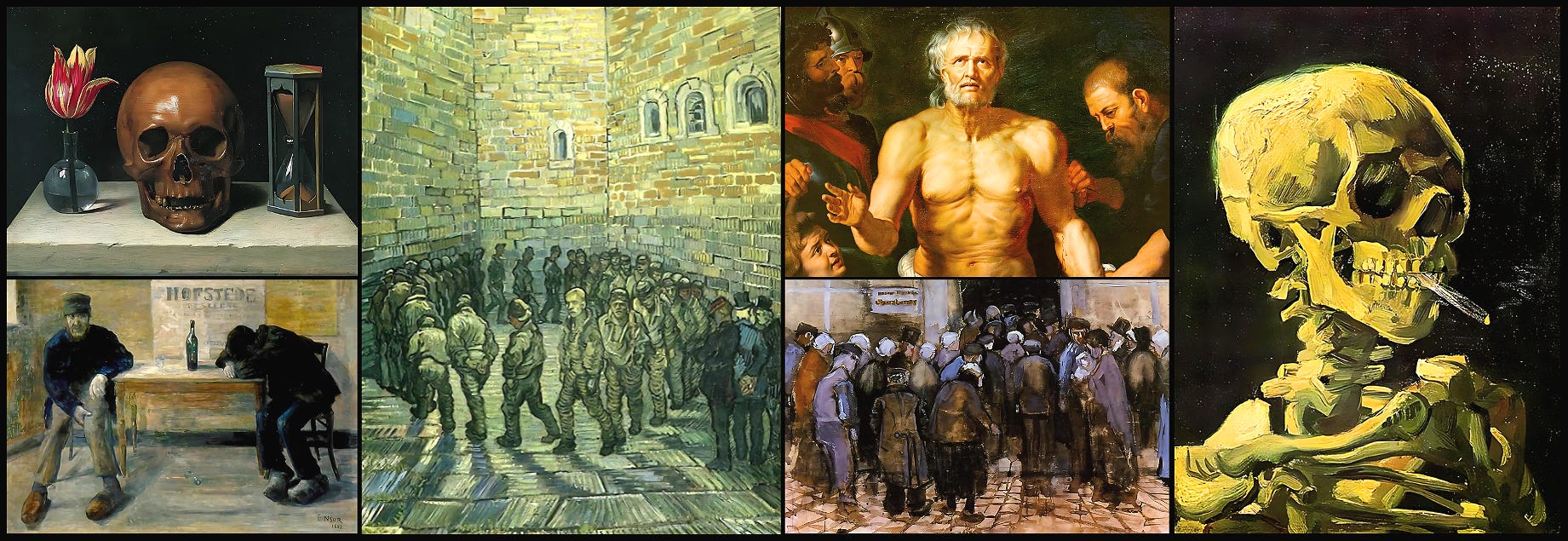
Seneca on the harbor at the end of life
Welcome back to Dying Every Day (Stoicism in a Year). This is Day 107.
We dedicate much of our lives to postponing the unavoidable. But what if the end is not a disaster but rather a homecoming? Seneca believed this to be true.
In a letter to his friend Lucilius, he offers this advice:
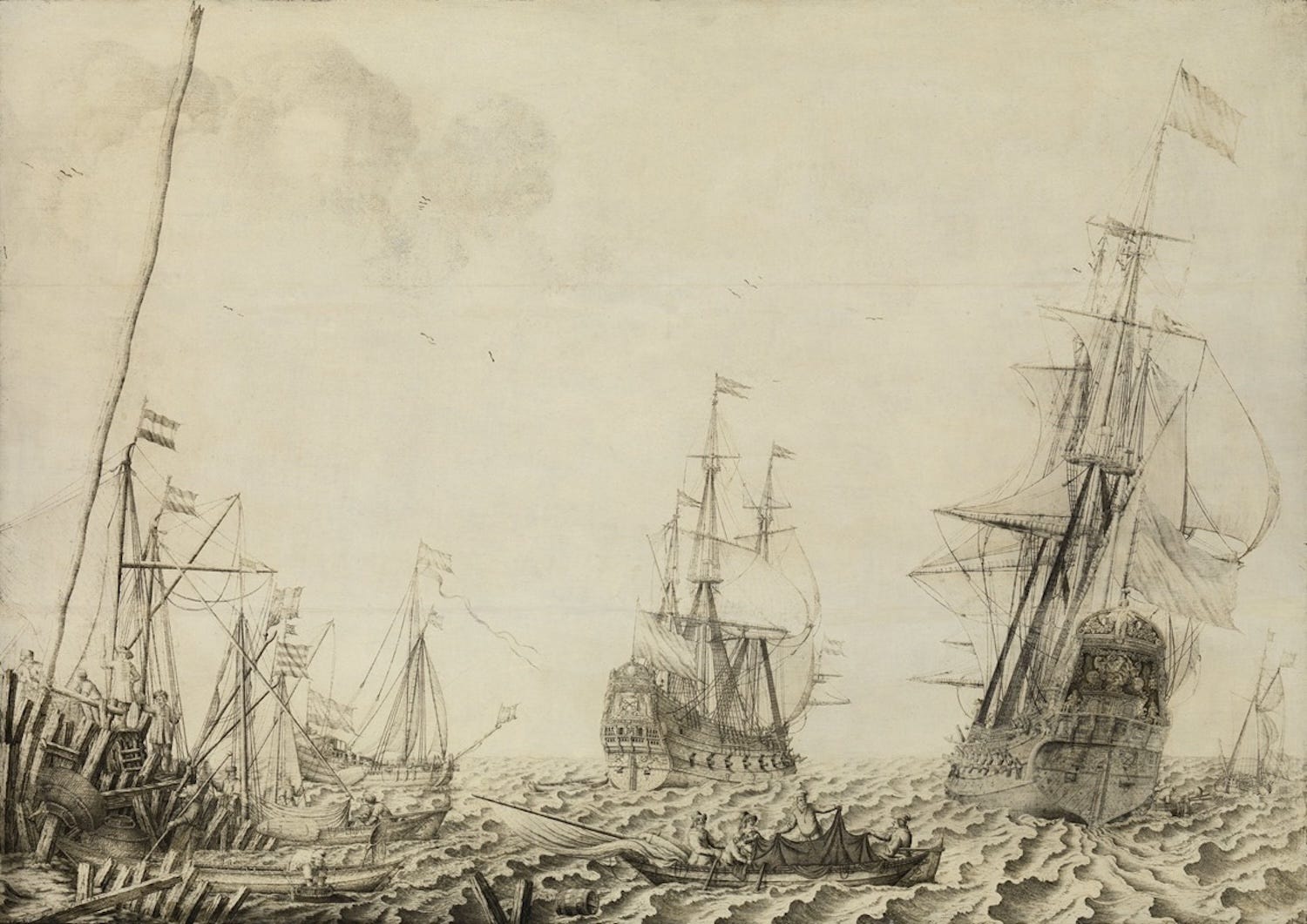
Fools that we are, we believe this bourn to be a dangerous reef; but it is the harbor, where we must some day put in… For some sailors… are tricked and held back by sluggish winds… while others are carried quickly home by steady gales… Life has carried some men with the greatest rapidity to the harbor… while others it has fretted and harassed…
For mere living is not a good, but living well… the wise man will live as long as he ought, not as long as he can.
+Adapted from On the Proper Time to Slip the Cable
Seneca is trying to shift our perspective. We often see death as a disaster to escape from. But he describes it as a harbor—a destination every person must eventually reach. Some arrive early. Some come late. But the key is not how soon but how well the journey is made.
“What matters,” Seneca says, “is not living, but living well.” This idea is at the heart of the Stoic way of life. A long, aimless life isn’t an accomplishment. A short life filled with courage, temperance, wisdom, and justice is enough. In fact, it might be more than enough.
Clinging blindly to life just because it continues isn't wisdom. “The wise man will live as long as he ought,” Seneca writes, “not as long as he can.” That’s a radical idea, especially in a culture obsessed with prolonging life at all costs.
But Stoicism asks a more important question: Is the life you’re living truly worthy of your days?
This isn't a call to give up; it's an invitation to wake up and start living an intentional life. Again, the question isn’t “How can I avoid death?” but rather, “What kind of life is worth living?”
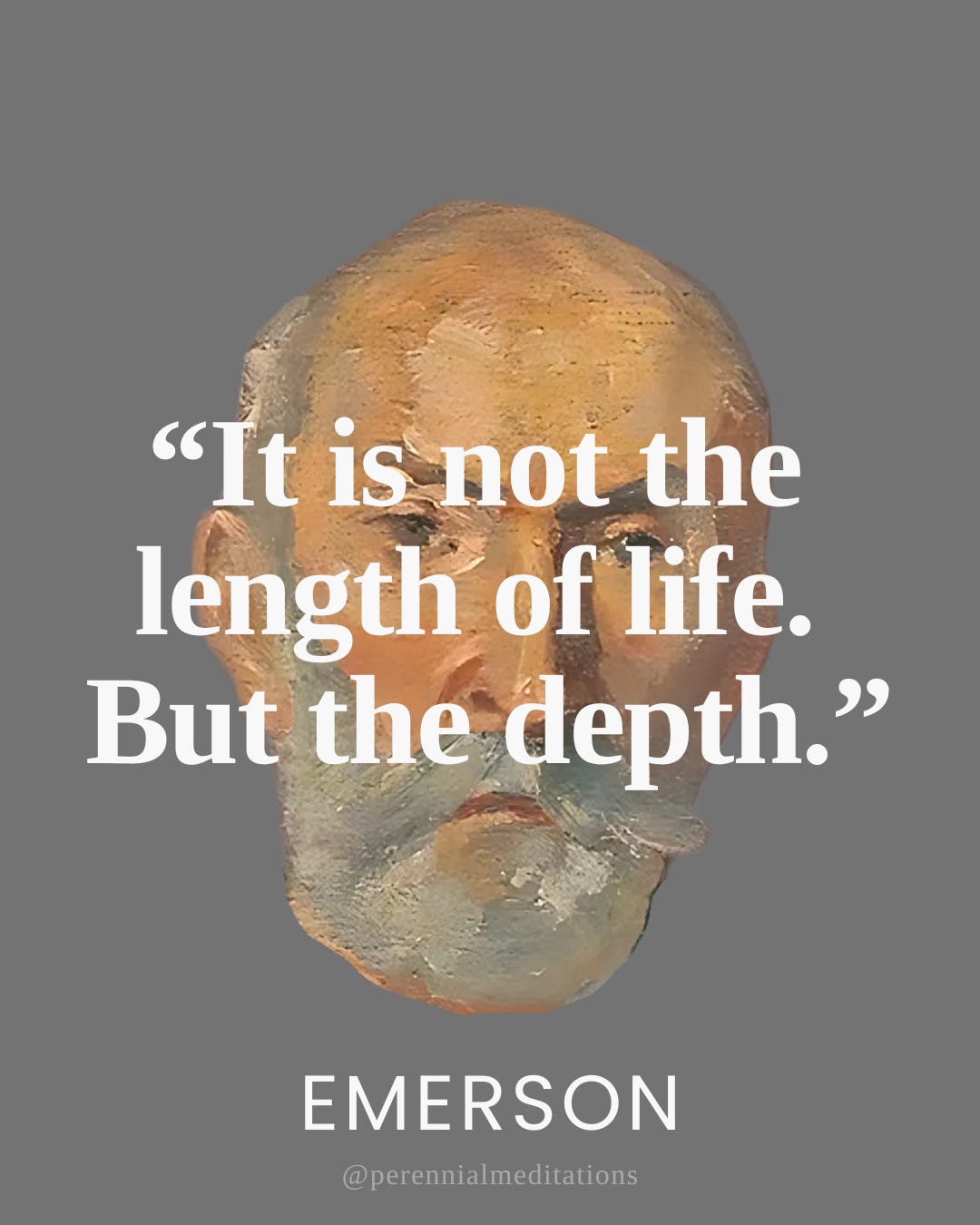
As the American philosopher Ralph Waldo Emerson once wrote:
It is not the length of life, but the depth.
If we keep that in mind—focusing on attention, virtue, and character—we can face the end peacefully rather than fearfully. We won't crash into the reef; instead, we will arrive gently at the harbor.
Reflection Prompt
Consider reflecting or journaling about your perspective on the end of life. You might ask yourself, “Am I more concerned with the length of my life or its depth?” and/or “Which parts of my life seem more about survival than living intentionally?”
Listen on Apple Podcasts, Spotify, or YouTube
—
Thank you for reading/listening; I hope you found something useful.
Until next time, be wise and be well.
J.W.
P.S. Feel free to catch up on the previous episodes of “Dying Every Day” below:
This is something that resonates with me daily and over the years I have oscillated between the two extremes.
As someone aged 5 I nearly died with polio (take note anti-vaxers) but survived with massive impairment- of course at that age you have no concept of death or the end you just grip onto life even if I later heard my mother had said - if he can’t walk I am not sure he if life would be worth living’
Of course that’s of it’s time in the early 1950s - much of my life has then been about fighting for ‘the best life’ and there is the rub, much of what I deal with physically day to day is something many would say ‘that’s too much’ and let go of the tiller and pull down the sails and let the harbour swallow them up !
But 70 years on I’ve lived my own life, with all the pain and joy and doubt and terror of death …. And as a psychologist of so many years now I see how death and fear of it haunts nearly all and probably lies behind many fears and decisions people make unconscious of the root deep maybe instinctual biological drive to survive at all cost and avoid that inevitable harbour.
Now I have prostate cancer and obviously that has been a challenge as I can now see the harbour entrance as clear as day (of course at 74 I should be seeing it anyway!) - so that struggle to accept the destination but navigate the path so that it is still the journey that counts and living well without just trying to live for its own sake.
I find it particularly reassuring to contemplate all those who have lived and ended up there ‘home’ in that harbour where all end up, whilst I will not BE - it’s a weird idea I think of it as not being alone - an illogical comfort maybe - but possibly that’s the human brain at work ?
(Excuse typos as always not ideal typing conditions these days)
Seneca--VERY relevant as we face our own Nero here in this time and place.