

Dying Every Day
Dying Every Day is a podcast for mortals and curious minds. Each episode explores what it means to think like a mortal: to act, choose, change our minds within the limits of a human life, and remember to live.
Listen on Apple Podcasts, Spotify, YouTube, or wherever you listen...
You Will Never Know Enough
Socrates and Epictetus on Acting Without Certainty
You’ve read the advice. You’ve asked the people you trust. And you’re still looking.
Somewhere along the way, the search for information became a search for assurance. One asks the world a question. The other asks the world for a promise.
So how much do you need to know before you act? You’ll never know enough to be certain. But you can know enough to act with care. An oracle once called Socrates the wisest man alive. He spent years trying to prove it wrong.
Welcome to Dying Every Day. This is Day 158.
Today we’re exploring the edge of what we can know. Our knowledge isn’t only incomplete. It’s incomplete inside a life that doesn’t last, and those two limits turn out to be one limit seen from two directions. Let’s start with Socrates.
Part One: What Do You Actually Know?
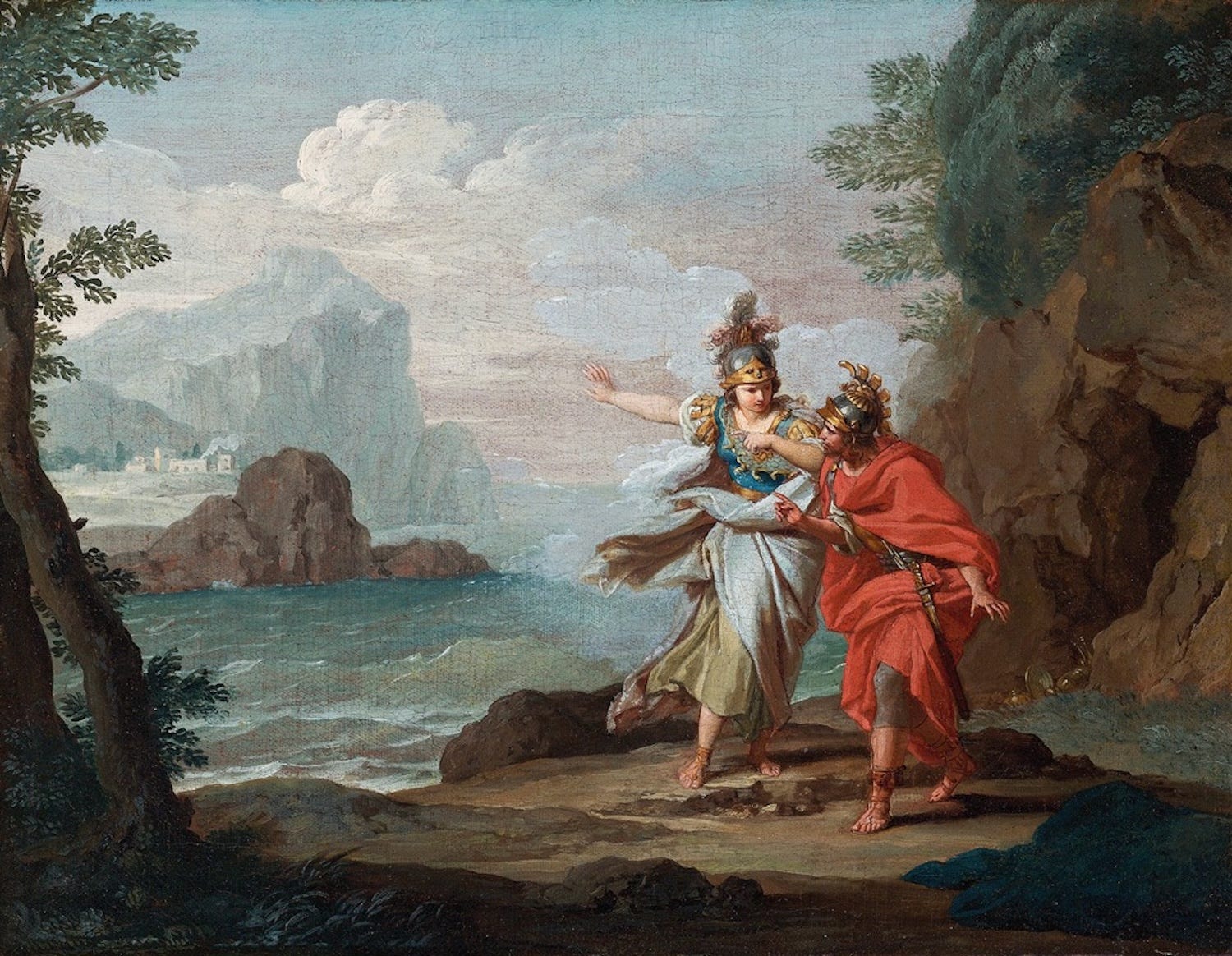
In Plato’s Apology, Socrates tells the jury about a trip his friend Chaerephon once made to Delphi. Chaerephon asked the oracle a bold question: Is anyone wiser than Socrates? And the answer came back: no one.
Socrates is baffled. He doesn’t think of himself as wise. But he also believes the god can’t lie. So he sets out to test the answer, to find someone wiser and resolve the contradiction.
He starts with a politician who has a reputation for wisdom. They talk, and Socrates comes away convinced the man’s confidence far outruns his understanding. Other people think he’s wise. He thinks he’s wiser still. When Socrates tries to point out the gap, the man turns hostile, and so do several people who overheard.
Socrates walks away with an uncomfortable advantage. Neither of them understood the things they’d discussed. But only one of them knew it. As he puts it, “I neither know nor think that I know.”
Now, it’s easy to hear that story and feel pleased with ourselves for distrusting confident, powerful people. So Socrates makes it harder. Eventually he goes to the craftsmen, and here he expects to learn something. He does. They have real knowledge he lacks, and he says so plainly: in their crafts, they’re wiser than he is.
But he notices something else, and it’s the more unsettling of the two. Their genuine skill has convinced them they understand other important matters too. Something they really do know has become the ground of their confidence about things they don’t know at all.
I think this is the trap that catches capable people. Which means it catches us where we’re strongest, not where we’re weakest. Think of someone who’s very good at fixing things. Engines, code, spreadsheets, whatever breaks. A friend calls, grieving, and before they’ve finished the first sentence, the fixer is already solving. The skill is real. The care is real. But grief isn’t a malfunction, and the confidence that serves so well at the workbench has walked, unnoticed, into a room where it was never qualified to speak.
This is part of what I mean by mortal wisdom: learning to reason from the actual conditions of a human life, including how little any one of us can know. We tend to file mortality under someday, the thing waiting at the end. But it’s already here, in the shape of every ordinary day. Our attention is limited. Our time is finite. We see from one particular place, with one particular history, and other people know things we never will. Some of what we don’t know can be found out, with study or a good conversation. Some of it will only become clear as events unfold. That kind can’t be hurried. It can only be waited for.
We admit all this in the abstract without much trouble. Then a real decision arrives, and we want an exception. We want to know the hard conversation will help. That the responsibility won’t overwhelm us. That the person we trust will stay trustworthy. We can investigate, prepare, weigh the evidence. And still, past a certain point, the answer depends on what people freely do next.
This is where the two limits meet. Our understanding is incomplete, and the time in which we might complete it is running out. The hours we’d spend gathering more certainty are the same hours in which the rest of life has to be lived. Inquiry isn’t free. It’s paid for in the only currency there is: a finite life.
That’s no argument for celebrating ignorance. Some uncertainties deserve long, serious investigation. And some limits people call inevitable are only inconvenient to change. Part of wisdom is learning which kind of limit you’re facing: the kind that gives way to effort, or the kind that belongs to the future and won’t give way to anything.

Part Two: How Do You Test What You Think?
Socrates shows us where knowledge ends. Epictetus takes up the harder question of what to do once you get there. And his answer is more useful than “be humble.”
In a discourse on the beginning of philosophy, he points out something odd. People readily admit they need instruction in geometry or music. But on questions of good and evil, of how to live, everyone pronounces judgment freely, and at once.
He walks through it like a conversation. Someone has an idea of the good. They apply it to a particular case, and assume the application is right. Epictetus stops them right there. That, he says, is the whole question. Why do you think it’s right? Because I think so. But someone else thinks the opposite, with exactly as much conviction. And now confidence has settled nothing, because both sides have plenty of it.
So Epictetus calls for a standard: a way of testing our impressions, the way we use a scale to test weight or a ruler to test straightness. For him, that’s the real beginning of philosophy. Not a vague sense that we might be wrong, but a search for something outside our own certainty that the certainty can be measured against. He isn’t saying every opinion is as good as every other. He’s saying the feeling of being right isn’t the test of being right.
That’s easy to say and very hard to live, because our attachment to a belief slowly comes loose from our reasons for it. We get so used to believing something that the sensation of certainty takes the place of the reasons that first earned it.
Here’s an ordinary case. A friend has grown distant. Replies come shorter. Invitations get declined. And almost without deciding to, you start assembling the pieces into a case. They’re angry. They’ve written the friendship off. Something you said changed everything.
Any of it might be true. But look how little you know: a slow reply, a missed evening. And look at how complete a story you’ve built on it. You can spend days answering your own account, getting defensive or pulling back in turn, conducting the entire argument alone before the other person has said a word.
So what would a standard look like here? For Epictetus, it was a philosophical rule, and we won’t settle what that rule should be today. But in everyday life, the first step toward it is humbler: finding something outside your own certainty to check your certainty against. Here, that means asking. And then the harder part, listening to an answer that may complicate the story you had ready.
The friendship may well be in trouble. But now you have a far better chance of learning what the trouble is. You’ve stopped treating your first impression as the final word, and started treating it as what it was: an impression, still waiting to be tested.
Part Three: What If You Still Can’t Be Sure?
So suppose you ask. Your friend tells you what happened, and you understand more than you did yesterday. Enough to see that you owe an apology.
You still can’t know whether it’ll be accepted.
The problem has changed shape. One gap, your ignorance of the facts, has closed. Another is wide open: the outcome, which now rests with another person who’ll bring their own hurt, history, and judgment to the moment. You can prepare your part completely and still not know how the whole thing will go.
There are two familiar ways to flinch from this. They look like opposites, but they do the same work. One is to harden a plausible story into a certainty, so you can stop feeling the doubt. The other is to put off acting until certainty arrives. Which it won’t. Both are ways of closing a question that life asks us to hold open while we keep moving.
And this is where the endless searching we started with comes from. Another article, another opinion, one more evening turning it over. Each one might add something real. But if the only thing that would satisfy you is a guarantee, you’ve handed inquiry a job it can never finish. And you’ll search forever.
It helps to ask, plainly: what am I still trying to find out?
Sometimes there’s a genuine answer. A fact that would change the decision. Someone with experience who might see a danger you’ve missed. Something you owe it to other people to understand before you act. Finding that out isn’t avoidance. It’s taking the situation seriously.
But sometimes the honest answer is that you’re trying to know the life that will follow the decision before you’re willing to make it. To have the experience without entering it. And no preparation can close that distance, because it isn’t a gap in your information. It’s the basic condition of a creature who lives forward in time.
None of this means acting immediately is always wise. Some decisions should wait. Some affect other people and need their voices. Some risks outrun the evidence. Part of wisdom is knowing when to wait, and making the waiting purposeful rather than a hiding place. But time keeps moving through our deliberation. Other people are waiting too. The conversation we keep postponing gets heavier. The responsibility sits unmet while we hunt for reassurance that accepting it will be easy.
Mortality doesn’t tell us whether to act or to wait. What it does is put the cost of delay on the scale. It makes the passing of time part of the decision. And once you see that, endless caution stops looking like the safe option. It has a price too, and you’re already paying it.
To think like a mortal is to let these conditions into your reasoning instead of pretending them away. You can learn, ask for counsel, correct an assumption, and then take a step whose consequences you can’t fully see. A finite life doesn’t give you command over everything that follows from your choices. It gives you something smaller and more usable: room to act with meaning before you’re ready. Because ready isn’t a state that reliably arrives.
And acting doesn’t mean you stop learning. A careful decision may still need revising once you see what it sets in motion. The courage to act without certainty works best alongside the humility to learn from what the action teaches.
Part Four: The Practice
Bring to mind one question that’s been on your mind. Now separate three things you’ve been holding as one. What do you actually know? What are you only assuming? And what could you still reasonably find out?
Then look for a fourth thing, the one that hides among the others: the promise you’ve been quietly asking the future to make before you’ll agree to take part in it.
That’s the thing to set down. Not the uncertainty. That’s honest, and it can stay. Just the demand for a guarantee the future was never going to sign.
You’ll never know enough to be certain. But you can almost always know enough to act with care. To ask for help, make the call, begin the work. Or to wait, this time, knowing exactly what you’re waiting for. That’s how nearly all of a human life goes: with knowledge worth having, questions still open, and responsibilities that arrive before we feel ready for them.
There’s still more to learn. There’s also a life to take part in.
Listen on Apple Podcasts, Spotify, YouTube, or wherever you listen...
—
Thank you for reading/listening; I hope you found something useful.
Until next time, remember to live.
J.W.
P.S. Catch up on recent (and past) meditations in the archive!