


📮 Letters from a Mortal
Letters from a Mortal is a series of personal reflections on time, attention, virtue, and the art of living (and dying) well. The word “Mortal” in the title comes from the Delphic maxim, “Think as a mortal.”
Listen on Apple Podcasts, Spotify, YouTube, ...
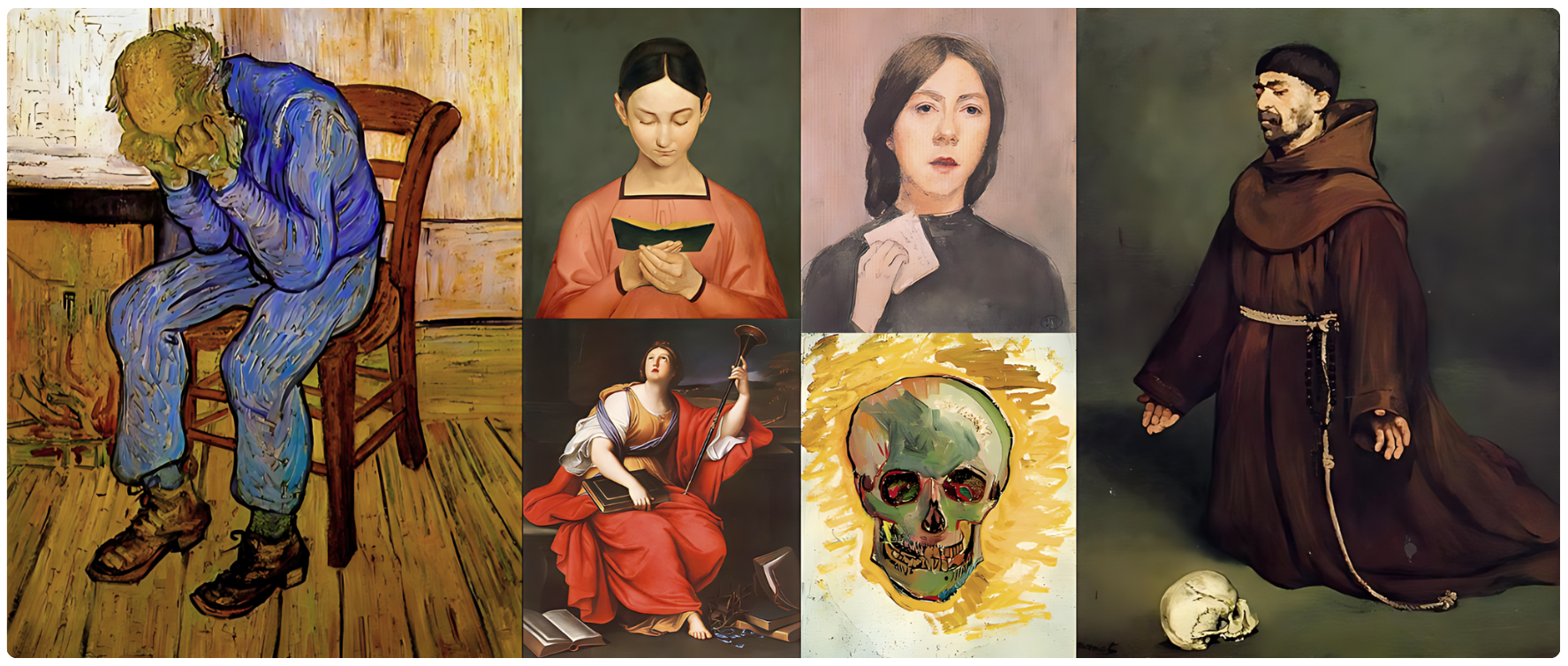
Why More Never Feels Like Enough
Letters from a Mortal
Dear Fellow Mortal,
Think for a moment about something you want. Not something you need. Something you want.
Perhaps more money. More recognition. A little more comfort.
Now imagine getting it.
How long before it simply becomes normal?
The Greek philosopher Epicurus built his philosophy around a deceptively simple question:
What do we actually need in order to live well?
He taught in ancient Athens, in a community known as the Garden, where friends lived and studied together.
Despite how people use his name today, Epicurus was no philosopher of indulgence. He valued friendship, simplicity, and contentment with little. He said plain bread and water can give the highest pleasure to someone who is truly hungry.
In his Letter to Menoeceus, he wrote that the aim is not always to live on little but to learn:
“to be contented with little if we have not much.”
That can sound like settling.
Epicurus thought it was freedom.
The more things we require in order to feel satisfied, the more conditions we place on our happiness.
He sorted our desires into kinds. Some answer genuine needs. Some simply make life more pleasant. And some seem to grow for no reason except that we keep feeding them.
The trouble with that last kind is that it never tells us when it has had enough.
It whispers:
“Just a little more. Then I’ll be satisfied. Then I can relax.”
And sometimes we get what we wanted.
The promotion. The purchase. The recognition.
For a little while, everything feels different. Then the extraordinary becomes ordinary. And enough moves a little farther away.
Epicurus was not against pleasure. He was against being ruled by it.
The person who can enjoy much without requiring much is very hard to deprive.
Think again about the thing you wanted at the beginning.
Would it genuinely improve your life? Or has wanting it simply become a habit? There is nothing wrong with improving your circumstances.
The question is whether you have ever decided where enough is.
Because if you never decide, desire will keep deciding for you.
Enough may not be a number at all. It may be the moment we stop measuring our lives only by what is missing.
Before you return to your day, carry one question:
What might I stop chasing if I believed I already had enough?
Listen on Apple Podcasts, Spotify, YouTube, ...
—
Until next time, remember to live.
J.W.
P.S. Feel free to let me know what you think!
One of the habits that I'm trying to break (more successfully now that I'm learning about stoicism) is the constant chasing of something that is unattainable for a while, and then when it is obtained, it is enjoyed for a few minutes and then something else is desired. As a child, it was a new toy; when I got older, it was a desire for a new video game. After months (and in some cases, years) of waiting for a game (or movie) to come out, it is released, we enjoy it for a few months if we're lucky, and then our mind focuses on "the next thing." This month, it's Grand Theft Auto VI and next month will be the Avengers: Doomsday movie.
I try less and less to focus on this desire, and to review on a regular basis about what I already have, to try and enjoy the things I already have (and whether I truly need them anyway). I do believe this puts me in a better frame of mind than the constant chase that I was involved in. I hope that younger people get this realization a lot sooner than I did.
Thank you for your continued work in this space, J.W. - I enjoy the podcast immensely.