


Dear Readers,
I hope this finds everyone wise and well! Thank you to everyone who has followed along with our Perennial Habits course. Over the past few months, we’ve explored the art and science of change (How to Change When Change is Hard, How to “Think” About Change, The Paradox of Small Changes, and Becoming Every Day). Along with a handful of lifelong practices (Discerning the Way, A Simple But Not Easy Stoic Exercise, How to See the World Like a Sage, How to Take Nothing for Granted, The Middle Way, The Art of Stillness, and Thinking About Life and Death) and from philosophical and spiritual traditions.
Today, we’re discussing a practice often called negative visualization (or Premeditatio Malorum in Latin).
—
J.W. Bertolotti
P.S. You’ll find links to related meditations and podcasts at the end.
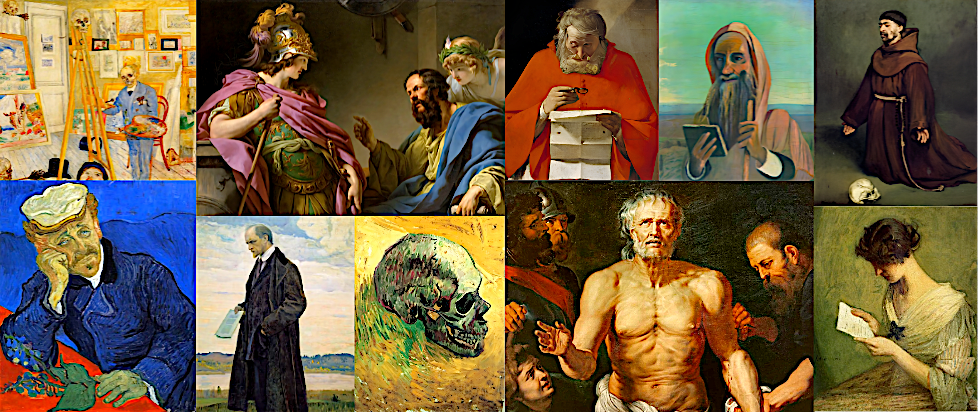
What Could Go Wrong?
The ancient practice of Premeditatio Malorum involves visualizing negative outcomes. It is an exercise of mental preparation and a way to build fortitude in an uncertain world.
It’s important to point out that our minds tend to do the negative part automatically (typically called the negativity bias). Imagine that you are tasked with giving an impromptu talk to your colleagues. Your mind might naturally think about worst-case scenarios: “What if I blow it?”; “What will my colleagues think of me?”; and so on.
The practice of negative visualization is not simply ruminating on all the ways a particular event could go sideways. Premeditatio Malorum is an intentional rehearsal of what could go wrong in an attempt to prepare ourselves accordingly.
Here’s how Seneca put it in a letter,
If an evil has been pondered beforehand, the blow is gentle when it comes. To the fool, however, and to him who trusts in fortune, each event as it arrives ‘comes in a new and sudden form,’ and a large part of evil, to the inexperienced, consists in its novelty. This is proved by the fact that men endure with greater courage when they have once become accustomed to what they initially regarded as hardships.
Seneca believed that the wise approach is to accustom ourselves to trouble by reflecting on the potential evils that might arise.
