

🖼️ Monday Muse
The “Monday Muse” is a weekly collection of reminders, insights, and maxims on the art of living. The term “muse” has two meanings: (1) a state of deep thought; and (2) a source of inspiration. May the following (in a small way) be a source of contemplation and wisdom to live your highest good.
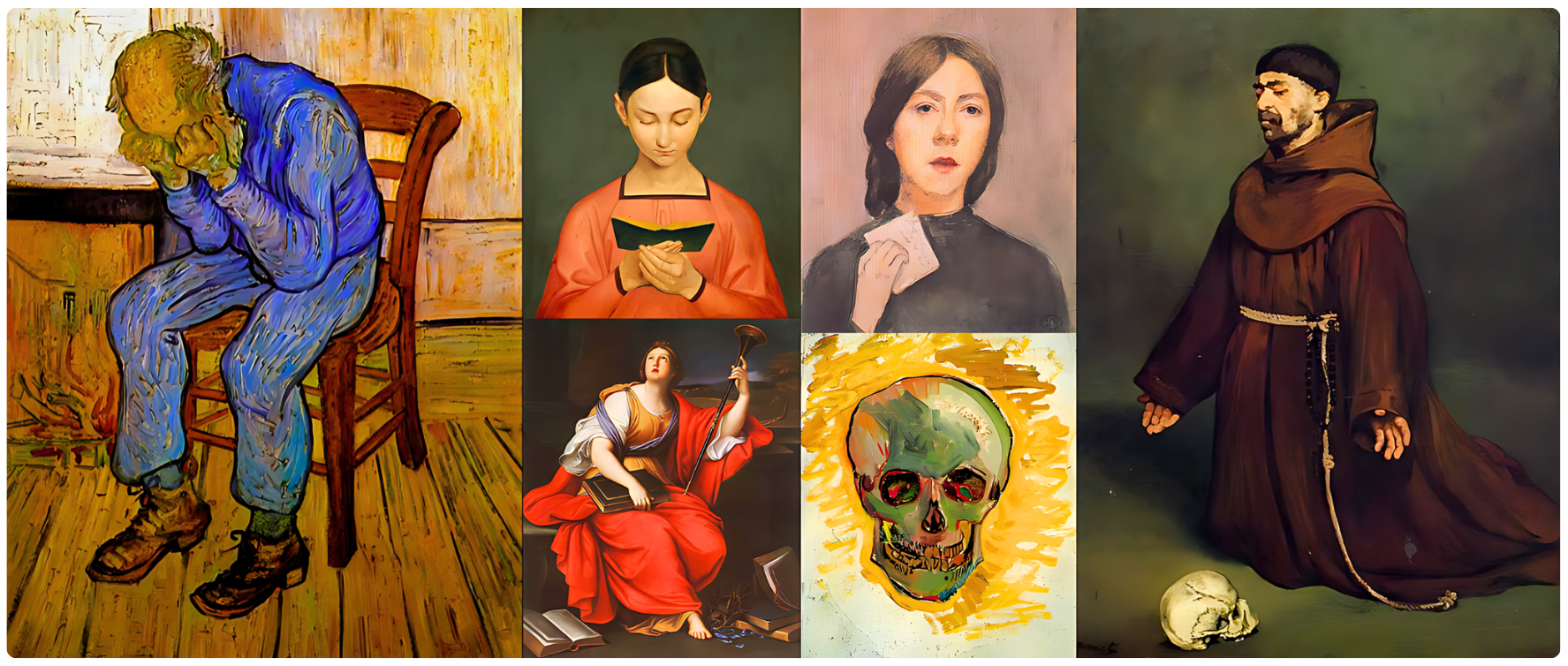
📌 Perennial Reminder(s)
The teacher and author Jennifer Michael Hecht on the wisdom of art:
Poetry takes in our whole outrageous situation as ambitious mortals…
Art pushes us away from the everyday, the worldly, and toward transcendence. By ‘transcendence’ I mean the feeling of being at one with the universe in vivid bliss that is, by wide report, available to humans—though hard to find, keep, or handle. Art welcomes contradictory truths and invites input from feeling and imagination. A poem can do this by juxtaposing evocative words and ideas to create a field of thinking; or, say, by describing an ongoing inner argument. Poetry can offer cosmic perspective, or specific advice.
Poems remind us of the inner lives of others, and thereby stoke empathy—much needed in times of strife. They can reach into our deepest solitude and greet us. […]
Source: The Wonder Paradox
📜 Perennial Maxim(s)
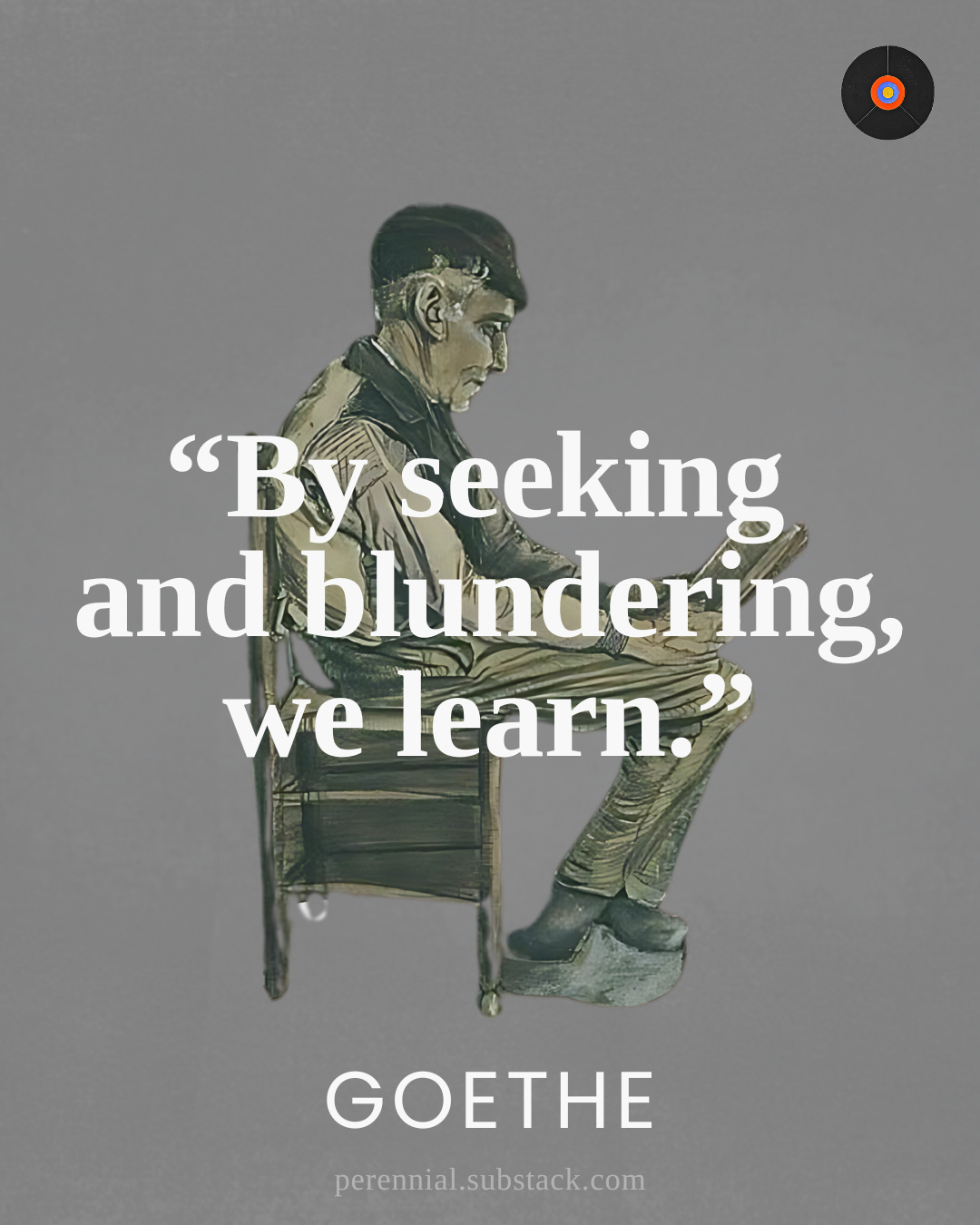
The German poet and writer Johann Wolfgang von Goethe (1749—1832) on the art of learning:
Follow: Instagram | Youtube | Notes
💡 Perennial Insight(s)
The French philosopher and historian Pierre Hadot (1922—2010) on the perennial search for wisdom:
The goal is to reactualize, rekindle, and ceaselessly reawaken an inner state which is in constant danger of being numbed or extinguished. The task—ever-renewed—is to bring back to order an inner discourse which becomes dispersed and diluted in the futility of routine.
As he wrote the Meditations, Marcus was thus practicing Stoic spiritual exercises. He was using writing as a technique or procedure in order to influence himself, and to transform his inner discourse by meditating on the Stoic dogmas and rules of life. This was an exercise of writing day by day, ever-renewed, always taken up again, and always needing to be taken up again, since the true philosopher is he who is conscious of not yet having attained wisdom. […]
Source: The Inner Citadel
—
Thank you for reading; I hope you found something useful.
Until next time, be wise and be well,
J.W. Bertolotti
P.S. If you’re interested in becoming a member but cannot afford it, feel free to request a complimentary membership or use this discount link.
Great perspective on the role of poetry.
It is very reassuring how timeless Stoic philosophy is. It was born in difficult times and as such helps us to not just survive but a road map to thrive. History has shown that Stoicism can be suppressed, but since it is a natural or a very human energy it will be with us as long as we are around.