


Perennial Wisdom
Perennial Wisdom is a podcast for seekers and curious minds. Each episode explores philosophical and spiritual traditions for universal truths and enduring ideas to help you (and me) never stop learning how to live.
Listen on Apple Podcasts, Spotify, or YouTube
The Timeless Art of Leading a Life
In this episode of Perennial Wisdom, we discuss the timeless truths shared across cultures and traditions that guide us in cultivating a life well-lived. Rather than chasing life hacks, quick fixes, or fleeting trends, expect to learn why perennial wisdom invites us to slow down and return to what truly matters: cultivating character and finding meaning beyond ourselves.
Key Takeaways
Timeless truths about human nature and the good life
The importance of cultivating inner clarity and character
Why these enduring insights still matter today
Listen on Apple Podcasts, Spotify, or YouTube
Episode Transcript
The following is a transcript from “The Timeless Art of Leading a Life” from the Perennial Wisdom podcast (Ep. 241).
—
The Timeless Art of Leading a Life
“There is nothing new under the sun,” wrote the author of Ecclesiastes, and in many ways, that’s what perennial wisdom is all about. It points us to the enduring insights that human beings have revisited for centuries—truths about love, character, and the search for meaning.
Perennial wisdom is the shared insight found across the world’s spiritual and philosophical traditions. It teaches that universal truths and enduring ideas about the good life exist. It doesn't belong to any specific tradition or time period.
This essay examines the concept of perennial wisdom through three key ideas: (1) timeless truths regarding human nature and the good life, (2) the importance of developing inner clarity and character, and (3) the relevance of these lasting insights in today’s world. Throughout, we’ll hear from philosophers, poets, saints, and psychologists, all emphasizing the importance of looking back, or to what’s enduring, to find our way.

1. Timeless truths and the good life
Some truths don’t age. They were true long before us, and they’ll still be true long after we’re gone. Perennial wisdom begins with the idea that human beings, across cultures and centuries, have wrestled with the same core questions:
What makes life meaningful?
How do we handle suffering?
What does it mean to live a good life?
These questions echo through the sayings of the Buddha, the dialogues of Plato, the parables of Jesus, and the reflections of Marcus Aurelius. And while their answers take different forms, they share a pattern. They point us inward. They ask us to examine ourselves.
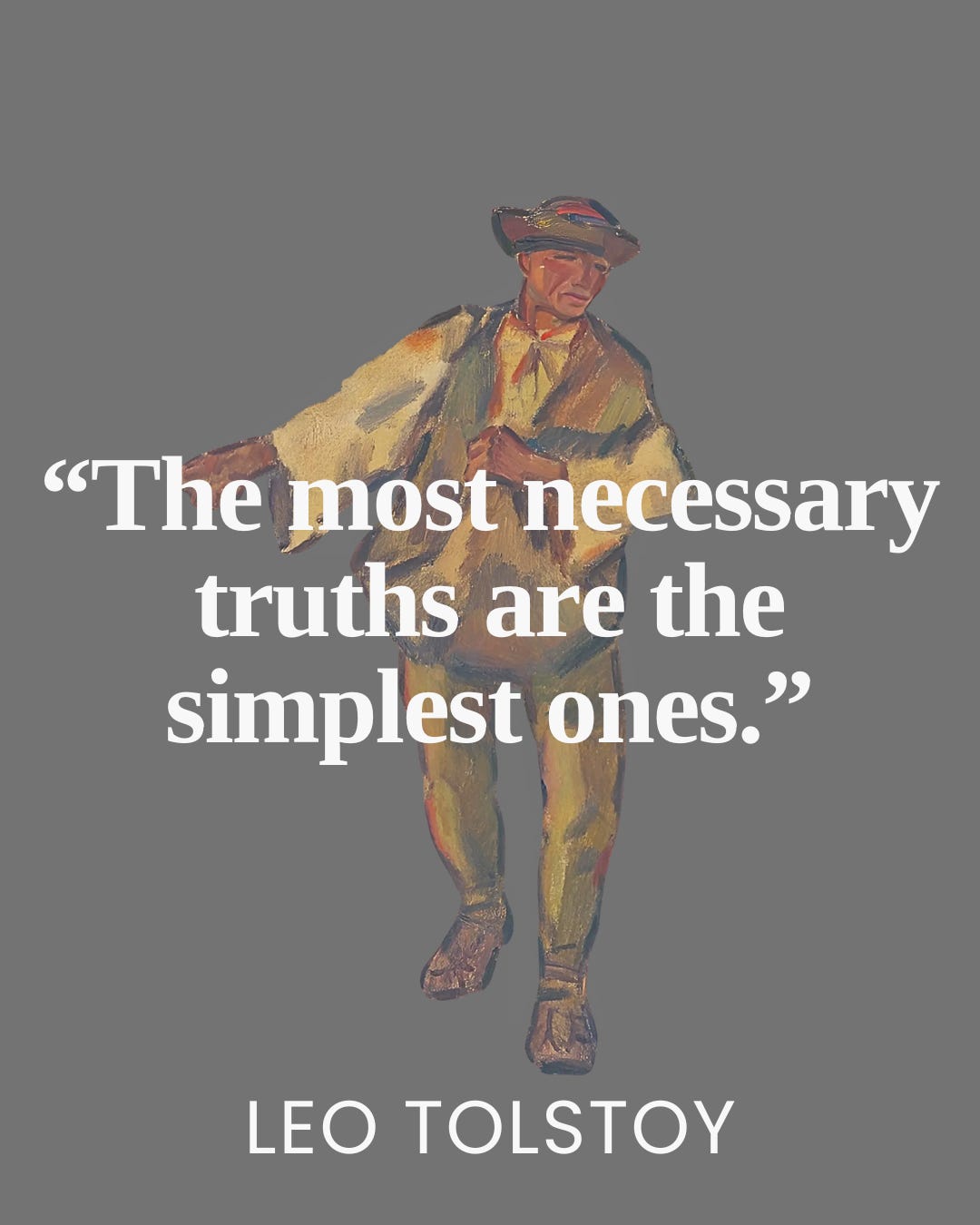
The Russian writer Leo Tolstoy once said, “The most necessary truths are the simplest ones.” For Tolstoy, perennial wisdom wasn’t found in theories, but in honest living—telling the truth, doing what is right, helping where we can, and restraining ourselves when needed.
These aren’t flashy ideas, but they hold up. They always have.
When Marcus Aurelius sat by lamplight in a Roman tent, writing to himself about kindness and death, he wasn’t inventing something new—he was returning to something ancient and enduring.
C.S. Lewis, in The Abolition of Man, warned about what happens when we forget these basics. “We laugh at honor and are shocked to find traitors in our midst,” he wrote. Lewis believed that without shared moral truths, we lose our sense of direction. We drift. And soon, we don’t just forget how to live—we forget that it even matters.
The late philosopher Alasdair MacIntyre made a similar point when he wrote, “At the foundation of moral thinking lie beliefs in statements, the truth of which no further reason can be given.” These aren’t empty slogans. They’re the roots of character. They remind us that long before we had answers, we had instincts, and many of them pointed in the right direction.
What’s a simple truth you’ve known for years but haven’t embodied lately?
2. Building a Life from the Inside Out
Knowing what matters is only the beginning. Living it—that’s where the real work begins. If the first gift of perennial wisdom is pointing us back to enduring truths, the second is showing us how to live them. Not by memorizing rules, but by forming habits. Not by trying to be perfect, but by shaping the kind of person we’re becoming.
As Aristotle wisely put it, “We are what we repeatedly do. Excellence, then, is not an act, but a habit.” The same goes for courage, temperance, wisdom, and justice. These virtues (or character traits) don’t come from nowhere. They’re built—often slowly, often quietly—through daily effort and reflection.
Education in the deepest sense isn’t about getting smarter. It’s about growing wiser. That means paying attention to what shapes our thoughts, our choices, and our character. It means noticing when we’re pulled by pride, fear, or envy—and learning how to return to stillness.
C.S. Lewis emphasized the importance of proper moral formation. In The Abolition of Man, he warned about the risks of developing individuals without a foundation in objective values: “We make men without chests,” he stressed, “and expect of them virtue and enterprise.” Such a life, although seemingly effective externally, is fragile and prone to collapse under pressure.
Perennial wisdom teaches us to build from the inside out. It doesn’t provide shortcuts. It encourages us to become better by understanding our limitations, staying open to life, and remaining faithful to what we know is right.
3. Why Enduring Ideas Matter
Our world is filled with constant updates and relentless noise. We're encouraged to pursue progress, productivity, and success—yet often feel more overwhelmed than before. During such moments, wisdom provides reassurance, urging us to slow down, listen, and reconnect with what truly matters.
In The Happiness Hypothesis, Jonathan Haidt observes that "the most useful truths are not always new; they are often ancient insights rediscovered." His psychological studies reinforce the enduring wisdom that lasting happiness comes not from control or material possessions but from living intentionally, fostering meaningful relationships, and staying true to our core values.
Perennial wisdom is essential because it provides a solid foundation. It reminds us that, although we cannot control everything, we can choose how we lead our lives. We can choose to let universal truths and enduring ideas guide us.

Final Thoughts
Life hacks and quick fixes are everywhere—promising to make us faster, richer, and more productive. But in the long run, they rarely make us wiser or improve our lives in a meaningful way. Wisdom encourages us to take a different approach. Instead of asking, “What’s the fastest or most productive?” it asks, “What is the highest good?” or, “What does it mean to learn how to live?”
Remember that wisdom doesn’t oppose change or progress; it simply warns us not to lose ourselves in the chaos. When we are pulled in many directions, wisdom guides us back to our core. It emphasizes the importance of focusing on what truly matters and leading an intentional life.
The world will keep changing. There will always be something new to chase. But wisdom—the kind that helps us live well—consists of universal truths and enduring ideas.
Reflection Exercise
Consider finding a quiet space to reflect or journal. Attempt to let your mind settle.
(1) Write down whatever comes to mind when you hear this question: What truly matters to me, beyond the noise and busyness of life? Don’t overthink it—simply list the words, values, or phrases that feel true to you.
(2) Reflect on a moment in your life when you felt most in harmony with yourself: What were you doing? Who were you becoming? What qualities were you practicing?
(3) Finally, ask yourself: What am I chasing today that doesn’t actually lead me closer to what matters? Consider writing down at least one habit, goal, or distraction that feels out of step with your deeper values.
—
Thank you for reading/listening; I hope you found something useful.
Until next time, be wise and be well.
J.W.
P.S. If you enjoyed it, consider leaving a rating on Apple Podcasts or Spotify.
J.W.,
These are core reflections that you’ve beautifully captured and that I’m so fortunate to have read.
Thank you.
Jeffrey