

🖌️ Monday Muse
The Monday Muse is a weekly collection of reminders, insights, and maxims on the art of living. The term “muse” has two meanings: (1) a state of deep thought; and (2) a source of inspiration. May the following (in a small way) be a source of contemplation, insight, and wisdom to live your highest good.
📌 Perennial Reminder(s)
The Greek philosopher Epicurus (341—270 BCE) on the pleasant life:
Becoming accustomed to simple, not extravagant, ways of life makes one completely healthy, makes man unhesitant in the face of life’s necessary duties, puts us in a better condition for the times of extravagance that occasionally come along, and makes us fearless in the face of chance. So when we say that pleasure is the goal, we do not mean the pleasures of the profligate or the pleasures of consumption, … but rather the lack of pain in the body and disturbance in the soul.
It is not drinking bouts and continuous partying, … that produce the pleasant life, but sober calculation, which searches out the reasons for every choice and avoidance and drives out the opinions that are the source of the greatest turmoil for men’s souls.
Prudence is the principle of all these things and is the greatest good. That is why prudence is more valuable than philosophy. Prudence is the source of all the other virtues, teaching that it is impossible to live pleasantly without living prudently, honorably, and justly, and impossible to live prudently, honorably, and justly without living pleasantly. […]
Source: Letter to Meneceus
📜 Perennial Maxim(s)
The Roman statesman Cicero (106—43 BCE) on the value of friendship:
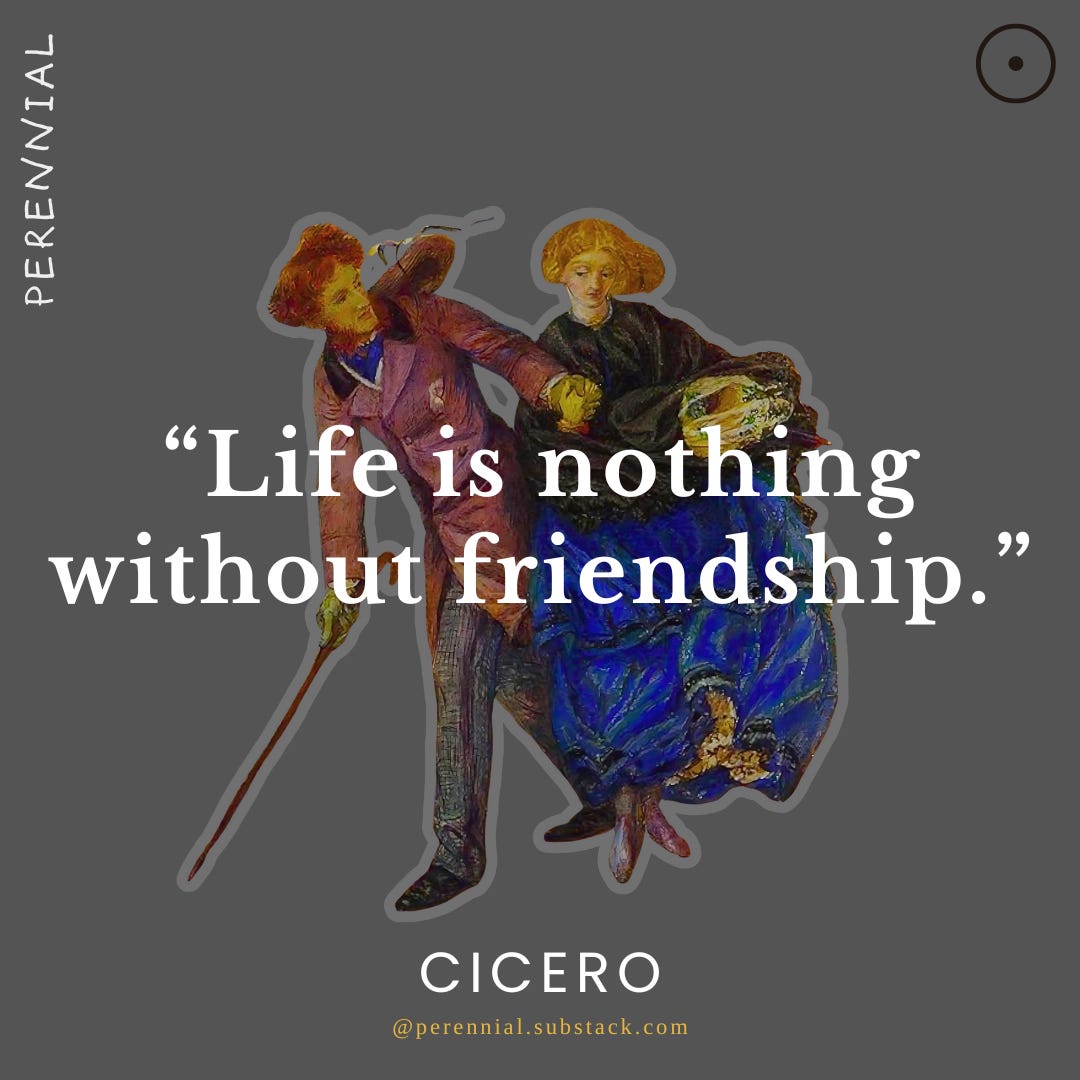
In Why Cicero Matters, Vittorio Bufacchi (our book this month for Reading & the Good Life) explores Cicero’s interest in the nature of friendship. Bufacchi writes, “Cicero approaches the question ‘What is friendship?’ by way of another question: ‘What is the value of friendship?’”
Consider reflecting (or journaling) on the value of friendship: How do you remember to cultivate and invest in your relationships? What does it mean to be a ‘good’ friend?
💡 Perennial Insight(s)
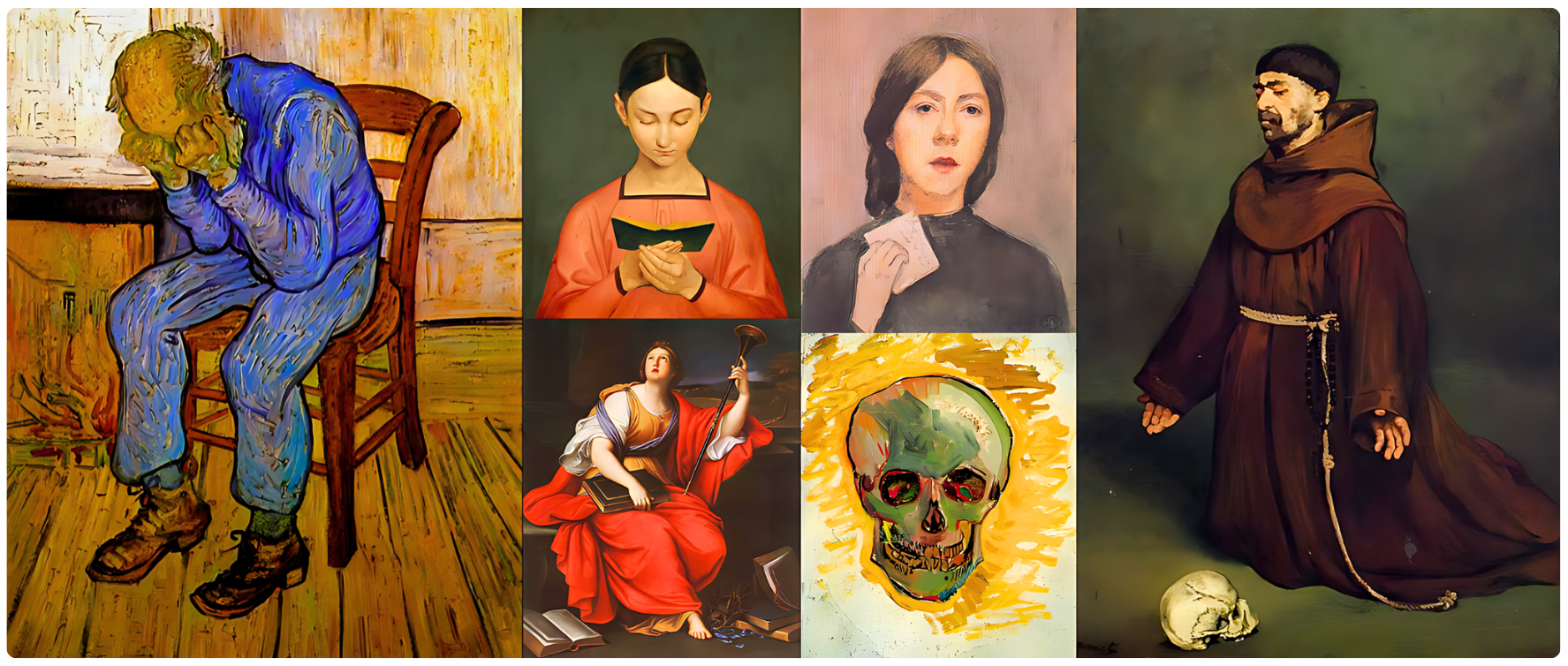
The philosopher and author Daniel McInerny (an upcoming podcast guest) on the art of imitation:
That is the idea at the center of the Aristotelian-Thomistic approach to art: that art is a picturing or mimēsis of reality. The Greek term mimēsis is typically translated as ‘imitation’ or ‘representation’ or simply left untranslated in the English word mimesis. …
In his treatise on the art of poetry, the Poetics, a slim, fragmented, massively influential treatise composed sometime in the middle of the fourth century BC, Aristotle speaks of mimesis as natural to human beings. We learn our first lessons, and no doubt many subsequent ones, through imitation of various models. Mimesis is thus linked to understanding. … Mimesis is one of the ways in which we human beings naturally try to make sense of our world, …
Aristotle says that the object of mimetic art is “human beings in action,” and we know that according to Aristotelian ethics, action is always undertaken for the sake of eudaimonia, or ultimate fulfillment. Mimetic art, therefore, depicts the human agent as a wayfarer, as someone in quest of that ultimate fulfillment we commonly call happiness. […]
Source: Beauty and Imitation
—
Thank you for reading; I hope you found something useful.
Until next time, be wise and be well,
J.W. Bertolotti
P.S. If you’re interested in becoming a member but cannot afford it, feel free to request a complimentary membership or use this discount link.