

Greetings Readers!
Here is the next volume of our series — The Wisdom of Art. This series invites us to pause from our busy lives to explore the wisdom of art and poetry.
Here is a painting, a poem, and a bit of prose…
Consider becoming a paid member for full access to this series, Sundays with Seneca, The Wisdom of Art, and other benefits. If you cannot afford it, feel free to request a complimentary membership or use this discount link.
1. The Kiss (Painting)
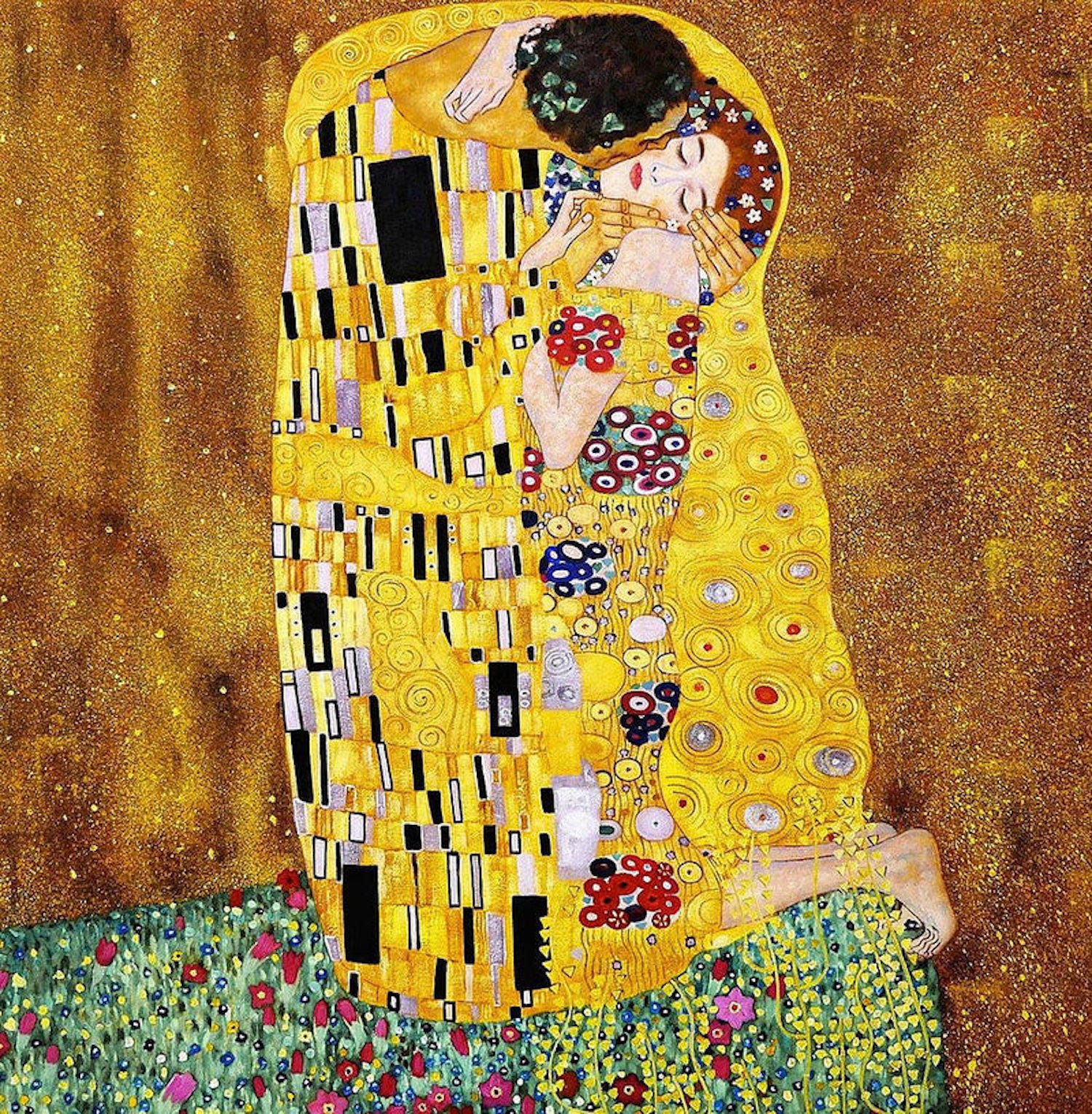
The Kiss is probably Gustav Klimt’s most famous work. It is one of the first paintings that truly captured my attention. I’m still somewhat amazed by it today. It is the high point of the artist’s Gold Period, characterized by his use of gold leaf. This painting is one in which Klimt deviated from his portrayal of dominant women in the form of a femme fatale. Instead, it is the portrayal of love and art, a couple locked in a golden-flecked, flower-filled embrace.
“Art is a line around your thoughts.”
— Gustav Klimt

Contemplation Exercise:
Consider taking some uninterrupted time to observe the painting.
Simply notice what arises…
What makes this painting a timeless piece…
2. Death Poems by Zen Monks (Poem)
This week’s poems come from a little book on Japanese Death Poems, compiled by Yoel Hoffman. Japan has a centuries-old tradition of writing a “death poem.” Hoffman explains that in Japan and elsewhere, it has become customary, in addition to leaving a will, to write a “farewell poem to life.”
A poem by the Zen Monk Koho Kennichi (Died on the twentieth day of the tenth month, 1316, at the age of seventy-six).
To depart while seated or standing is all one.
All I shall leave behind me.
Is a heap of bones.
In empty space I twist and soar
And come down with the roar of thunder
To the sea.
Hoffman comments, “Death in a Zen sitting position or death standing up was considered worthy of an enlightened person.”
