

🖌️ Monday Muse
The Monday Muse is a weekly collection of reminders, insights, and maxims on the art of living. The term “muse” has two meanings: (1) a state of deep thought; and (2) a source of inspiration. May the following (in a small way) be a source of contemplation, insight, and wisdom to live your highest good.
📌 Perennial Reminder(s)
The American essayist Henry David Thoreau (1817—1862) on intentional living:
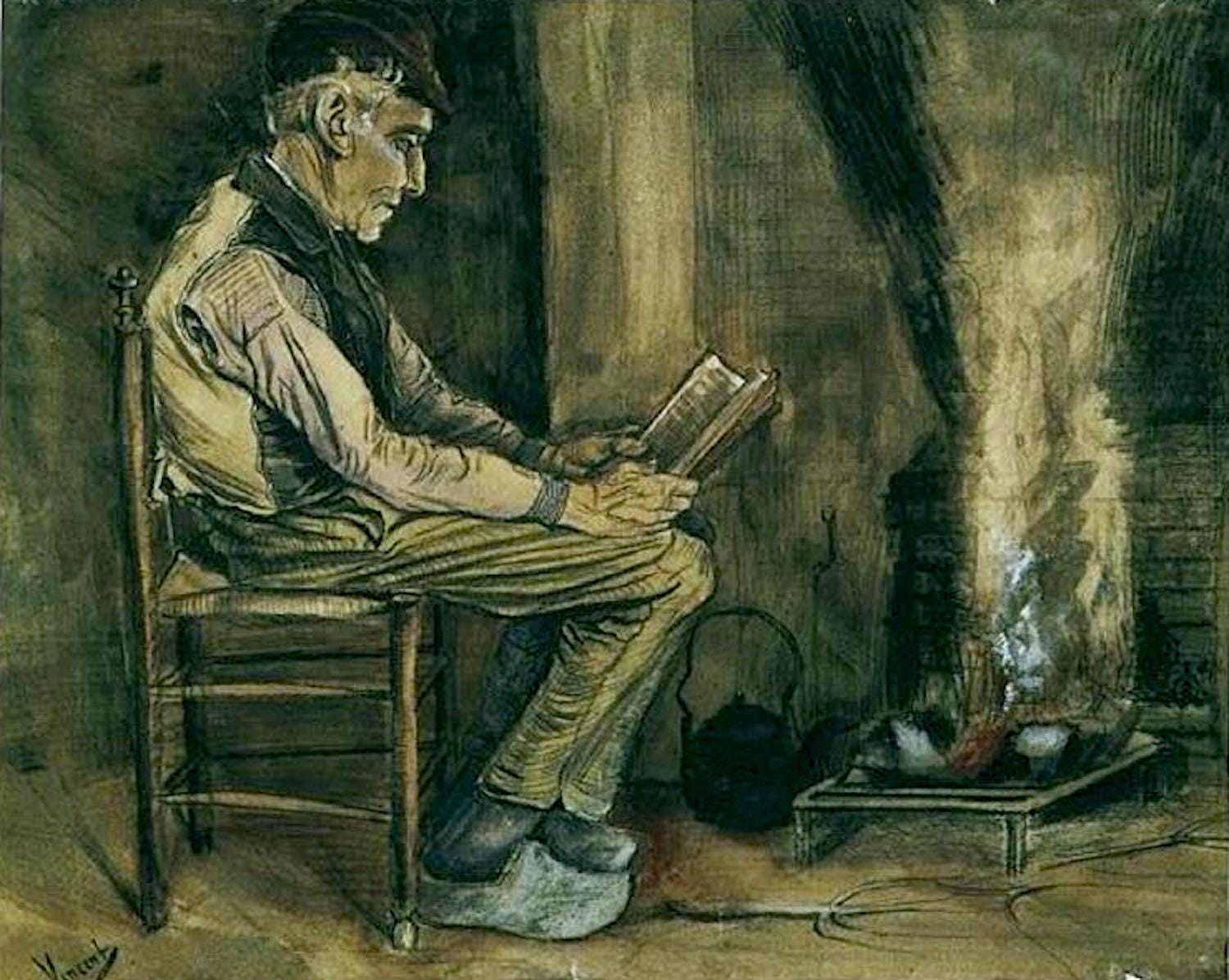
The mass of men lead lives of quiet desperation. What is called resignation is confirmed desperation. …
I went to the woods because I wished to live deliberately, to front only the essential facts of life, and see if I could not learn what it had to teach, and not, when I came to die, discover that I had not lived. I did not wish to live what was not life; living is so dear, nor did I wish to practice resignation unless it was quite necessary. I wanted to live deep and suck out all the marrow of life, to live so sturdily and Spartan-like as to put to rout all that was not life. …
Our life is frittered away by detail. … Simplicity, simplicity, simplicity! … Why should we live with such hurry and waste of life? […]
Source: Best of Thoreau
📜 Perennial Maxim(s)
The Greek playwright Sophocles (c. 497—406 B.C.E.) on kindness:
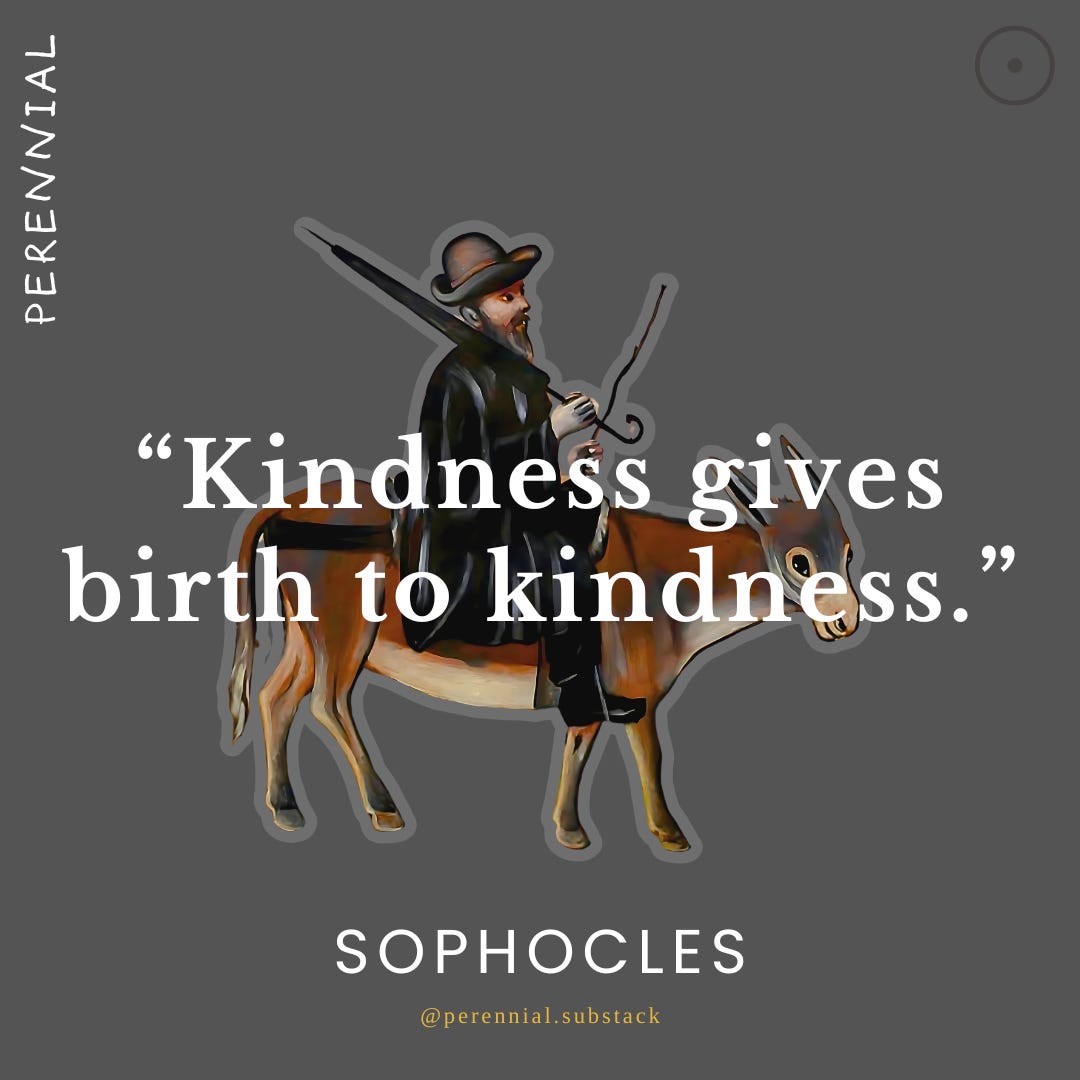
This short saying from the Greek playwright Sophocles is one of my favorites. In just a few words, it highlights an essential aspect of human nature. Our actions lead to more of that action. Replace the word ‘kindness’ with anger, for example, “Anger gives birth to anger,” and it still holds true.
Zeno, the founder of Stoicism, famously said, “Well-being is attained little by little, and nevertheless is no little thing itself.” It’s important to remember that everything is ‘attained little by little,’ and therefore, every action matters. Virtuous acts build (or give birth to) virtuous habits.
As you navigate your week, consider observing whether your actions lead to more of that action (in yourself and those around you).
💡 Perennial Insight(s)
The American Trappist monk Thomas Merton (1915—1968) on being yourself:
Many poets are not poets for the same reason that many religious men are not saints: they never succeed in being themselves. … They waste their years in vain efforts to be some other poet, some other saint. For many absurd reasons, they are convinced that they are obliged to become somebody else who died two hundred years ago and who lived in circumstances utterly alien to their own. …
There can be an intense egoism in following everybody else. People are in a hurry to magnify themselves by imitating what is popular—and too lazy to think of anything better. … In great saints, perfect humility and integrity coincide. The two turn out to be practically the same thing. The saint is unlike everybody else precisely because he is humble. […]
Source: New Seeds of Contemplation
—
Thank you for reading; I hope you found something useful.
Until next time, be wise and be well,
J.W. Bertolotti
P.S. If you’re interested in becoming a member but cannot afford it, feel free to request a complimentary membership or use this discount link.