

🖼️ Monday Muse
The Monday Muse is a weekly collection of reminders, insights, and maxims on the art of living. The term “muse” has two meanings: (1) a state of deep thought; and (2) a source of inspiration. May the following (in a small way) be a source of contemplation, insight, and wisdom to live your highest good.
📌 Perennial Reminder(s)
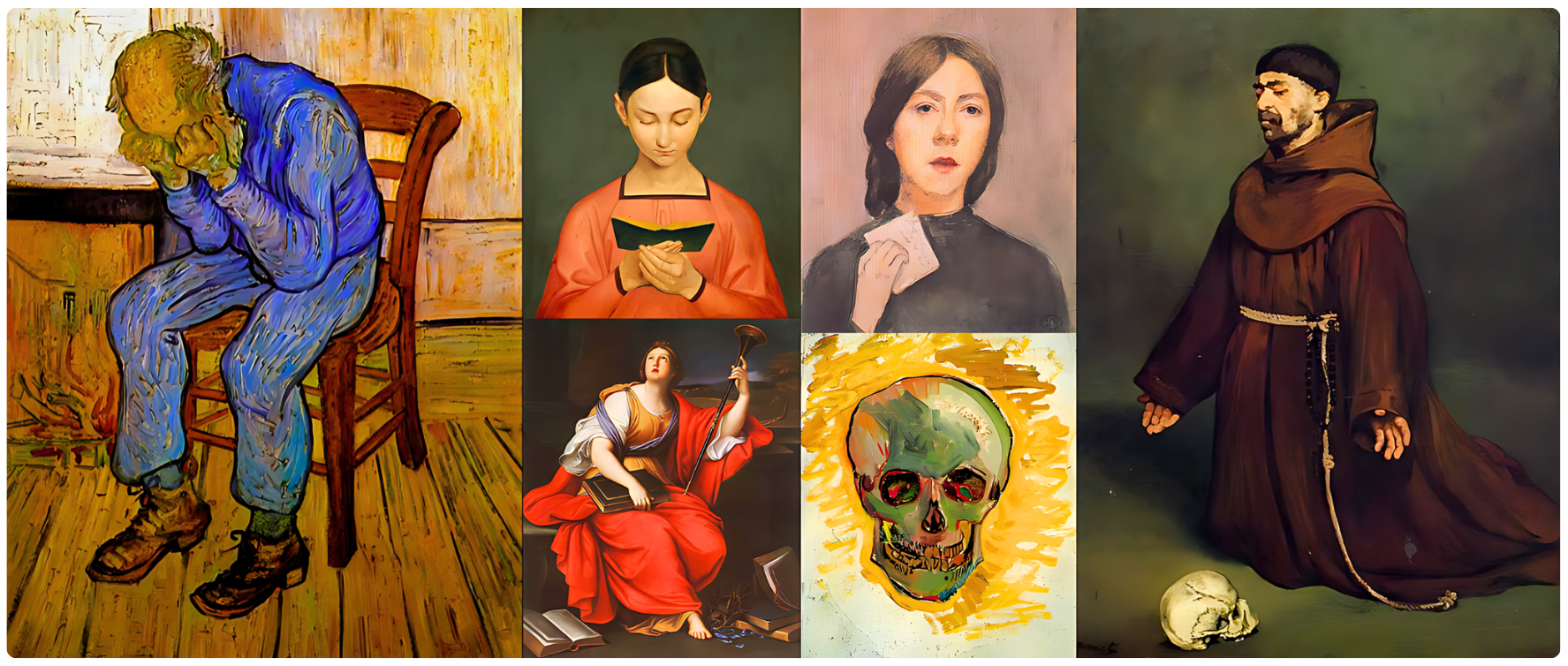
The American Trappist monk and writer Thomas Merton (1915—1968) on the inner self:
The inner self is not a part of our being, like a motor in a car. It is our entire substantial reality itself, on its highest, most personal, and most existential level. It is like life, and it is life: it is our spiritual life when it is most alive. It is the life by which everything else in us lives and moves. It is in and through and beyond everything that we are. If it is awakened, it communicates a new life to the intelligence in which it lives so that it becomes a living awareness of itself, and this awareness is not so much something that we ourselves have as something that we are. …
At the same time, however, every deeply spiritual experience, whether religious, moral or even artistic, tends to have in it something of the presence of the interior self. Only from the inner self does any spiritual experience gain depth, reality, and a certain incommunicability. […]
Source: The Inner Experience
📜 Perennial Maxim(s)
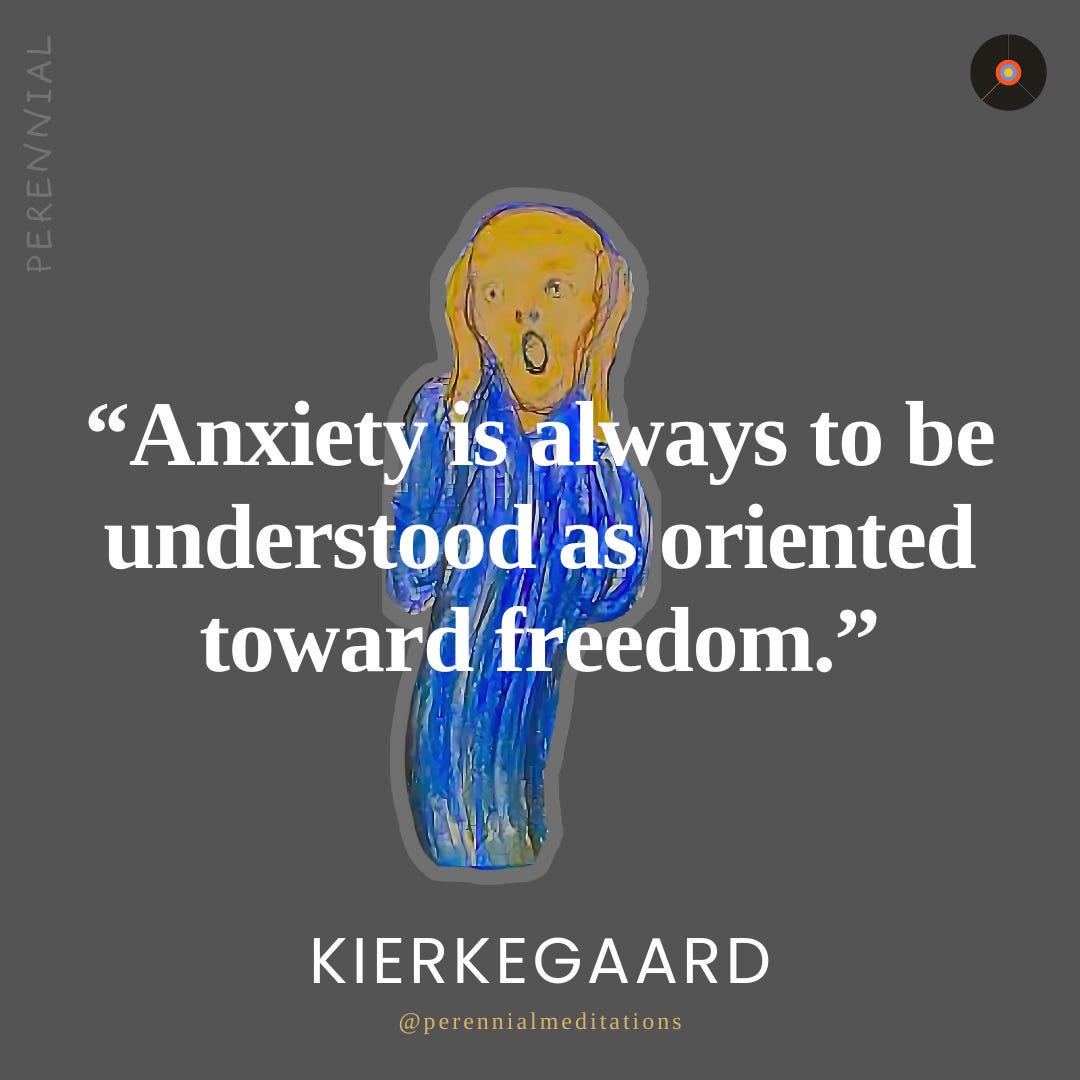
The Danish theologian and philosopher Søren Kierkegaard (1813—1855) on anxiety and freedom:
Follow Us: Instagram | Youtube
💡 Perennial Insight(s)
The Greek philosopher Aristotle (384–322 BC) on types of knowledge:
Aristotle holds that it is good for human beings to know rather than to be ignorant. Let us say for the moment that there are two main types of knowledge. One type is of how things are; the other type is more complicated and includes knowledge of good and evil as well as the beautiful and the ugly. Today, we often refer to these two types as knowledge of facts and values. …
For Aristotle, however, who is representative of the tradition of Western philosophy, the two kinds of knowledge are an expression of two kinds of human excellence or perfection. Furthermore, Aristotle clearly makes the theoretical life, or the contemplation of how things are, higher than the practical life, or the pursuit of moral and political virtue. Let us say that these two lives express two types of perfection, that is, two ways of achieving the characteristically human excellence, one through wisdom or a grasp of truth and the other through moderation, which is best represented by the virtue of justice. The highest form of human existence would then be characterized by the possession of both types of goodness. […]
Source: The Philosopher’s Handbook
—
Thank you for reading; I hope you found something useful.
Until next time, be wise and be well,
J.W. Bertolotti
P.S. If you’re interested in becoming a member but cannot afford it, feel free to request a complimentary membership or use this discount link.
Excellent essay. I especially enjoyed the first section with the Quote by Thomas Merton on the self. There is so much out there today on Medium and also in books and articles that denies the self, that downgrades the self or even denigrates the self. And I find myself opposed to that opinion. I think my take on this is related to René Descartes’ Cognito, where he most famously said “I think therefore I am.“ In my opinion, Our sense of self, Our self-concept, Our sense of “me “or “I” is all we have because it’s who we are or who we think we are as we are thinking, And feeling, and experiencing all day long throughout our lives. What do you think about this Josh?