

🖌️ Monday Muse
The Monday Muse is a weekly collection of reminders, insights, and maxims on the art of living. The term “muse” has two meanings: (1) a state of deep thought; and (2) a source of inspiration. May the following (in a small way) be a source of contemplation, insight, and wisdom to live your highest good.
📌 Perennial Reminder(s)
The American philosopher and professor Scott Samuelson (a previous podcast guest) on the good life:
It’s not that we shouldn’t undertake projects. If anything, Stoics are always embroiled in big projects. But we should engage them with a reserve clause: ‘I will do X—provided nothing out of my control prevents me.’ The key is to shift our goals from finishing a project to working on it. For instance, rather than thinking, ‘My happiness depends on finishing this book,’ much less, ‘My happiness depends on the success of this book,’ I should think, ‘My happiness depends on writing this book to the best of my abilities.’
Happiness is now or never. Our sense of well-being switches from the never-arrived future to the always-here present, from the sculpture to the sculpting. The Greek philosophical term for this kind of well-being is areté, which we translate as ‘virtue,’ though it’s closer in its technical meaning to our sense of virtuosity—an active performance of ourselves at our best.
Source: Rome and the Good Life (via In Search of Wisdom)
📜 Perennial Maxim(s)
The British philosopher A.C. Grayling on perennial ideas:
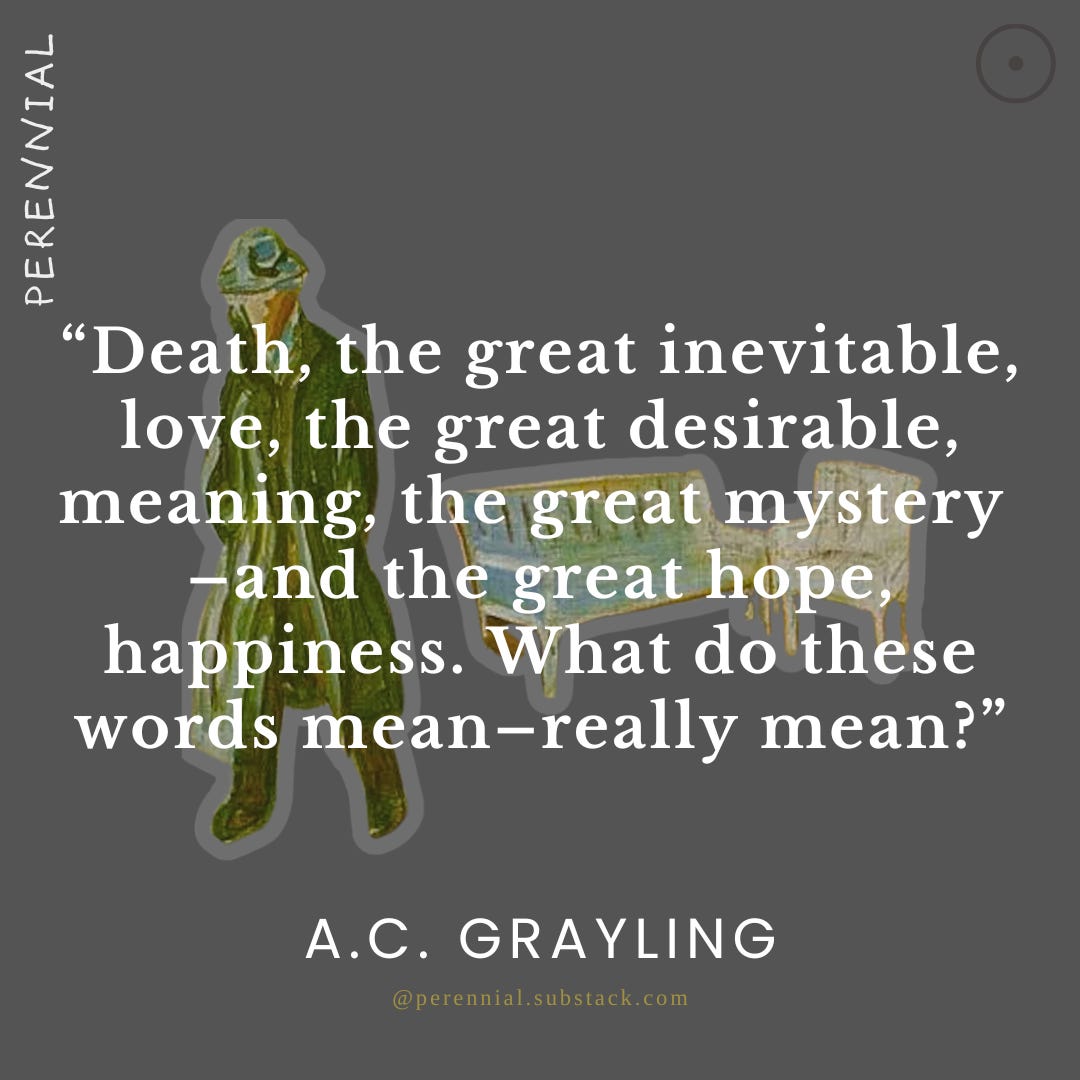
In his new book Philosophy and Life, Grayling stresses the need for clarity around what I often call “perennial ideas” (or questions). What does happiness, for example, actually mean? “Is happiness the point (of life)? It depends on what is meant by ‘happiness,’” observes Grayling.
Consider journaling on the topics (death, love, meaning, and happiness) over the next few days. Contemplate what these words mean to you in daily life.
💡 Perennial Insight(s)
The professor, philosopher, and Catholic writer Peter Kreeft on ethics:
We all have very many good friends in philosophy. The best ones are dead. But the dead can still live! Dead writers are like ghosts: you can meet their spirits, their minds, even though their bodies are dead. In their books they left the products their minds made for us to use, just as those who built our cities left the products their bodies made for us to use. …
But for all the great philosophers, however radically they differ from each other on specific ethical questions, ethics is about the most fundamental, prior, and important things in life. Socrates went so far as to say that a good person does not worry much about the little things, like whether he lives or dies, but only about the one big thing: whether he is a good person or a bad one. […]
Source: Ethics for Beginners
🎧 Latest Podcast(s)

***Listen on Apple Podcasts, Spotify, or YouTube.
—
Thank you for reading; I hope you found something useful.
Until next time, be wise and be well,
J.W. Bertolotti
P.S. If you’re interested in becoming a member but cannot afford it, feel free to request a complimentary membership or use this discount link.