

Reading & the Good Life
Join the conversation! Every Friday at Noon EST, Perennial Meditations readers are welcome to gather for Reading & the Good Life (Register here), a casual space for connection, contemplation, and conversations on the art of living!
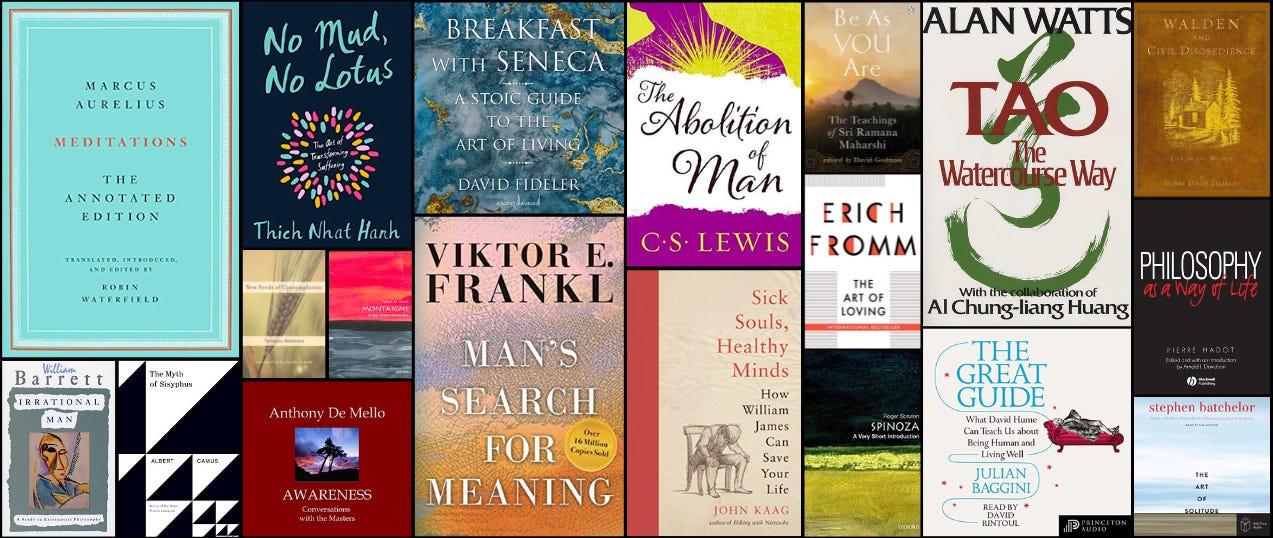
Who is Pythagoras?
Pythagoras, one of the most famous and controversial ancient Greek philosophers, lived from ca. 570 to ca. 490 BCE. He spent his early years on the island of Samos, off the coast of modern Turkey. At the age of forty, however, he emigrated to the city of Croton in southern Italy, where most of his philosophical activities took place. Pythagoras wrote nothing, nor were there any detailed accounts of his thoughts written by contemporaries. By the first centuries BCE, it became fashionable to present Pythagoras in a largely unhistorical fashion as a semi-divine figure who originated all that was true in the Greek philosophical tradition, including many of Plato’s and Aristotle’s mature ideas. …
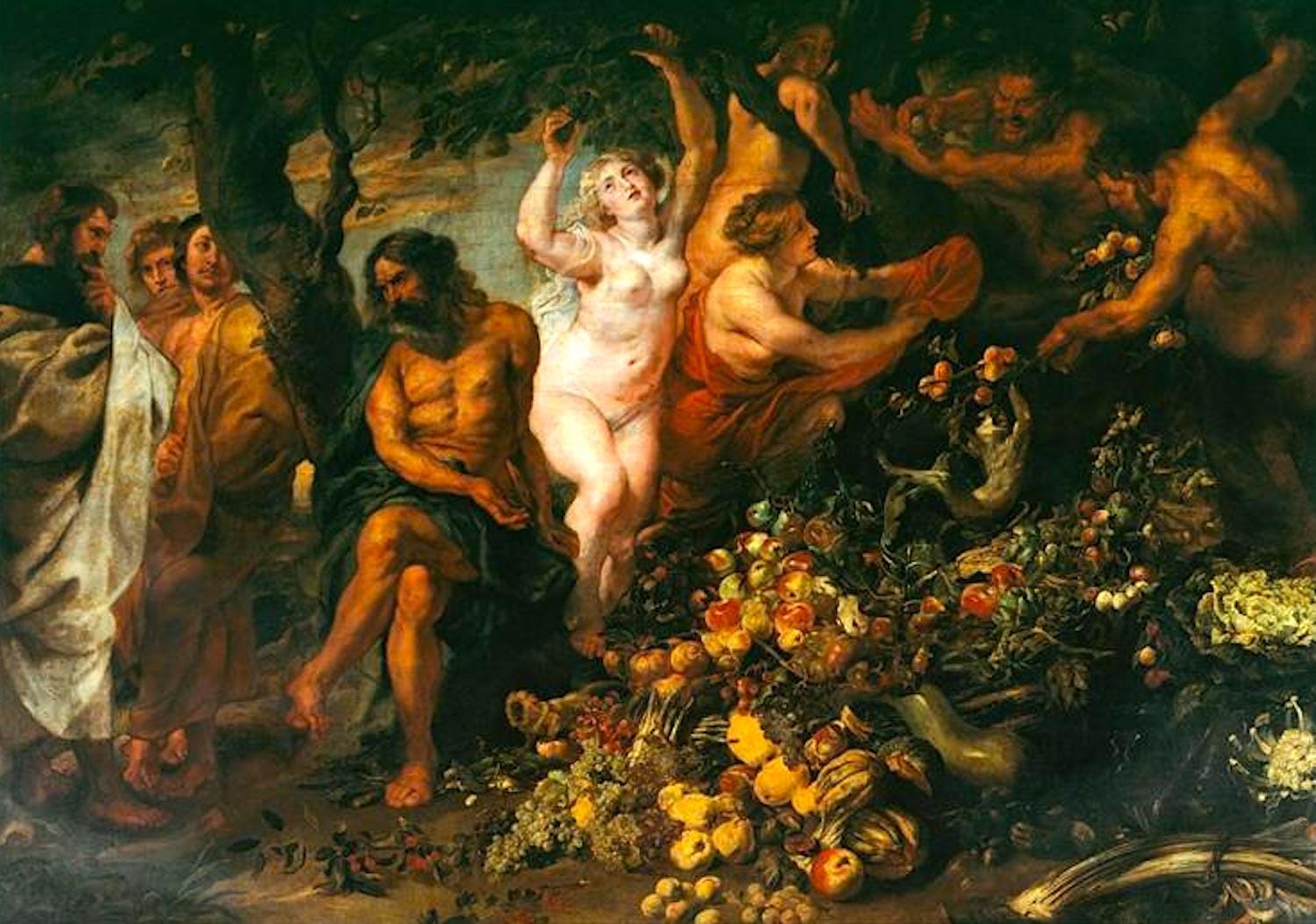
To obtain an accurate appreciation of Pythagoras’ achievement, it is important to rely on the earliest evidence before the distortions of the later tradition arose. The popular modern image of Pythagoras is that of a master mathematician and scientist. The early evidence shows, however, that while Pythagoras was famous in his own day and even 150 years later in the time of Plato and Aristotle, it was not mathematics or science upon which his fame rested. Pythagoras was famous (1) as an expert on the fate of the soul after death, who thought that the soul was immortal and went through a series of reincarnations; (2) as an expert on religious ritual; (3) as a wonder-worker who had a thigh of gold and who could be two places at the same time; (4) as the founder of a strict way of life that emphasized dietary restrictions, religious ritual, and rigorous self-discipline. […]
Source: Stanford Encyclopedia of Philosophy
Selected Passages
This week’s passages from The First Philosophers, edited by Robin Waterfield, will guide our Friday meetup (Register here). As you read the passages below, consider reflecting on these questions:
(1) How can you begin to embody these lessons in daily life?
(2) What might stand in the way of implementing these ideas?
(3) How can the following insights help you to live the good life?
