

📮 Letters from a Seeker
“Letters from a Seeker” is a weekly series of short contemplations that explore the mystery, meaning, and art of living. The word ‘Seeker’ in the title is inspired by the Delphic maxim: “Be a seeker of wisdom.” *** This series is exclusive to members.

Dear Fellow Traveler,
We are arguably the most optioned generation in human history and possibly the most stuck. We face countless choices in what to watch, where to work, how to live, and who to be.
Yet, we seem to share a strange modern dilemma: it's not a lack of options but the inability to commit to one.
The psychologist Barry Schwartz documented this pattern carefully in his 2004 book The Paradox of Choice. His findings were counterintuitive and uncomfortably recognizable: beyond a certain threshold, more options don’t liberate us—they paralyze us. They raise our expectations until no single choice can meet them, and leave us less satisfied with whatever we do choose than if we’d had fewer options to begin with.
Schwartz described the phenomenon as the tyranny of abundance. His research shows that having more varieties on the shelf actually led to less buying and enjoyment, serving as a surprisingly accurate reflection of modern life.
Although Schwartz diagnosed the symptom, Søren Kierkegaard (1813–1855)—the Danish philosopher who worried about the human condition with more honesty than almost anyone before or since—had already identified the disease. Writing two centuries before the age of infinite options, he saw that the problem wasn’t abundance itself.
It is what abundance does to the soul when it has no anchor.
He called anxiety the dizziness of freedom.
The image is precise. Dizziness isn’t pain. It isn’t grief. It’s the sensation of having no fixed point—of the ground moving slightly beneath you, of reaching for something stable and finding only more space.
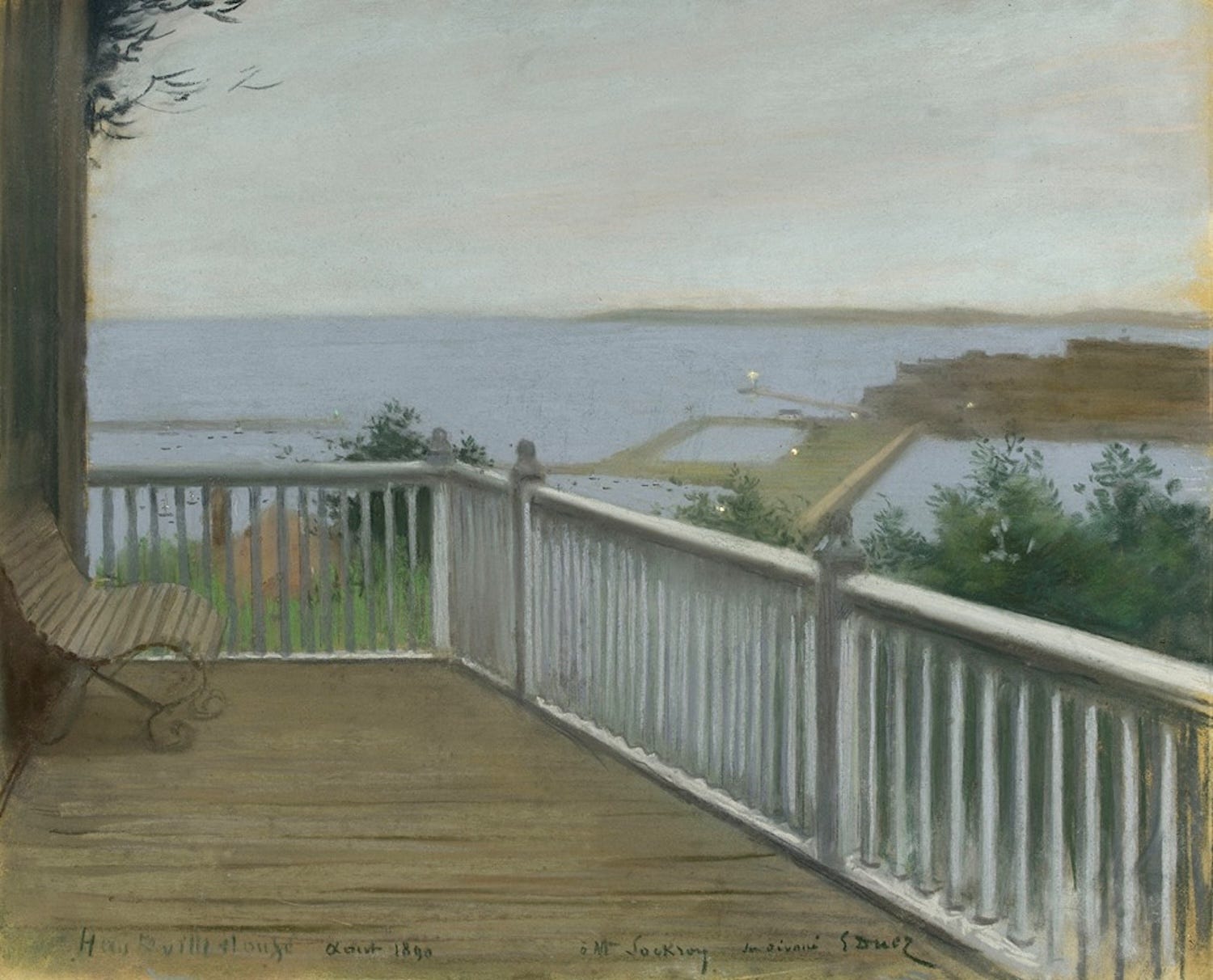
That is what genuine freedom feels like from the inside, Kierkegaard thought, when you’re standing at the edge of your own possibility with no necessity to tell you which way to step.
He wasn’t against freedom. He was against the illusion that more of it automatically produces a better life.
I’ve felt it most not in the big decisions but in the small, embarrassing ones. Standing in a grocery store aisle, paralyzed by thirty-one varieties of olive oil. Scrolling through shows for twenty minutes before settling on the first one I’d considered. Keeping plans loose, commitments light, doors open—telling myself this is wisdom when, if I’m honest, it is mostly a failure of nerve.
