

🖌️ Monday Muse
The Monday Muse is a weekly collection of reminders, insights, and maxims on the art of living. The term “muse” has two meanings: (1) a state of deep thought; and (2) a source of inspiration. May the following (in a small way) be a source of contemplation, insight, and wisdom to live your highest good.
📌 Perennial Reminder(s)
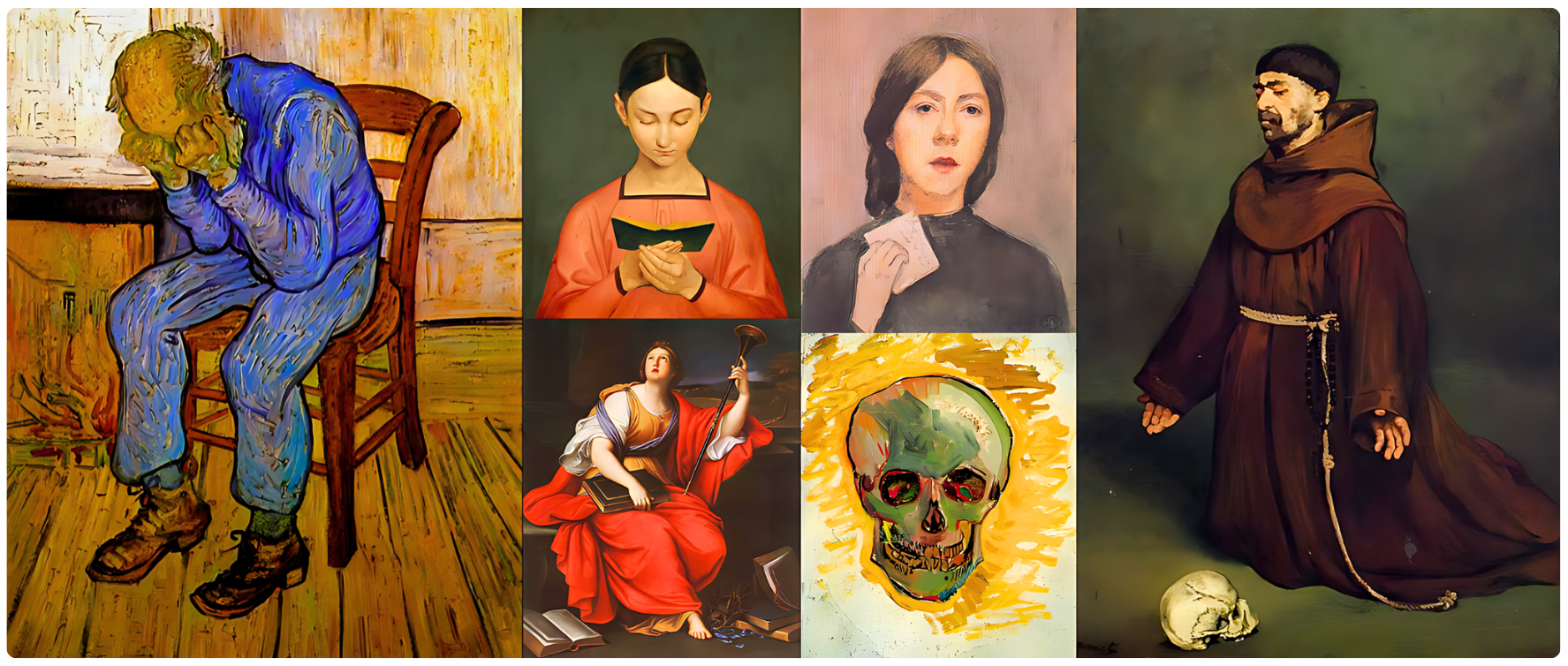
The American cultural anthropologist Ernest Becker (1924—1974) on the denial of death:
Yet, at the same time, as the Eastern sages also knew, man is a worm and food for worms. This is the paradox: he is out of nature and hopelessly in it; he is dual, up in the stars and yet housed in a heart-pumping, breath-gasping body that once belonged to a fish and still carries the gill marks to prove it. ... Man is literally split in two: he has an awareness of his own splendid uniqueness in that he sticks out of nature with a towering majesty, and yet he goes back into the ground a few feet in order to blindly and dumbly rot and disappear forever. It is a terrifying dilemma to be in and to have to live with. … The knowledge of death is reflective and conceptual, and animals are spared it. They live, and they disappear with the same thoughtlessness: a few minutes of fear, a few seconds of anguish, and it is over. But to live a whole lifetime with the fate of death haunting one's dreams and even the most sun-filled days—that's something else. […]
Source: The Denial of Death
📜 Perennial Maxim(s)
The Indian philosopher and writer J. Krishnamurti (1895—1986) on education:
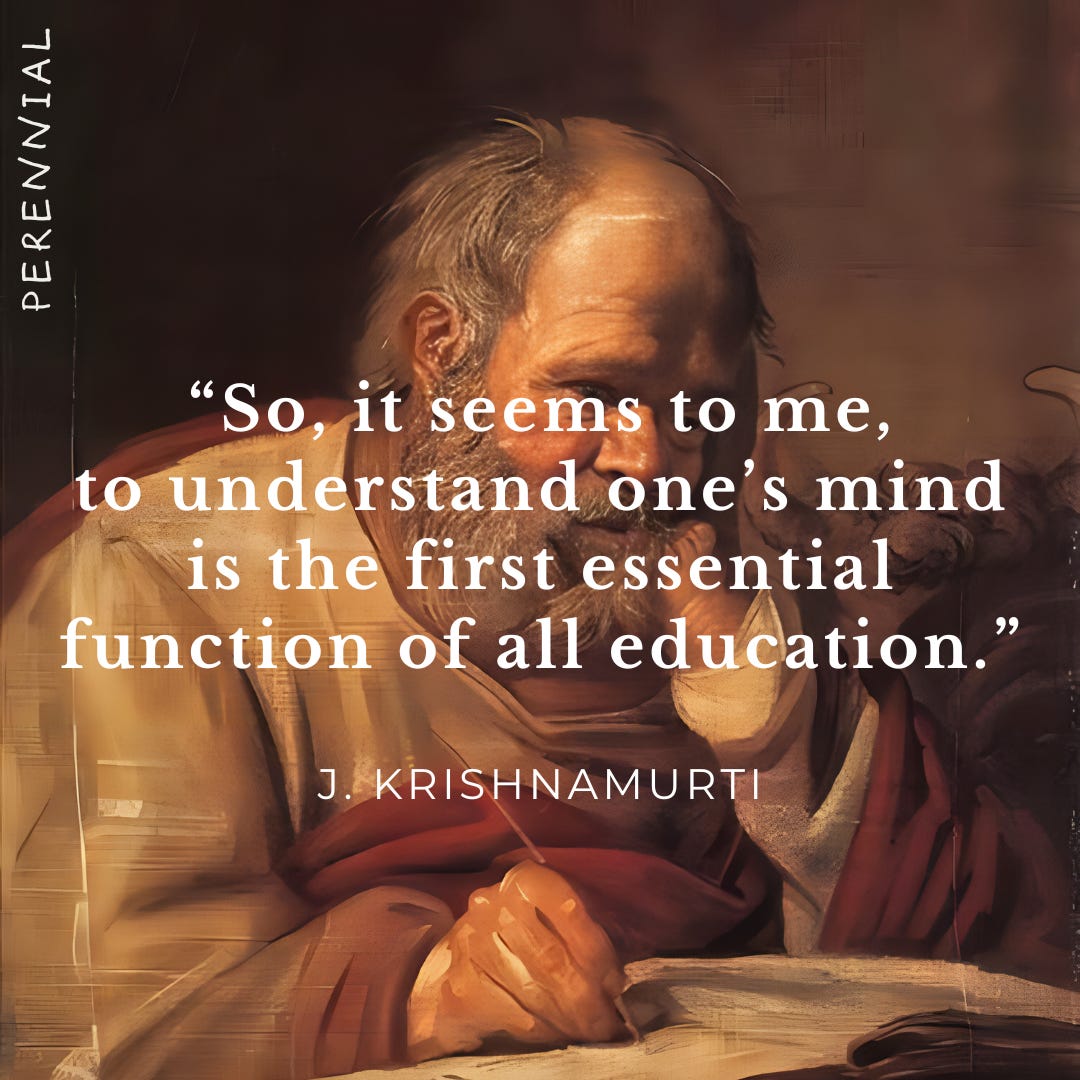
In his classic What Are You Going to Do with Your Life, Krishnamurti stressed,
“We do not know the workings of our own mind—the mind as it is, not as it should be or as we would like it to be. The mind is the only instrument we have, with which we think, act, and have our being. Our minds are conditioned and tethered to dogma, belief, experience, and knowledge.”
It’s interesting to reflect on whether we understand our minds. As you navigate your week, consider paying close attention to your mind. You might note the types of thoughts, conditioning, resistance, etc.
💡 Perennial Insight(s)
The American philosopher Kieran Setiya (a previous podcast guest) on the perils of loneliness:
The pain of social disconnection, loneliness, is not to be confused with being alone. One can be by oneself, in quiet solitude, without feeling lonely; and one can be lonely in a crowd. There’s a distinction, too, between transient or situational loneliness—a reaction to loss or displacement—and chronic loneliness, which persists for months or years. Some are more prone to loneliness than others. …
It’s hard to escape from loneliness without getting help from others, which makes being lonely a catch-22. Nor can one change things overnight: it takes effort to assuage the social anxiety induced by loneliness. That’s why loneliness is a problem for society, not just individuals. […]
Source: Life is Hard
—
Thank you for reading; I hope you found something useful.
Until next time, be wise and be well,
J.W. Bertolotti
P.S. If you’re interested in becoming a member but cannot afford it, feel free to request a complimentary membership or use this discount link.