

💀 Dying Every Day
The Dying Every Day series delivers guided meditations on the art of living. Each meditation provides a quote, a selected passage (from an original Stoic text), and a reflection prompt to consider. These meditations are designed to help you (and me) reflect on what it means to live a good life.
The Art of Stoic Joy
“There is only one way to happiness, and that is to cease worrying about things that are beyond the power of our will.”
— Epictetus, Discourses
Selected Passage
In this week’s meditation, we explore the art of Stoic joy through a selected passage from Seneca.
Reaching the heights means knowing what to rejoice in—finding prosperity in that which no one else can control. Anyone enticed by hope is anxious and unsure of himself, even if hope is for something close at hand or not difficult to get, even if the things one hoped for never prove disappointing.
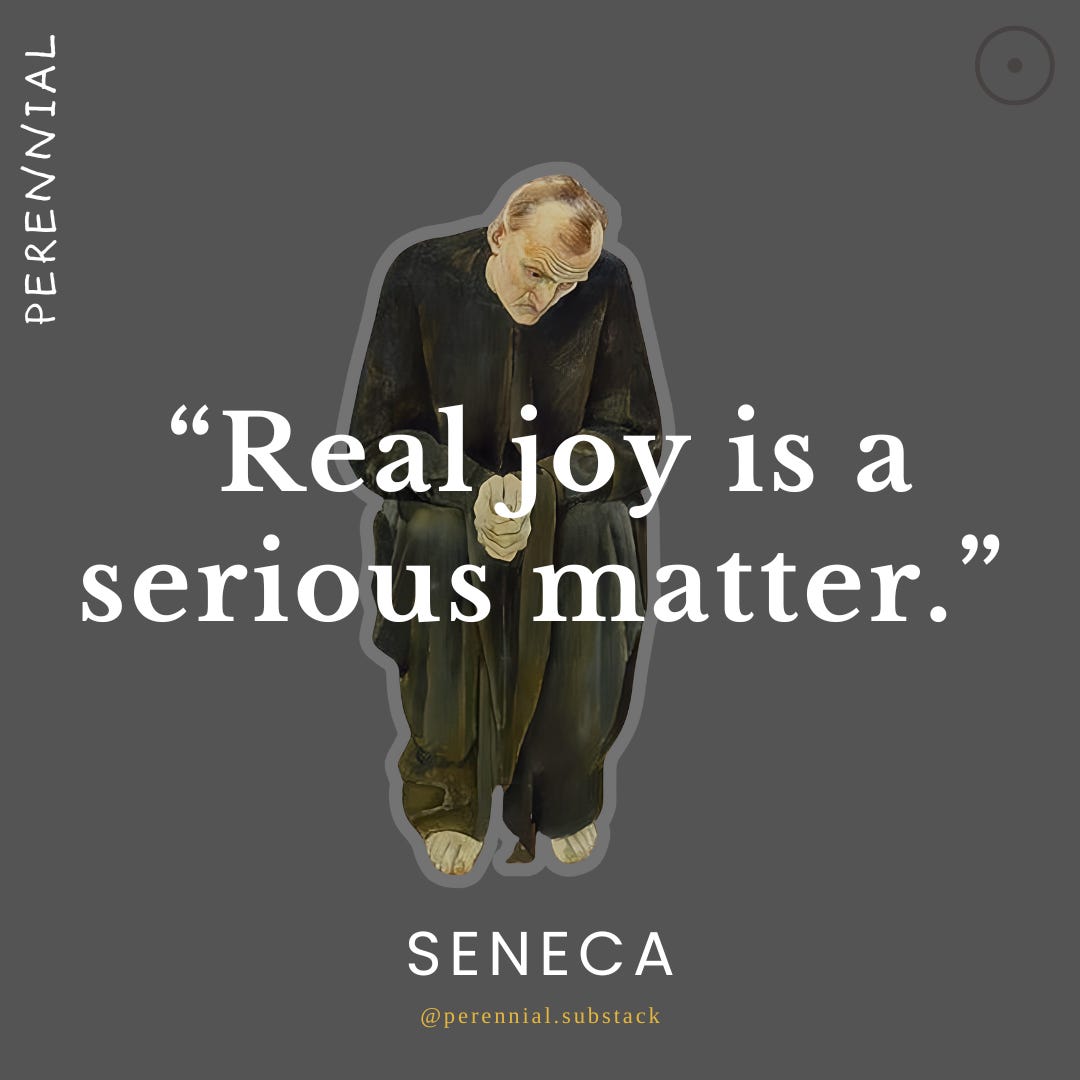
Do this above all, dear Lucilius: learn how to experience joy. Do you now suppose that because I am removing from you the things of fortune and think you should steer clear of hopes, those sweetest of beguilements, I am taking away many pleasures? Not at all: I want that gladness should never be absent from you. I want it to be born in your own home—and that is what will happen if it comes to be inside you. … Believe me, real joy is a serious matter. …
There is only one course of action that can make you happy. I beg you, dearest Lucilius, to do it: cast aside those things that glitter on the outside, those things that are promised you by another or from another, and trample them underfoot. Look to your real good, and rejoice in what is yours. What is it that is yours? Yourself; the best part of you. […]
+Adapted from On the True Joy Which Comes from Philosophy
Reflection Exercise
How do you define (or think about) ‘joy’ in daily life? Or, put another way, “How might you advise a close friend interested in experiencing joy?” Our minds tend to connect ‘joy’ with pleasure, but that would be a mistake, at least according to the Stoics. Seneca stressed to Lucilius not to rejoice in empty things. The ‘empty things’ Seneca was referring to was pleasure. He believed that pleasures are ‘empty, short, and regrettable’ and need to be tempered with a good deal of self-control, or they will soon turn into the opposite.
Journaling Prompt
Consider reflecting (or journaling) about the path to true joy: What would you say are the ingredients of a joyful life? What role does your philosophy of life play in experiencing true joy?
—
Thank you for reading; I hope you found something useful.
Until next time, be wise and be well,
J.W.
P.S. New here? Catch up on previous volumes in the archive!