

🖼️ Monday Muse
The Monday Muse is a weekly collection of reminders, insights, and maxims on the art of living. The term “muse” has two meanings: (1) a state of deep thought; and (2) a source of inspiration. May the following (in a small way) be a source of contemplation, insight, and wisdom to live your highest good.
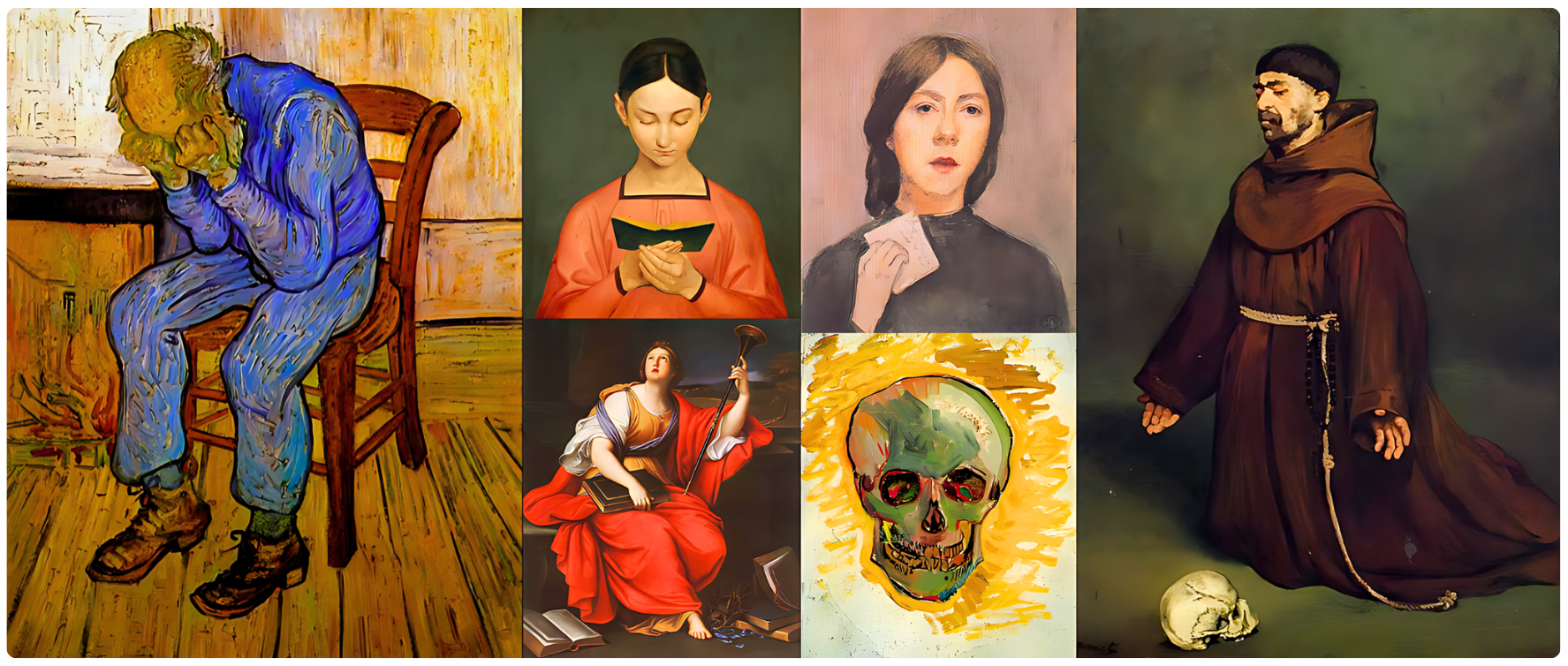
📌 Perennial Reminder(s)
The psychiatrist and author Dr. Dilip Jeste (a previous podcast guest) on the art (and wisdom) of self-reflection:
Self-reflection is the exercise of introspection, the examination of our own mental and emotional processes to better understand their fundamental nature, purpose, and essence. It’s a profoundly important and obvious element of wisdom. ‘The unexamined life is not worth living,’ wrote Plato in The Apology of Socrates, a recollection of the speech his mentor gave at his ill-fated trial.
Reflection gives the brain time to pause, to untangle and sort through the myriad observations and experiences that wash over and through it every second of every waking hour—and perhaps in many sleeping hours as well. It provides time to consider multiple interpretations and create meaning, which in turn becomes learning and shapes our future thoughts and actions. …
While humans possess the power of self-reflection, that doesn’t necessarily mean everyone uses it—or uses it willingly. We may like to believe that we think a lot, but there’s plenty of evidence to suggest that’s not quite true. […]
Source: Wiser: The Scientific Roots of Wisdom, Compassion, and What Makes Us Good
📜 Perennial Maxim(s)
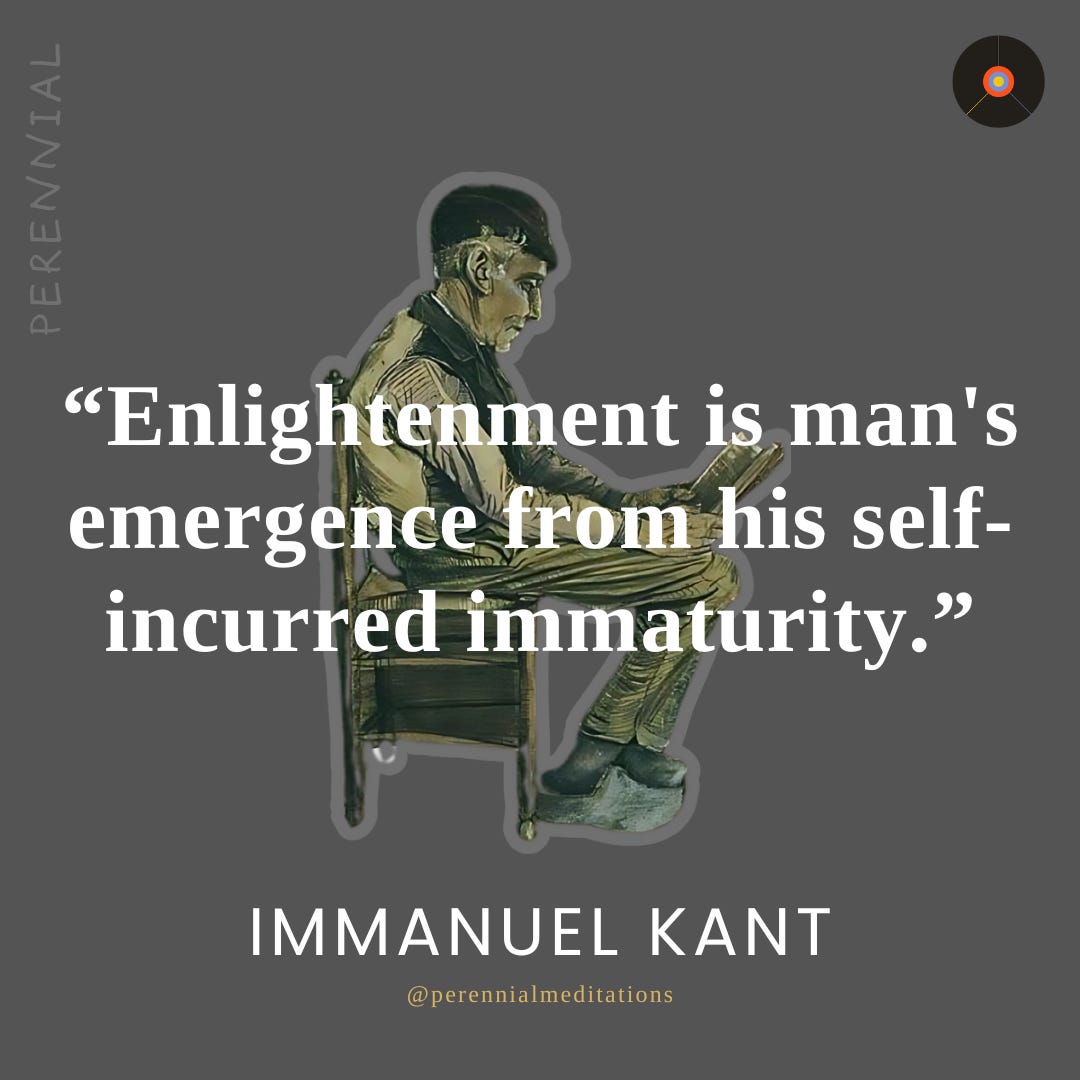
The German philosopher Immanuel Kant (1724—1804) on enlightenment:
Follow us: Instagram | Youtube
💡 Perennial Insight(s)
The Greek philosopher Plotinus (c. 205—270) on awakening love (via the classicist and philosopher Pierre Hadot):
For Plotinus, if things were nothing other than what they are, in their nature, essence and structure, they would not be lovable. In other words, love is always superior to its object, however lofty the latter may be. Its object can never explain or justify it. There is in love a ‘something more,’ something unjustified; and that which, in objects, corresponds to this ‘something more’ is grace, or Life in its deepest mystery. Forms and structures can be justified, but life and grace cannot. They are ‘something more,’ and this gratuitous surplus is everything. In it, Plotinus recognizes ‘the trace of the Good’: ‘Each form, taken by itself, is [only] what it is; but it becomes desirable once the Good diffuses the color of its light over it . . . awakening love in those who desire it’.
What Plotinus calls the Good is thus, at the same time, that which, by bestowing grace, gives rise to love, and that which, by awakening love, causes grace to appear. The Good is what all things desire; it is what is desirable in an absolute sense. […]
Source: Plotinus or the Simplicity of Vision
—
Thank you for reading; I hope you found something useful.
Until next time, be wise and be well,
J.W. Bertolotti
P.S. If you’re interested in becoming a member but cannot afford it, feel free to request a complimentary membership or use this discount link.