


💀 Dying Every Day
Dying Every Day (Stoicism in a Year) is a podcast by the Perennial Leader Project. Each episode turns a selected passage from Stoic philosophy into a guided meditation designed to help you (and me) learn how to live.
Listen on Apple Podcasts, Spotify, or YouTube
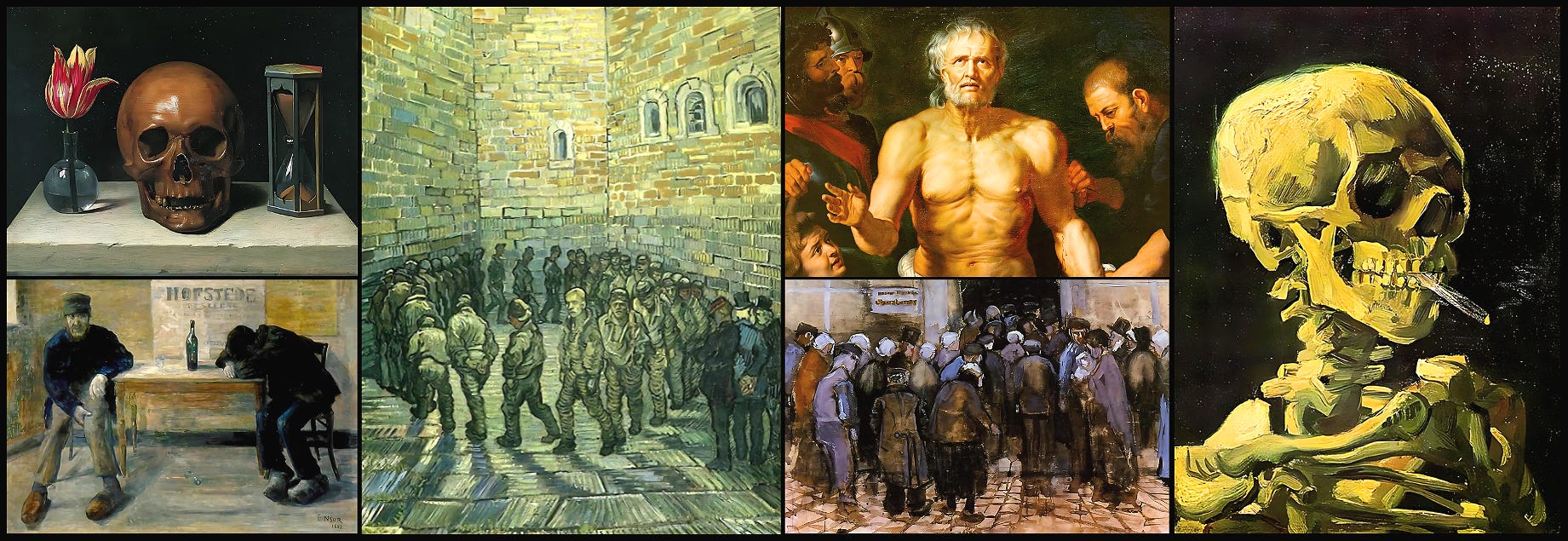
The Art of Negative Visualization
Welcome to Dying Every Day (Stoicism in a Year). Today is Day 60, and we’re exploring negative visualization, which you may have heard in Latin as premeditation malorum (meaning the premeditation of evils).
In a letter to Lucilius, Seneca wrote,
If an evil has been pondered beforehand, the blow is gentle when it comes. To the fool, however, and to him who trusts in fortune, each event as it arrives ‘comes in a new and sudden form,’ and a large part of evil, to the inexperienced, consists in its novelty. This is proved by the fact that men endure with greater courage when they have once become accustomed to what they initially regarded as hardships.
+Adapted from On Learning Wisdom in Old Age
The practice of negative visualization does not simply consist of ruminating on all the ways a particular event could go sideways. It is an intentional rehearsal in an attempt to prepare ourselves accordingly.
The Stoics (along with many others) advise us not to worry. “Don’t ask for things to happen as you would like them to,” stressed the Stoic philosopher Epictetus, “but wish them to happen as they actually do, and you will be all right.”
Negative visualization is designed to help us understand our desires (the things we want) and aversions (the things we don’t want). By premeditating on what could go wrong, we can better meet life as it is and reduce our fear and anxiety about the future.
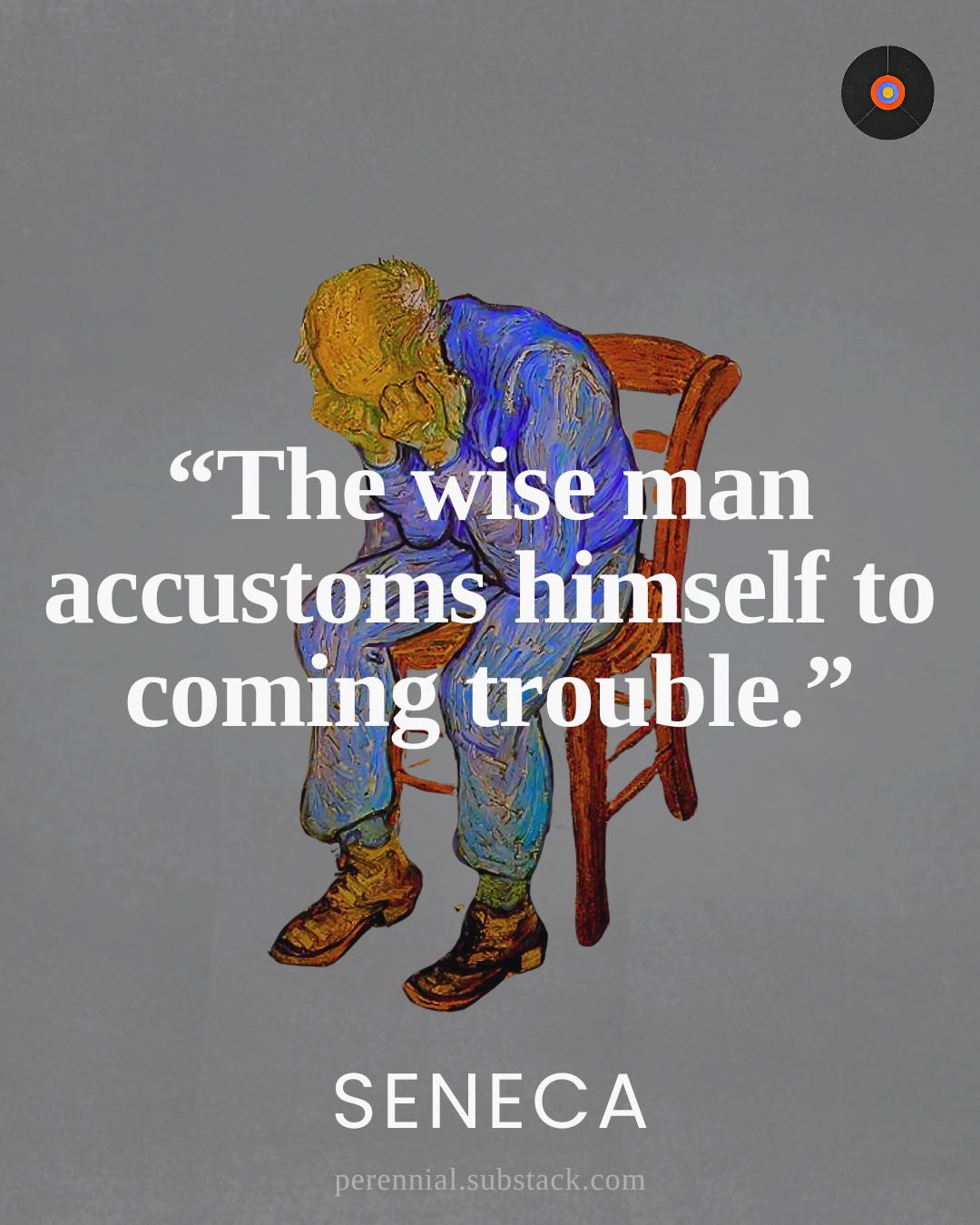
To quote Seneca, “The wise man accustoms himself to coming trouble.”
Reflection Prompt
Consider reflecting (or journaling) on an issue currently on your heart. Then, ask yourself, “What could go wrong?” Remember that life can unfold in various ways. Be sure to take the necessary time to contemplate the issue from all sides.
Listen on Apple Podcasts, Spotify, or YouTube
—
Thank you for reading/listening; I hope you found something useful.
Until next time, be wise and be well,
J.W.
P.S. I greatly appreciate your time, attention, and support!