

💀 Dying Every Day
Dying Every Day (Stoicism in a Year) is a podcast by the Perennial Leader Project. Each episode turns a selected passage from Stoic philosophy into a guided meditation designed to help you (and me) learn how to live.
Listen on Apple Podcasts, Spotify, or YouTube
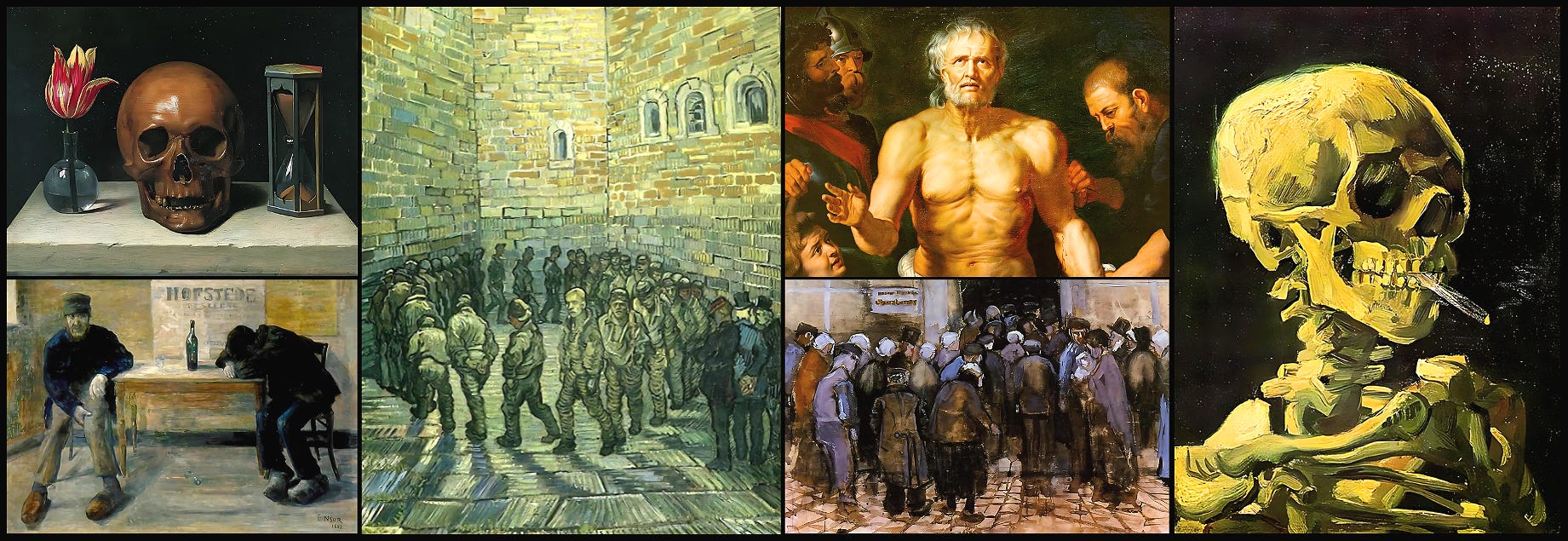
Seneca on why we deceive ourselves
Welcome back to Dying Every Day (Stoicism in a Year). We’ve reached Day 85, and we’re returning to Seneca to learn why we deceive ourselves.
Before we start, here's one quick reminder: if you’d like the transcripts for these episodes, you can subscribe to Perennial Meditations (on Substack). Also, if you’d like to support this project (and podcast), you can consider becoming a Perennial Meditations member!
In a letter to his friend Lucilius, Seneca wrote,
Why do we deceive ourselves? The evil that afflicts us is not external, it is within us, situated in our very vitals; for that reason we attain soundness with all the more difficulty, because we do not know that we are diseased.
Suppose that we have begun the cure; when shall we throw off all these diseases? At present, we do not even consult the physician, whose work would be easier if he were called in when the complaint was in its early stages. …
+Adapted from On Our Blindness and Its Cure
Consider noticing the impressions (or initial thoughts) that arise after hearing Seneca say that “the evil that afflicts us is within us.” Interestingly, Seneca frequently reminds Lucilius of his own shortcomings; he suggests thinking of him as a fellow patient in a hospital bed beside him (or someone also in need of wisdom).
According to the Stoics, having faults or vices is nothing to fret about. It’s a reminder to continue turning to philosophy.
Seneca continues his letter by stressing the power of philosophy to heal our souls. He explained,
No, we must work. To tell the truth, even the work is not great, if only, as I said, we begin to mould and reconstruct our souls before they are hardened by sin. But I do not despair even of a hardened sinner.
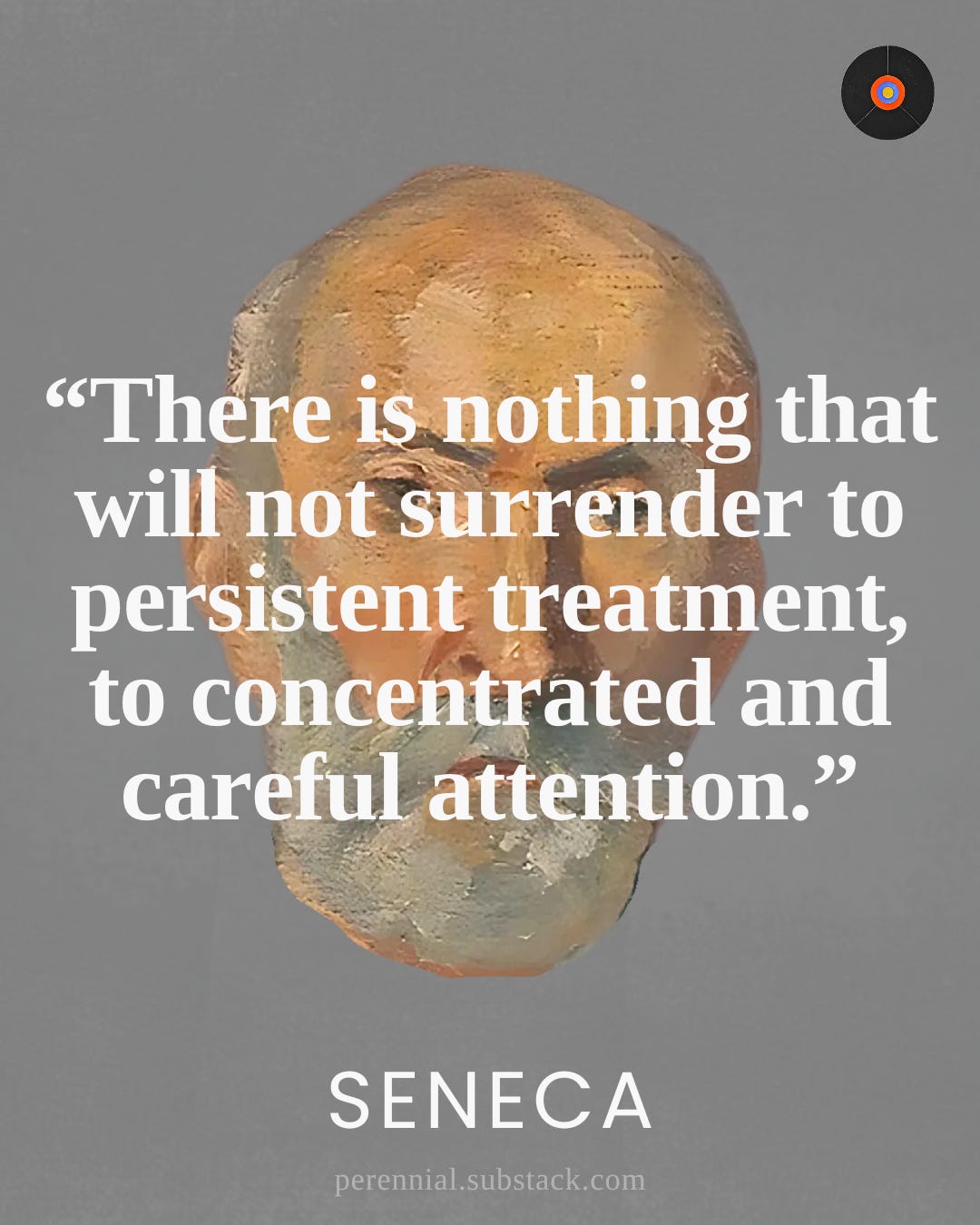
There is nothing that will not surrender to persistent treatment, to concentrated and careful attention; however much the timber may be bent, you can make it straight again.
Stoicism invites us to view ourselves as prokoptons, or someone working diligently to make progress (or you could say to straighten out their character).
Reflection Prompt
Consider reflecting (or journaling) on what it means to seek wisdom. You could ask yourself, “What role does turning inward (or examining oneself) play in the search for wisdom?” and/or “How might discovering my flaws (or vices) be a path to a more virtuous life?”
Listen on Apple Podcasts, Spotify, or YouTube
—
Thank you for listening; I hope you found something useful.
Until next time, be wise and be well,
J.W.
P.S. I greatly appreciate your time, attention, and support!