

Reading & the Good Life
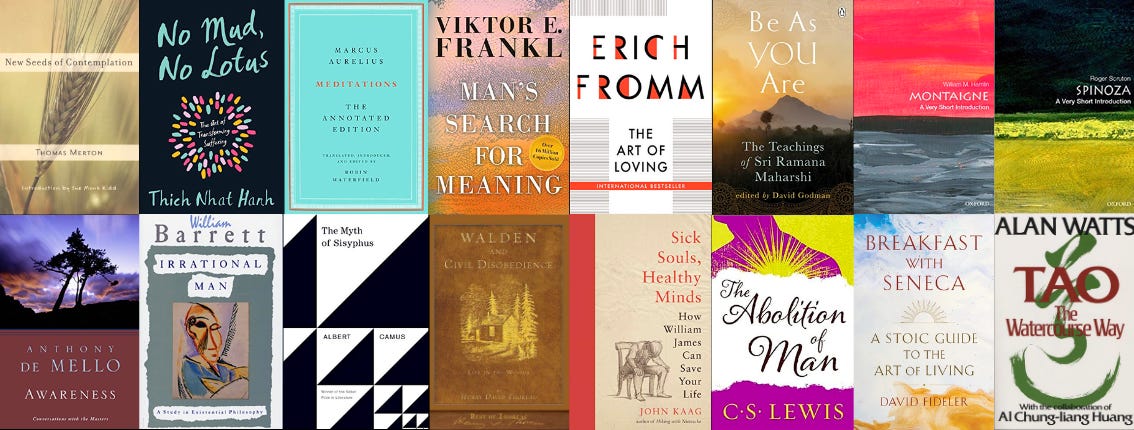
Join the conversation! Every Friday at Noon EST, Perennial Meditations readers are welcome to gather for Reading & the Good Life (Join here), a space for connection, contemplation, and conversations on the art of living! This week concludes our exploration of the writing and wisdom of Lucius Annaeus Seneca through David Fideler’s (a previous podcast guest) great book Breakfast with Seneca: A Stoic Guide to the Art of Living.
***Next month, we’re exploring Eastern philosophy through Tao: The Watercourse Way by Alan Watts (initially published in 1975).
Who is Lucius Annaeus Seneca?
As many of you know, every Sunday, we explore one of Lucius Annaeus Seneca's (4 BC to 65 AD) letters. Seneca was a Roman Stoic philosopher, statesman, and advisor to Emporer Nero. He is most known for his philosophical works, including a dozen essays and one hundred twenty-four letters. Seneca's letters are mainly to Lucilius and cover several timeless topics, from wisdom to death and everything in between. His letters, known today as Letters from a Stoic, are filled with timeless wisdom.
Seneca — On Love and Gratitude
The book “How to Love — Like a Stoic” does not exist. But maybe it should. As Fideler explains, the stereotype of a Stoic as “cold and unfeeling” is simply not true. The Stoics took love and affection to be the primary human emotion.
In Breakfast with Seneca, Fideler writes, The Stoics put love, as an emotion, in a category all by itself. In Seneca’s view,
The Stoics had more love for humanity than any other philosophical school. Love and affection, they maintained, form the very basis of human society. They realized that parents instinctively love their children. They also thought that this kind of primary affection could be extended outward to encompass all of humanity.
Because of this, Fideler observes, it is not an overstatement to call Stoic ethics ultimately based on love. In his work On Anger, Seneca wrote, “Society can only remain healthy through the mutual protection and love of its parts.”
