

🏛️ Sundays with Seneca
Sundays with Seneca is a weekly series exploring Lucius Annaeus Seneca’s writings and Stoic philosophy. Each meditation includes selected passages from one of Seneca’s letters, searching for ancient lessons on the art of living.
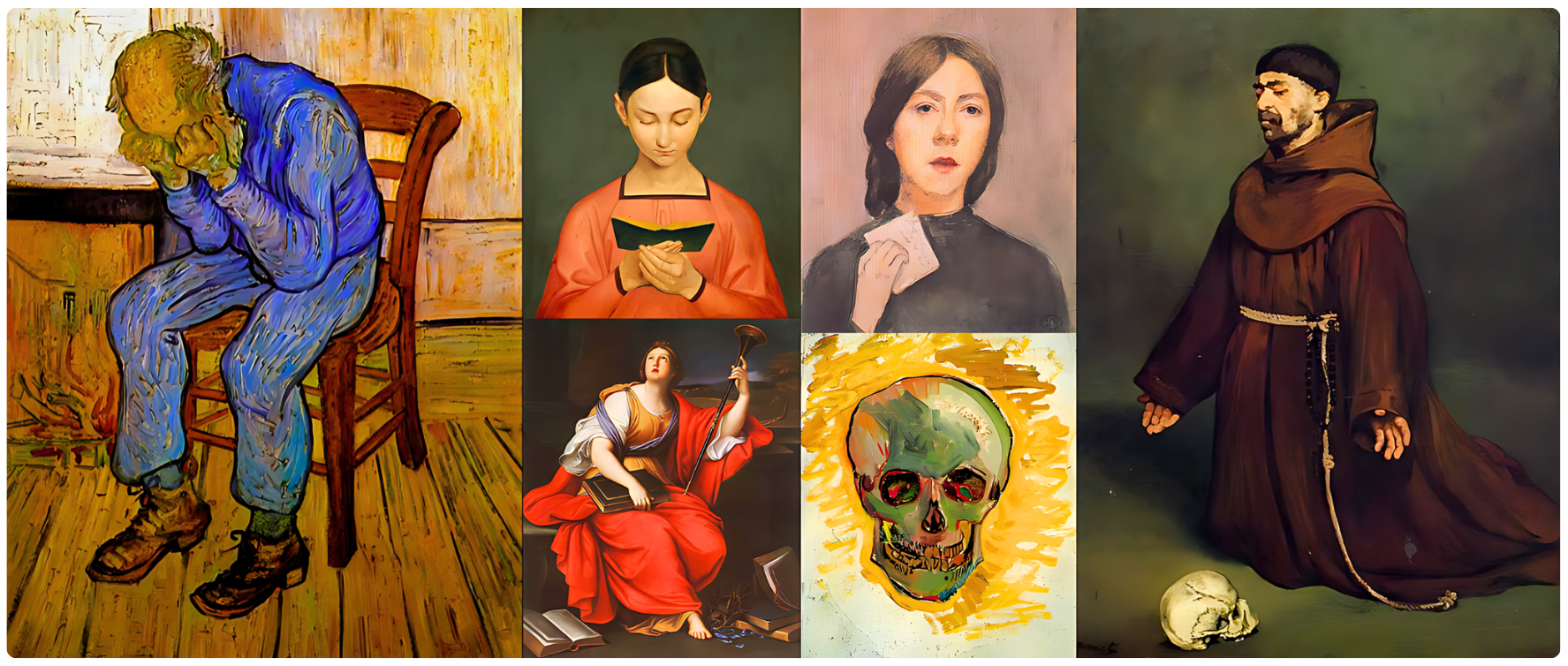
Seneca on finding the ‘right’ path
In this week’s Sundays with Seneca series, we’re exploring selected passages from a letter known today as On the Philosopher’s Seclusion.
‘Do you bid me,’ you say, ‘shun the crowd, and withdraw from men, and be content with my own conscience? Where are the counsels of your school, which order a man to die amid active work?’ As to the course which I seem to you to be urging on you now and then, my object in shutting myself up and locking the door is to be able to help a greater number. I never spend a day in idleness; I appropriate even a part of the night for study. I do not allow time for sleep but yield to it when I must, and when my eyes are wearied with waking and ready to fall shut, I keep them at their task.
I have withdrawn not only from men, but from affairs, especially from my own affairs; I am working for later generations, writing down some ideas that may be of assistance to them. There are certain wholesome counsels, which may be compared to prescriptions of useful drugs; these I am putting into writing; for I have found them helpful in ministering to my own sores, which, if not wholly cured, have at any rate ceased to spread.
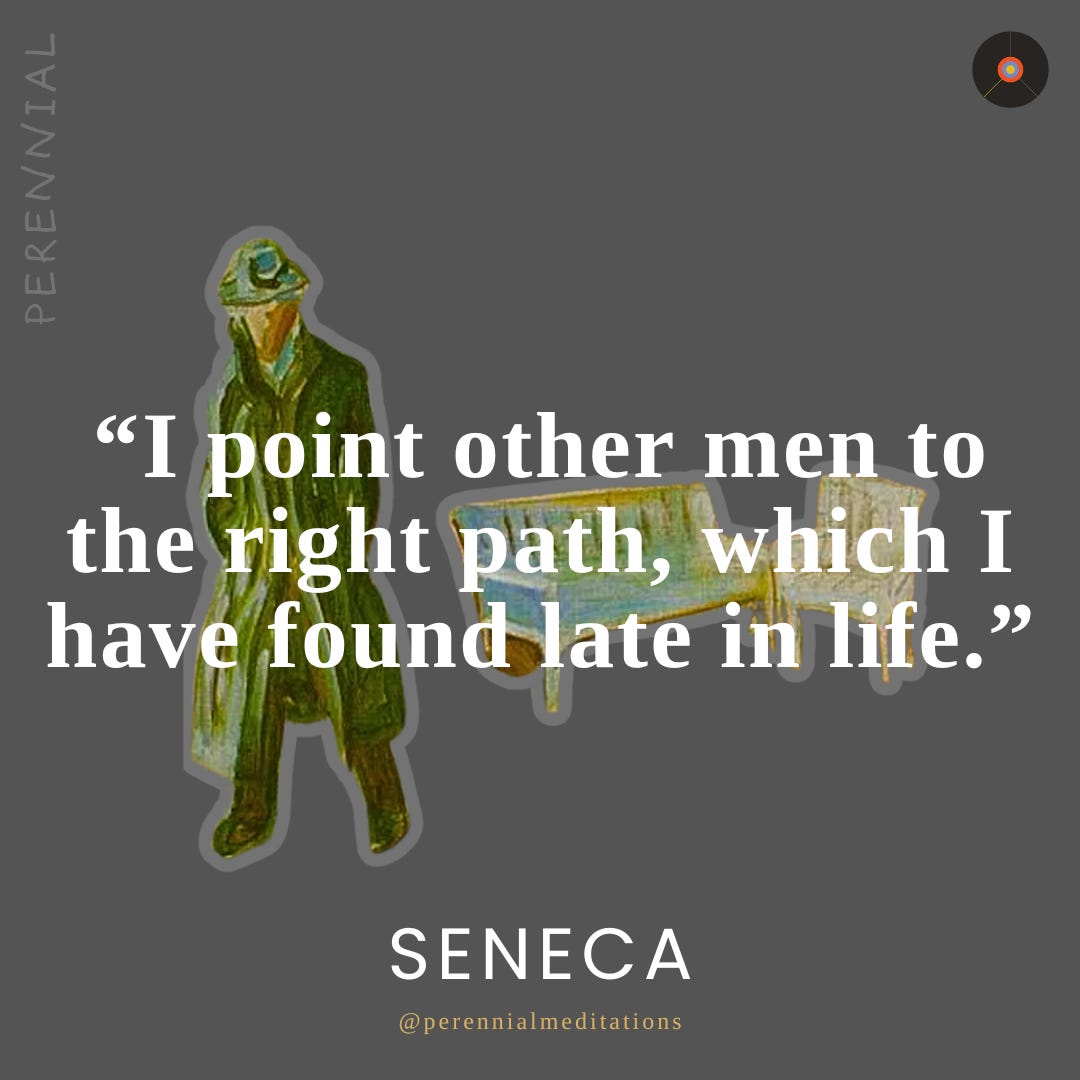
I point other men to the right path, which I have found late in life, when wearied with wandering. I cry out to them: ‘Avoid whatever pleases the crowd: avoid the gifts of Chance!’ …
Seneca continues,
Do you call these things the ‘gifts’ of Fortune? They are snares. And any man among you who wishes to live a life of safety will avoid, to the utmost of his power, these limed twigs of her favor, by which we mortals, most wretched in this respect also, are deceived, for we think that we hold them in our grasp, but they hold us in theirs. …
Moreover, we cannot even stand up against prosperity when she begins to drive us to leeward, nor can we go down, either, ‘with the ship at least on her course,’ or once for all; Fortune does not capsize us—she plunges our bows under and dashes us on the rocks.
‘Hold fast, then, to this sound and wholesome rule of life—that you indulge the body only as necessary for good health. The body should be treated more rigorously to avoid being disobedient to the mind. Eat merely to relieve your hunger; drink merely to quench your thirst; dress merely to keep out the cold; house yourself merely as a protection against personal discomfort. …
Despise everything that useless toil creates as an ornament and an object of beauty. And reflect that nothing except the soul is worthy of wonder; for to the soul, if it is great, naught is great.’
Seneca concludes,
Believe me, those who seem to be busied with nothing are busied with the greater tasks; they are dealing at the same time with things mortal and things immortal.
But I must stop and pay my customary contribution to balance this letter. The payment shall not be made from my own property; for I am still conning Epicurus. Today, in his works, I read the following sentence: ‘If you would enjoy real freedom, you must be the slave of Philosophy.’ The man who submits and surrenders himself to her is not kept waiting; he is emancipated on the spot. For the very service of Philosophy is freedom. … Farewell.
Journaling Prompt
What does Seneca mean when he writes: “I point other men to the right path”? How would you ‘point’ a close friend to the ‘right’ path? Seneca consistently urges Lucilius not to follow (or seek to please) the crowd. Put another way, he encourages Lucilius to think for himself. To find his ‘right’ path.
Consider reflecting on what it means to find your way in life. You might ask yourself, “How do I know if I have veered away from the ‘right’ path?”
—
Thank you for reading; I hope you found something useful.
Until next time, be wise and be well,
J.W.
P.S. New here? Catch up on previous volumes in the archive!