


💀 Dying Every Day
Dying Every Day (Stoicism in a Year) is a podcast by the Perennial Leader Project. Each episode turns a selected passage from Stoic philosophy into a guided meditation designed to help you (and me) learn how to live.
Listen on Apple Podcasts, Spotify, or YouTube
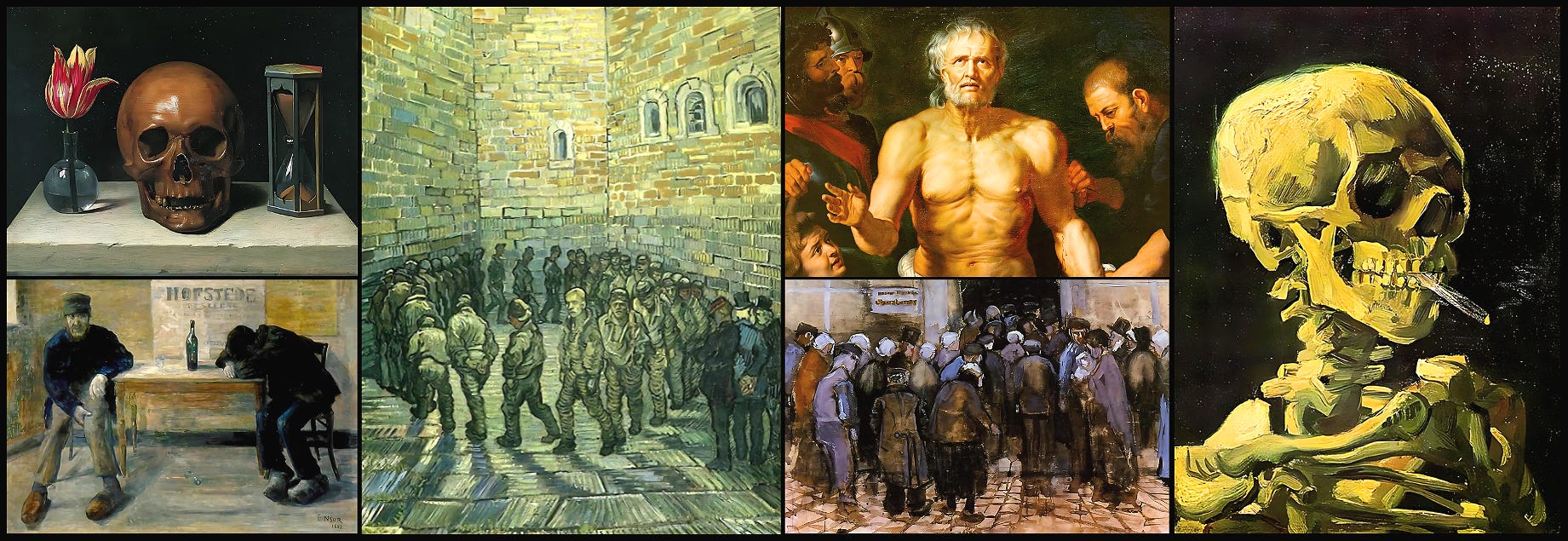
Seneca on a “Good Conscience”
Welcome back to Dying Every Day (Stoicism in a Year). Today is Day 68, and we are turning to Seneca to learn about having a good conscience.
In a letter to Lucilius, Seneca wrote,
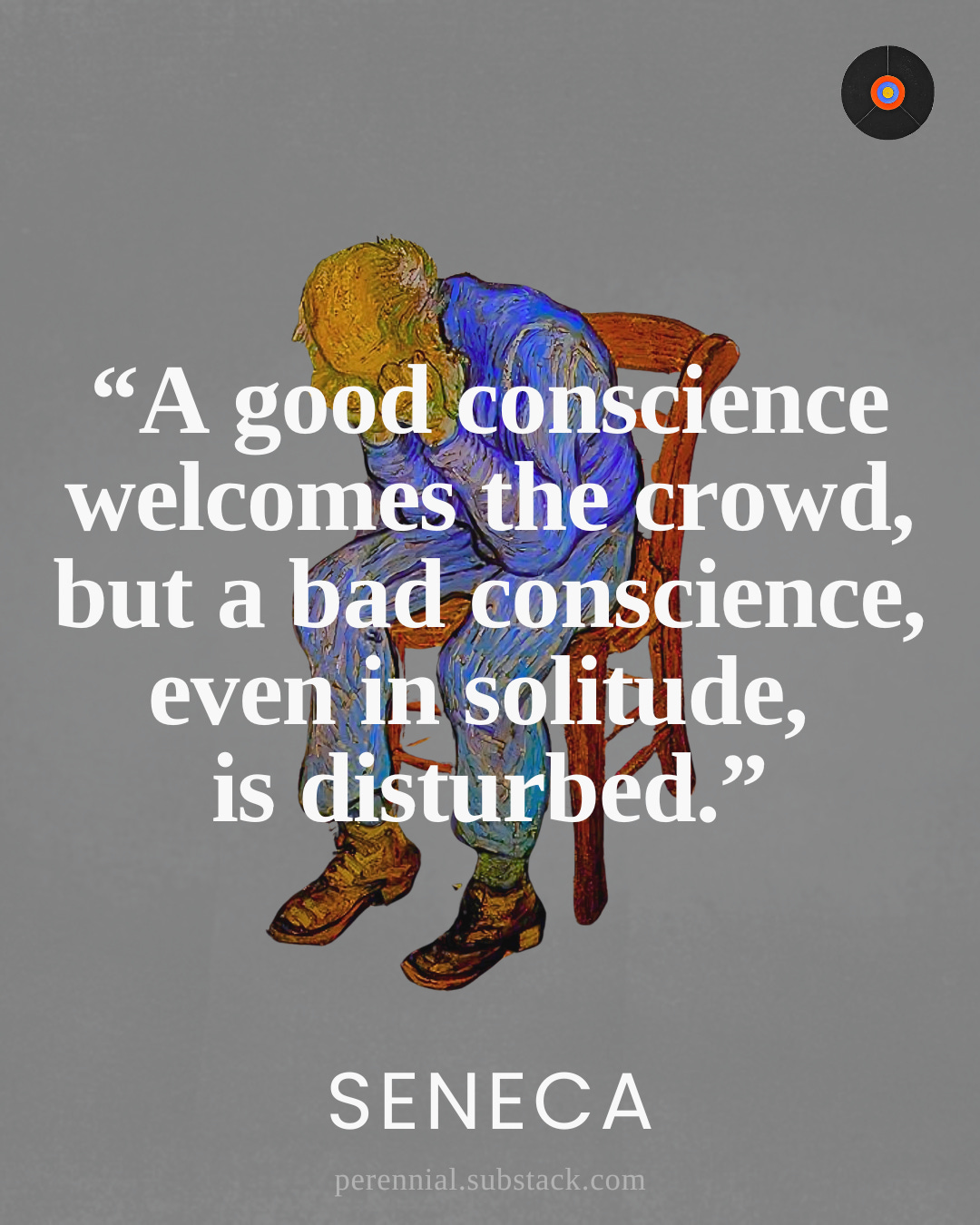
I shall mention a fact by which you may weigh the worth of a man’s character: you will scarcely find anyone who can live with his door wide open. It is our conscience, not our pride, that has put doorkeepers at our doors; we live in such a fashion that being suddenly disclosed to view is equivalent to being caught in the act. … A good conscience welcomes the crowd, but a bad conscience, even in solitude, is disturbed and troubled.
+Adapted from On the Relativity of Fame
What does it mean to have a good (or clear) conscience? The word conscience typically implies a sense of moral goodness of one's own conduct, intentions, or character. It is generally assumed that our conscience leads to a feeling of obligation to be morally good.
Seneca wisely observes that a bad conscience (or failing to be morally good) leaves us disturbed and troubled. However, there is no need to take Seneca’s word for it. If we take a few moments to examine our conscience, we generally know this to be true.
Being virtuous leads to a good (or clear) conscience. It allows us to hide nothing or, metaphorically, as Seneca said, to live with our door wide open.
In a letter titled On the Happy Life, Seneca explained,
What is the happy life? It is peace of mind and lasting tranquillity. This will be yours if you possess the greatness of soul and the steadfastness that resolutely clings to a good judgment just reached. How does a man reach this condition? By gaining a complete view of truth, by maintaining, in all that he does, order, measure, fitness, and a will that is inoffensive and kindly, that is intent upon reason and never departs therefrom. …
Reflection Prompt
Consider reflecting (or journaling) on what it means to have a good (or clear) conscience. You could ask yourself, “How would adopting the Stoic view that ‘virtue is the highest good’ help you to focus on your conduct, intentions, and character?” or “How can you start living in a way that allows you to be transparent (to live with ‘your door wide open’) with yourself and others?”
Listen on Apple Podcasts, Spotify, or YouTube
—
Thank you for reading/listening; I hope you found something useful.
Until next time, be wise and be well,
J.W.
P.S. I greatly appreciate your time, attention, and support!