

🖼️ Monday Muse
The “Monday Muse” is a weekly collection of reminders, insights, and maxims on the art of living. The term “muse” has two meanings: (1) a state of deep thought; and (2) a source of inspiration. May the following (in a small way) be a source of contemplation and wisdom to live your highest good.
📌 Perennial Reminder(s)
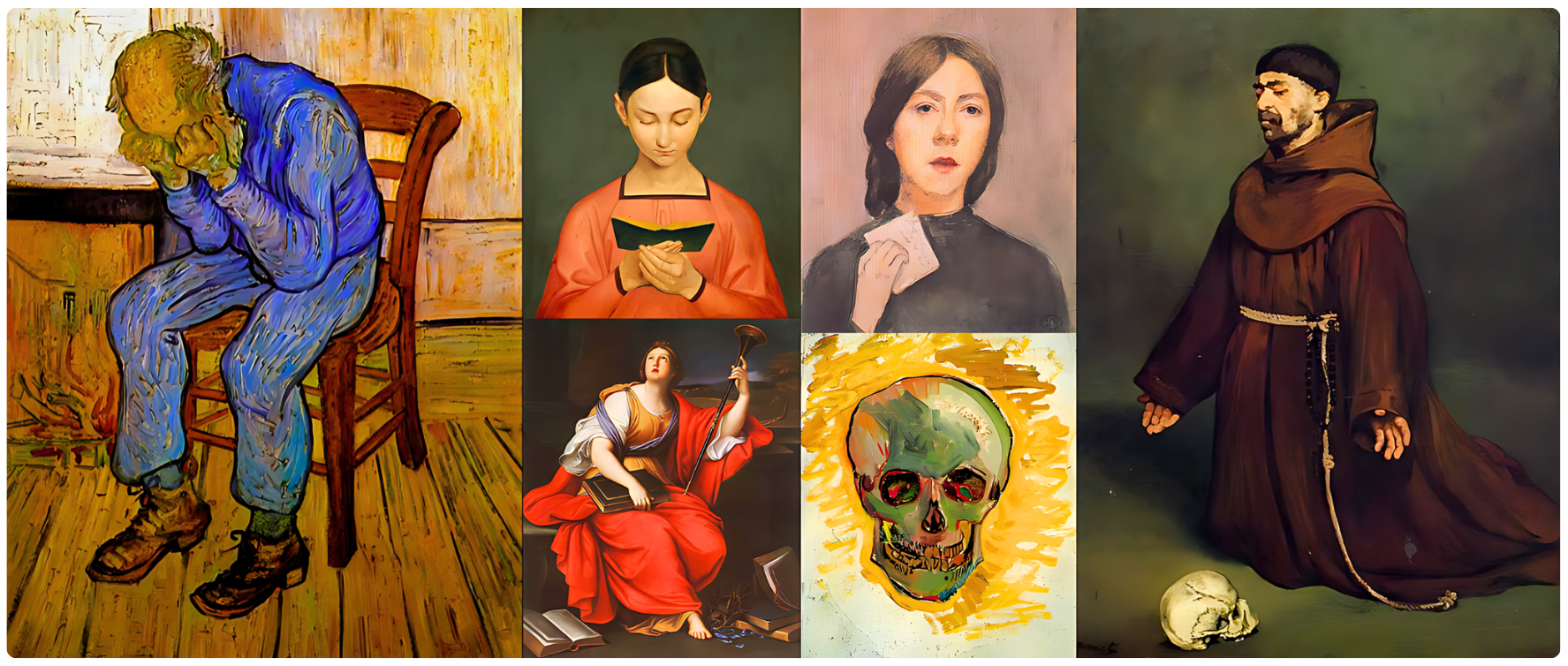
The British translator and independent scholar Robin Waterfield on the Greek philosopher Plato and the conditions for goodness:
Everyone aims for happiness or fulfillment, but that is not a product of satisfying the bodily appetites. Virtue is not of minor relevance to happiness, as most people might think, but the sine qua non (Latin for ‘without which not,’ or something indispensable) of happiness, and virtue is knowledge, which makes cultivation of the rational aspect of the soul imperative. At the very least, we have to understand what is truly valuable to us as human beings and try consistently to put that into practice. Actions are not good unless the person performing those actions is good; goodness is primarily a condition of the soul. […]
Source: Plato of Athens
📜 Perennial Maxim(s)
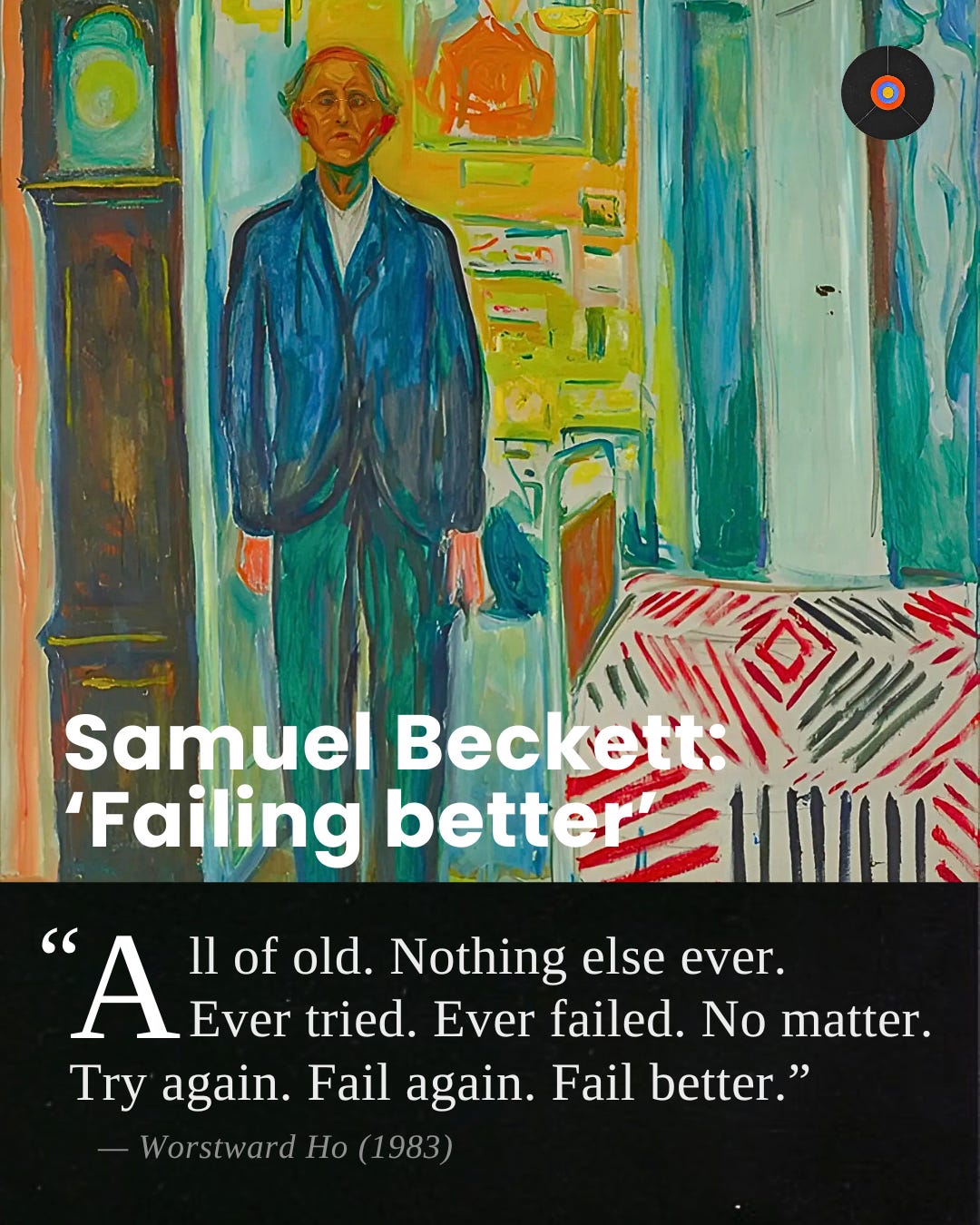
The Irish novelist and poet Samuel Beckett (1906—1989) on failing better:
Follow: Instagram | Youtube | Notes
💡 Perennial Insight(s)
The Danish philosopher and theologian Søren Kierkegaard (1813—1855) on the need for irony:
In his dissertation, Kierkegaard argued that this modern irony has no anchor. We rise above the world, question its meaning, expose its contingency – for what? … Socrates’s irony was not like this, for his trickery was intensely serious. … When Socrates practised irony, he was honouring his god. Like other people in Athens, Socrates went to the temple and made sacrifices – but he did these things differently: without certainty, without even faith and hope, but simply from longing, in an eternally questioning spirit.
If Socrates was the master of irony, Kierkegaard has been his apprentice. In his dissertation he wrote that ‘no genuinely human life is possible without irony’ – for each human soul yearns restlessly for truth, longs to know the source of its life, and feels this longing as its deepest need, its joy and its pain. […]
Source: Philosopher of the Heart (by Clare Carlisle)
🔥 Recommendation(s)
After a rather long break from including recommendations, here are two that might interest you:
(1) The first is a new audiobook and lecture series by Massimo Pigliucci (a previous podcast guest) titled Books that Matter: Meditations from The Great Courses. I highly recommend it if you’re interested in learning more about Stoicism and the Roman emperor Marcus Aurelius.
(2) The second and final recommendation is a new abridged version of Meditations, The Wisdom of Marcus Aurelius, by the renowned translator Robin Waterfield. In this latest edition, Waterfield organizes the thoughts of Marcus Aurelius into around fifty short chapters.
—
Thank you for reading; I hope you found something useful.
Until next time, be wise and be well,
J.W. Bertolotti
P.S. If you’re interested in becoming a member but cannot afford it, feel free to request a complimentary membership or use this discount link.
And
Socrates, Plato, Ang Kierkegaard were right. Who knew? Certainly not Harvard, or the deconstructionists, et al. A good man - or college - is hard to find. Ubi sunt?