

📿 Musings from Monks
‘Musings from Monks’ is an occasional series that explores insights from the writings of monks, mystics, and martyrs. These short guided contemplations are designed to deliver meditations, prompts, and practices. May they help you (and me) reflect on what it means to live a contemplative life.
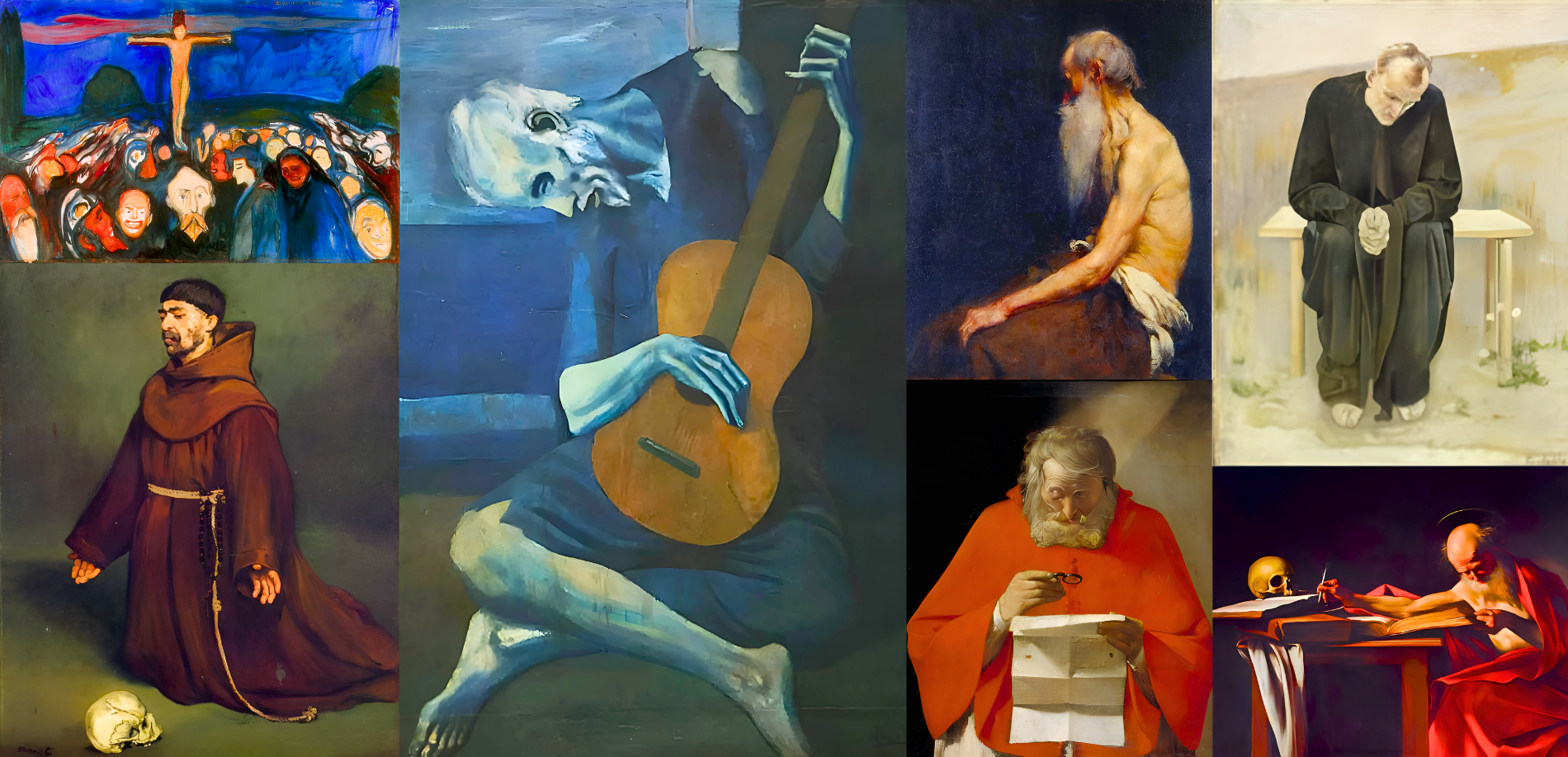
“In great saints, perfect humility and integrity coincide.”
Many poets are not poets for the same reason that many religious men are not saints: they never succeed in being themselves. …
They waste their years in vain efforts to be some other poet, some other saint. For many absurd reasons, they are convinced that they are obliged to become somebody else who died two hundred years ago and who lived in circumstances utterly alien to their own. …
Following everybody else can lead to intense egoism. People rush to magnify themselves by imitating what is popular and are too lazy to think of anything better. Hurry ruins saints as well as artists. …
In great saints, perfect humility and integrity coincide. The two turn out to be practically the same thing. The saint is unlike everybody else precisely because he is humble.
On the contrary, humility consists in being precisely the person you are before God. Since no two people are alike, you will not be like anyone else in the universe if you have the humility to be yourself. […]
+Adapted from New Seeds of Contemplation
Thomas Merton (1915—1968) is arguably the most influential American Catholic author of the twentieth century. His autobiography, The Seven Storey Mountain, has sold over one million copies and has been translated into over fifteen languages. He also wrote over sixty other books and hundreds of poems and articles on topics ranging from monastic spirituality to civil rights.

Contemplation: “Being Who You Are”
What does it mean to “be” who you are? Interestingly, Merton says that our “individuality” does not necessarily need to assert itself on the surface of everyday life. Being who we are is beyond “mere appearances or opinions” or ways of doing things. “It is something deep in the soul,” according to Merton.
