

💀 Dying Every Day
Dying Every Day (Stoicism in a Year) is a podcast by the Perennial Leader Project. Each episode turns a selected passage from Stoic philosophy into a guided meditation designed to help you (and me) learn how to live.
Listen on Apple Podcasts, Spotify, or YouTube
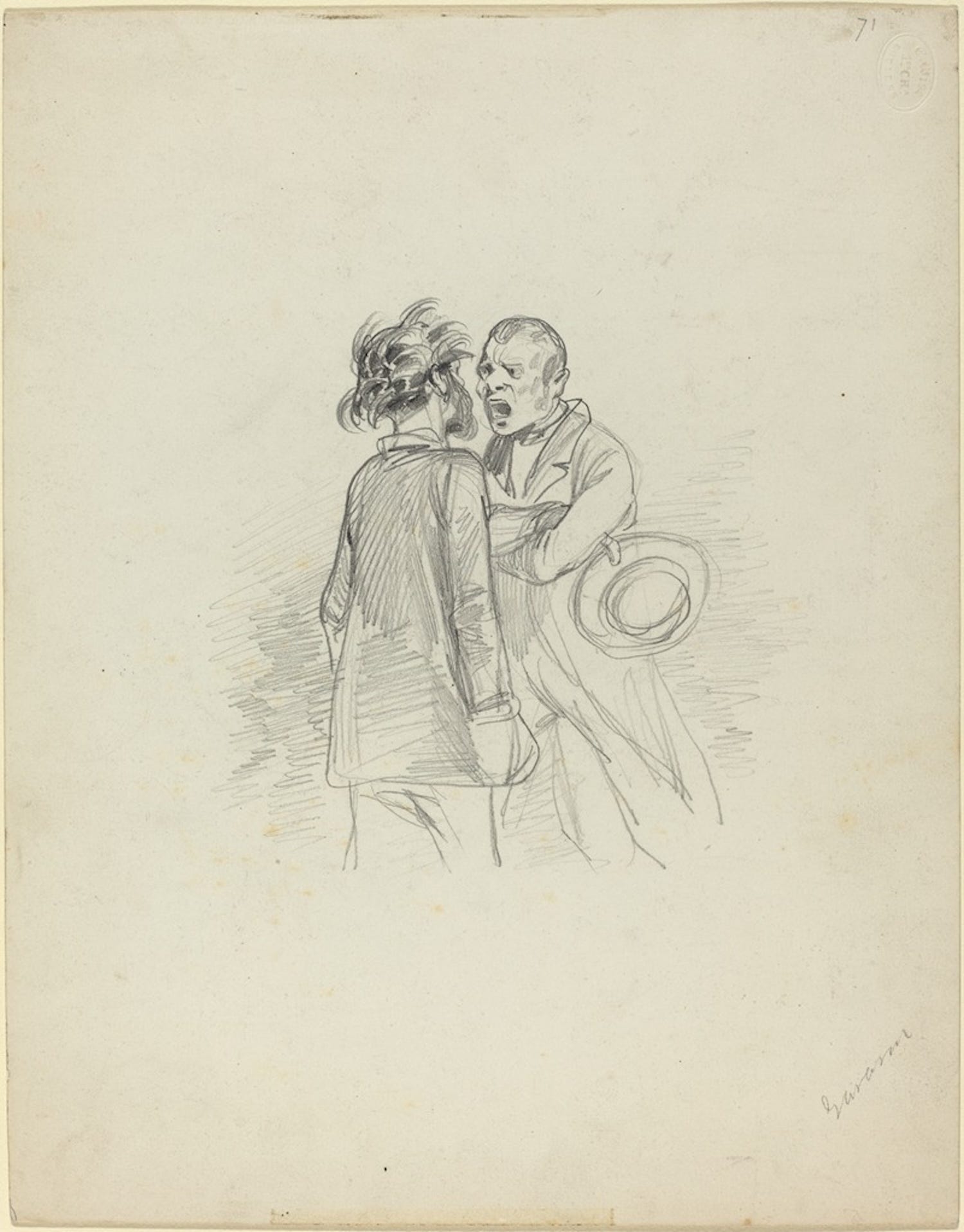
Marcus Aurelius on responding with reason, not retaliation
Welcome back to Dying Every Day (Stoicism in a Year). This is Day 125.
When someone wrongs you—such as cutting you off in traffic, taking credit for your work, or lashing out in anger—your first instinct might be to retaliate. However, the Roman emperor Marcus Aurelius offers a much different perspective.
He suggests (writing to himself):
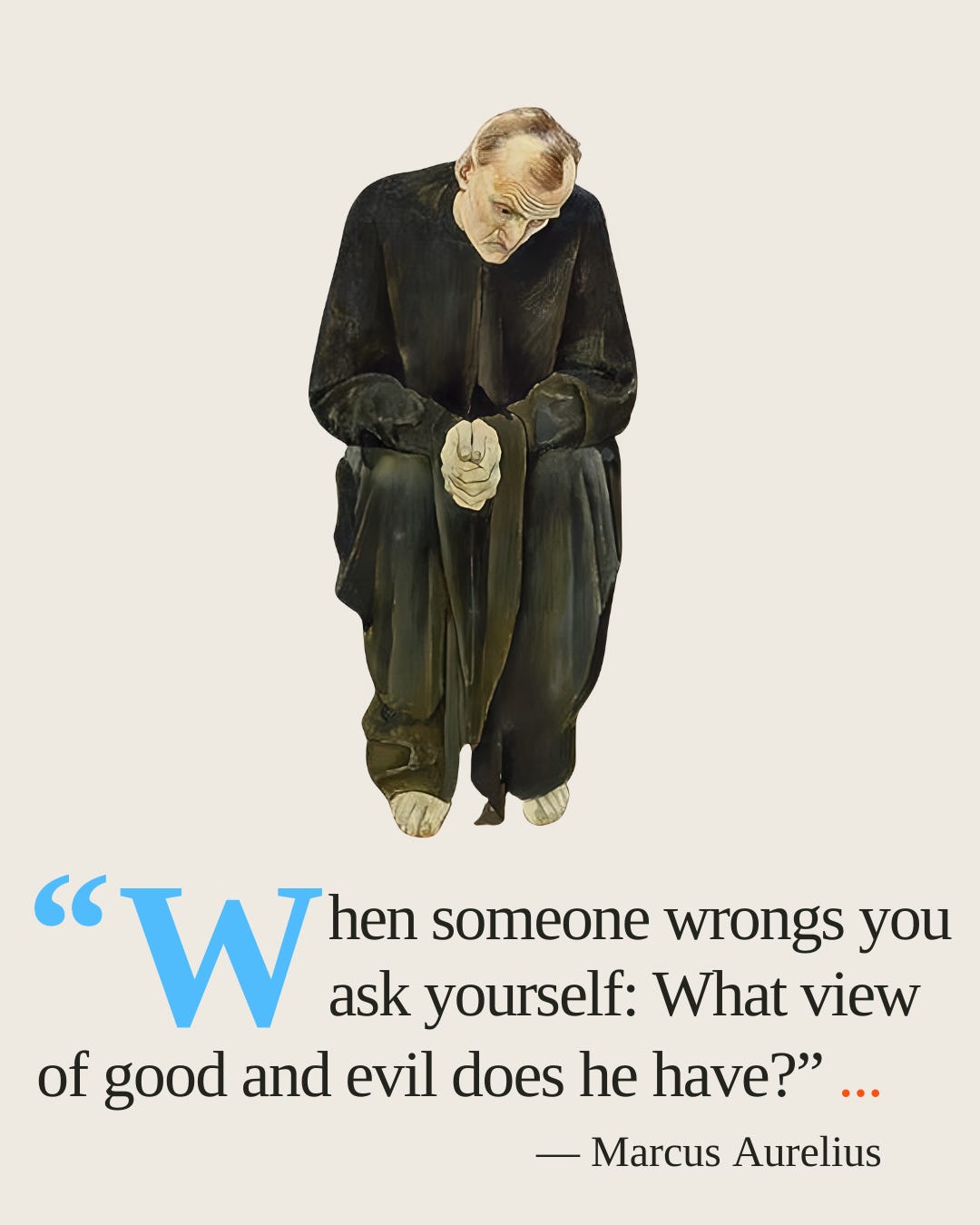
When someone wrongs you, ask yourself: What view of good and evil does he have?
This is a radical act of reframing. Instead of fueling retaliation, Marcus invites us to look behind the action. Every person carries a map of what they think is good and bad—status, safety, comfort, approval. If we can glimpse their map, even briefly, anger softens. We may pity their confusion or forgive their ignorance.
Either way, we are no longer enslaved by rage.
Marcus continues:
Every wrongdoing is a failure of judgment, not of nature. And no one does wrong willingly, for to err is to act against oneself.
Here, he echoes Socrates' claim that no one chooses evil knowingly. People act wrongly because they misjudge what is good. Recognizing this doesn’t excuse the harm, but it frees us from taking it personally. The wrongdoer is not attacking our essence; they are struggling in their own.
Modern psychology validates this Stoic wisdom. Studies on forgiveness interventions reveal that practicing forgiveness consistently lowers anger, depression, and anxiety. Likewise, brain imaging research indicates that forgiving engages areas associated with empathy and perspective-taking, whereas fixating on grudges triggers stress and threat-related circuits.
In essence, compassion genuinely reshapes how we respond, guiding us from basic survival reactions to more thoughtful and higher-level reasoning. When Marcus encourages us to “respond with reason, not retaliation,” he's highlighting a truth echoed by modern neuroscience: empathy and reappraisal soothe the brain, whereas anger tends to inflame it.
Psychologists refer to this as cognitive reappraisal—altering our interpretation of a situation to influence our emotions. When we remind ourselves that “wrongdoing is a failure of judgment,” it helps defuse anger and restores our sense of control. This change lowers the physiological stress response and boosts resilience.
Here’s a four-step process to integrate into daily life. The next time you feel someone has wronged you, consider the following:
(1) Pause: Allow the initial wave of anger to come and go without reacting.
(2) Ask: “What view of good or evil is this person acting on?” Even a rough guess—“He craves approval,” “She fears rejection”—can greatly reduce the hold of resentment.
(3) Reframe: Tell yourself, “This is a judgment error, not an attack on my essence.”
(4) Respond: Choose the action that aligns with virtue or establishes a boundary, but steer clear of humiliation or revenge.
Notice how this practice preserves what Marcus calls your ruling faculty. Anger causes your mind to give way to the offender; reason restores it. Retaliation may seem powerful in the moment, but it leaves a trail of stress, regret, and bitterness.
Compassion and reason, on the other hand, leave you light, unencumbered, and free to face the next moment with clarity.
Marcus Aurelius was not asking us to be passive, but to be wise. Yes, wrongdoings must be confronted occasionally. But confrontation without understanding often hardens into cruelty, while confrontation with compassion preserves both justice and humanity.
Every insult, betrayal, or slight offers a choice. The Stoics remind us to respond with reason, not retaliation.
Reflection Prompt
Consider reflecting or journaling on how you think about reason and retaliation. You might ask yourself, “How can I remember to practice cognitive reappraisal—’pause, ask, reframe, and respond’—the next time conflict occurs?”
Listen on Apple Podcasts, Spotify, or YouTube
—
Thank you for reading/listening; I hope you found something useful.
Until next time, be wise and be well.
J.W.
P.S. Catch up on recent (and past) meditations in the archive!
Excellent essay. Links back to Epictetus and his concept of the dichotomy of control. Look at everything from the viewpoint of “is this under my control or not under my control“. He advises that we only concern ourselves with things that are under our control. As we cannot control what isn’t. Thanks again!