


💀 Dying Every Day
Dying Every Day (Stoicism in a Year) is a podcast by the Perennial Leader Project. Each episode turns a selected passage from Stoic philosophy into a guided meditation designed to help you (and me) learn how to live.
Listen on Apple Podcasts, Spotify, or YouTube
Marcus Aurelius on Making Mistakes
Welcome to Dying Every Day (Stoicism in a Year). This is Day 64, and we’re turning to the Roman emperor Marcus Aurelius for guidance on making mistakes (and being human).
In his Meditations, he wrote to himself,
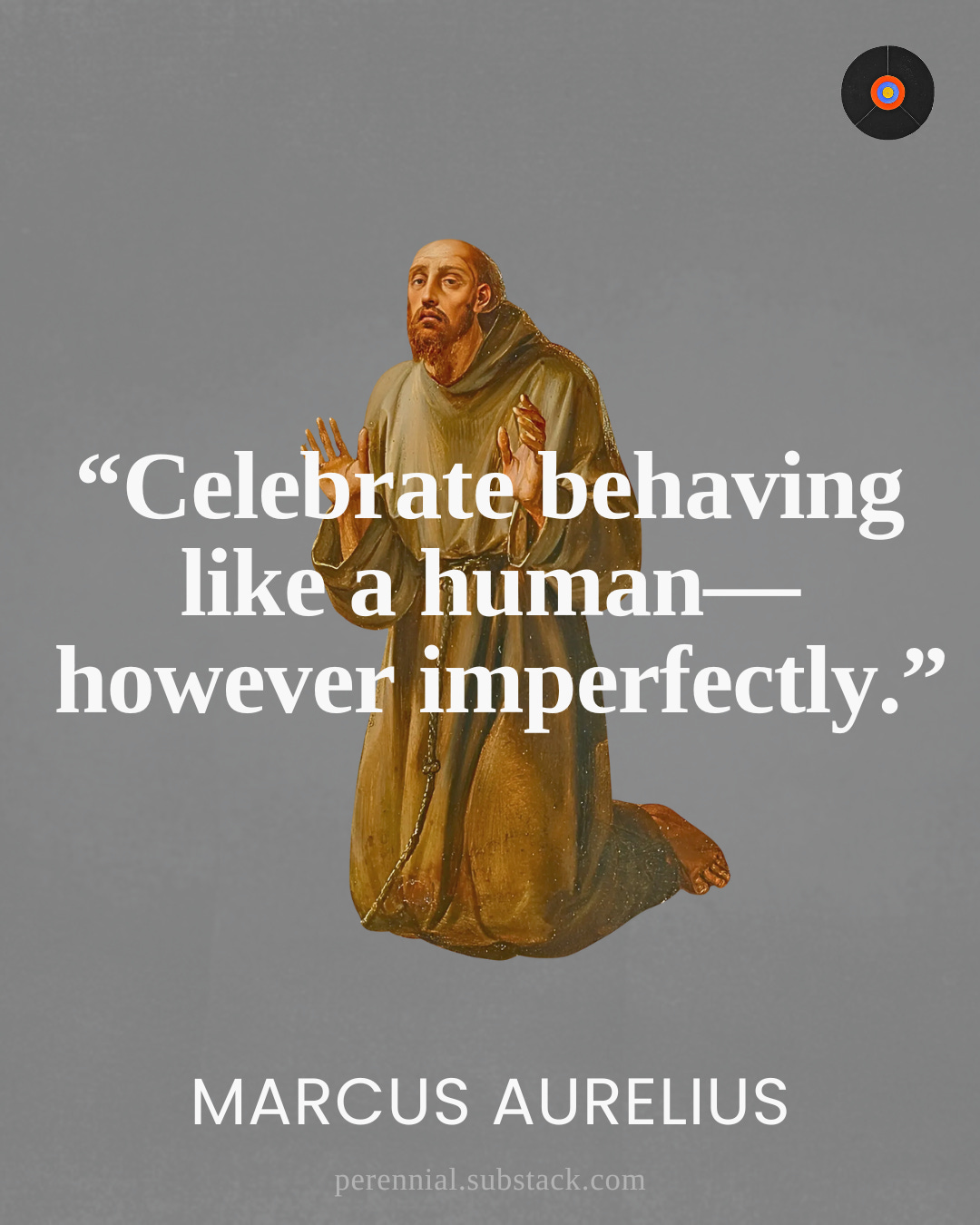
Not to feel exasperated, or defeated, or despondent because your days aren’t packed with wise and moral actions. But to get back up when you fail, to celebrate behaving like a human—however imperfectly—and fully embrace the pursuit that you’ve embarked on. And not to think of philosophy as your instructor, but as a soothing ointment. Not showing off your obedience to the logos, but resting in it. ...
Marcus Aurelius continues,
What you’ve been after is something else again—something unnatural. But what could be preferable? That’s exactly how pleasure traps us, isn’t it? Wouldn’t generosity be preferable? Or freedom? Honesty? Prudence? Piety? And is there anything preferable to thought itself—to logic, to understanding?
+Adapted from Meditations, 5.9
For the Stoics, making mistakes or missing the mark is part of being human. Although the sage (or ideal) consistently embodies virtue, we should not assume that we are one or that the Stoics we read about were either. The Stoics believed the sage is as rare as the phoenix, which, according to legend, comes around once every 500 years.
The ancient saying, “The best is the enemy of the good,” connects with today’s passage. It means that the pursuit of perfection often gets in the way of accomplishing anything. By its very nature, the virtue of prudence or practical wisdom goes against perfectionism.
Stoicism does not demand perfection. The Greek term prokopton, used by the Stoics, refers to someone progressing or advancing towards virtue and wisdom. Therefore, it’s important to remember that there is no progress without the occasional setbacks. Likewise, there is no goal (or life) without obstacles.
Reflection Prompt
Consider reflecting (or journaling) on what it means to keep moving forward despite mistakes, obstacles, and challenges. You might ask yourself, How can I remember to get back up when I fail and, like Marcus Aurelius, celebrate being human—however imperfectly?
Listen on Apple Podcasts, Spotify, or YouTube
—
Thank you for reading/listening; I hope you found something useful.
Until next time, be wise and be well,
J.W.
P.S. I greatly appreciate your time, attention, and support!
Im going to write on this tomorrow amd post here
That's what I want to become--a sage. Such a lofty goal, but it's doable. Thank you for this.