


💀 Dying Every Day
Dying Every Day (Stoicism in a Year) is a podcast by the Perennial Leader Project. Each episode turns a selected passage from Stoic philosophy into a guided meditation designed to help you (and me) learn how to live.
Listen on Apple Podcasts, Spotify, or YouTube
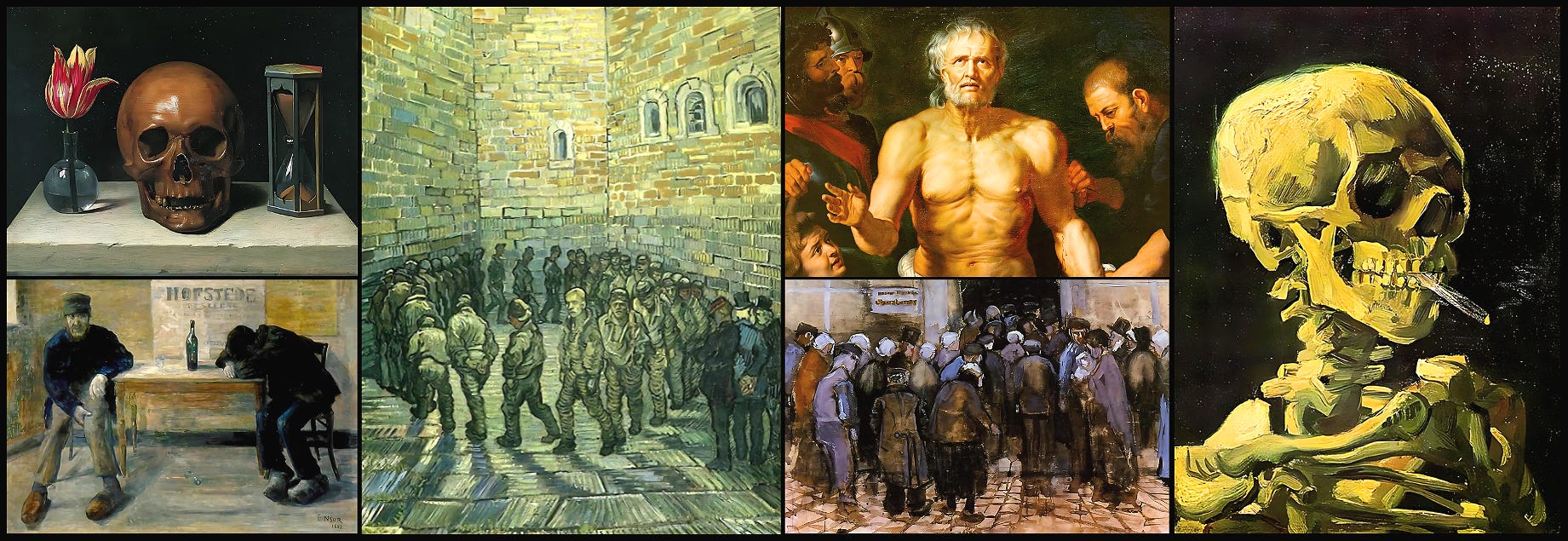
Marcus Aurelius on human nature
Welcome back to Dying Every Day (Stoicism in a Year). We’ve reached Day 88, and we’re exploring human nature.
In his Meditations, the Roman emperor Marcus Aurelius wrote to himself,
Don’t let yourself forget how many doctors have died, after furrowing their brows over how many deathbeds. How many astrologers, after pompous forecasts about others’ ends? How many philosophers, after endless disquisitions on death and immortality. How many warriors, after inflicting thousands of casualties themselves? How many tyrants, after abusing the power of life and death atrociously, as if they were themselves immortal?
How many whole cities have met their end? …
Marcus concludes the passage like this,
In short, know this: Human lives are brief and trivial. … To pass through this brief life as nature demands. To give it up without complaint. Like an olive that ripens and falls. Praising its mother, thanking the tree it grew on.
+Adapted from Meditations, 4.48
Today’s passage points to the notion that nothing lasts. The maxim “this too shall pass” applies whether we are thinking about people or empires.
Take a moment and consider how often you contemplate (or remind yourself of) the impermanence of life. What about the transient or fleeting nature of each moment?
Buddhist scripture frequently uses analogies and metaphors to illustrate the shortness of life. Here is one from a religious teacher named Araka:
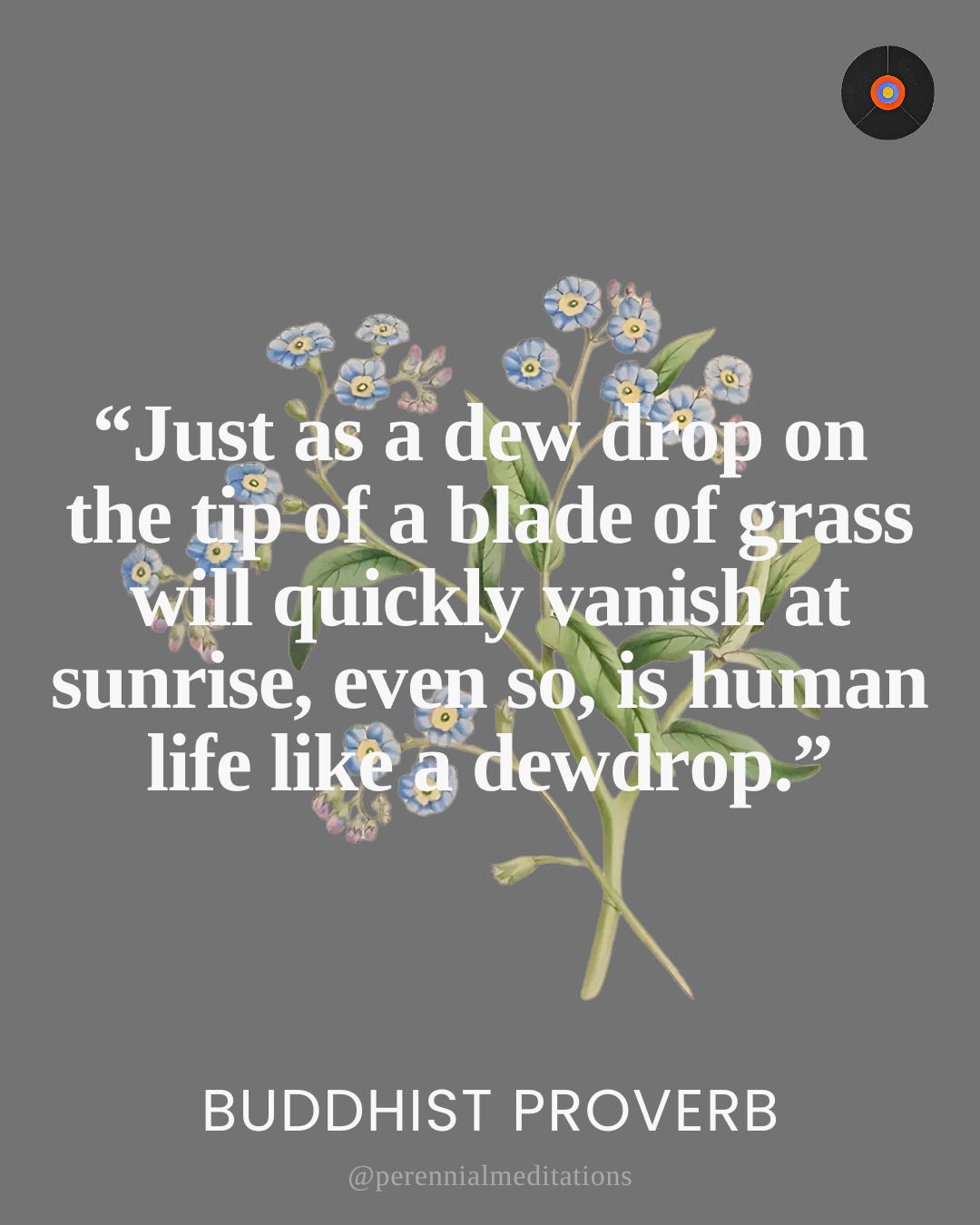
Just as a dew drop on the tip of a blade of grass will quickly vanish at sunrise and will not last long, even so, is human life like a dewdrop.
The idea that nothing lasts is one of the most observable eternal truths. It applies to the moments in life that we cherish and those that we don’t. But despite how observable this eternal truth is, like Marcus Aurelius, we need reminders (usually often).
Reflection Prompt
Consider reflecting (or journaling) on how you think about (or notice) the nature of impermanence. You might ask yourself, “What does it mean to remember one’s mortality or fleeting nature?” and/or “How can I begin to live while remembering that life is short?”
Listen on Apple Podcasts, Spotify, or YouTube
—
Thank you for listening; I hope you found something useful.
Until next time, be wise and be well,
J.W.
P.S. I greatly appreciate your time, attention, and support!