

💀 Dying Every Day
Dying Every Day (Stoicism in a Year) is a podcast by the Perennial Leader Project. Each episode turns a selected passage from Stoic philosophy into a guided meditation designed to help you (and me) learn how to live.
Listen on Apple Podcasts, Spotify, or YouTube
Marcus Aurelius on fame and praise
Welcome to another episode of Dying Every Day (Stoicism in a Year). This is Day 81, and we’re turning to the Roman emperor Marcus Aurelius to explore fame and praise.
In his Meditations (or Notes to himself), Marcus Aurelius wrote,
People excited by posthumous fame forget that those who remember them will soon die too. And those after them in turn. Until their memory, passed from one to another like a candle flame, goes out.
But suppose that those who remembered you were immortal and your memory undying. What good would it do you? And I don’t just mean when you’re dead, but in your own lifetime. What use is praise, except to make your lifestyle a little more comfortable?
You’re out of step—neglecting the gifts of nature to hand on someone’s words in the future.
+Adapted from Meditations, 4.19
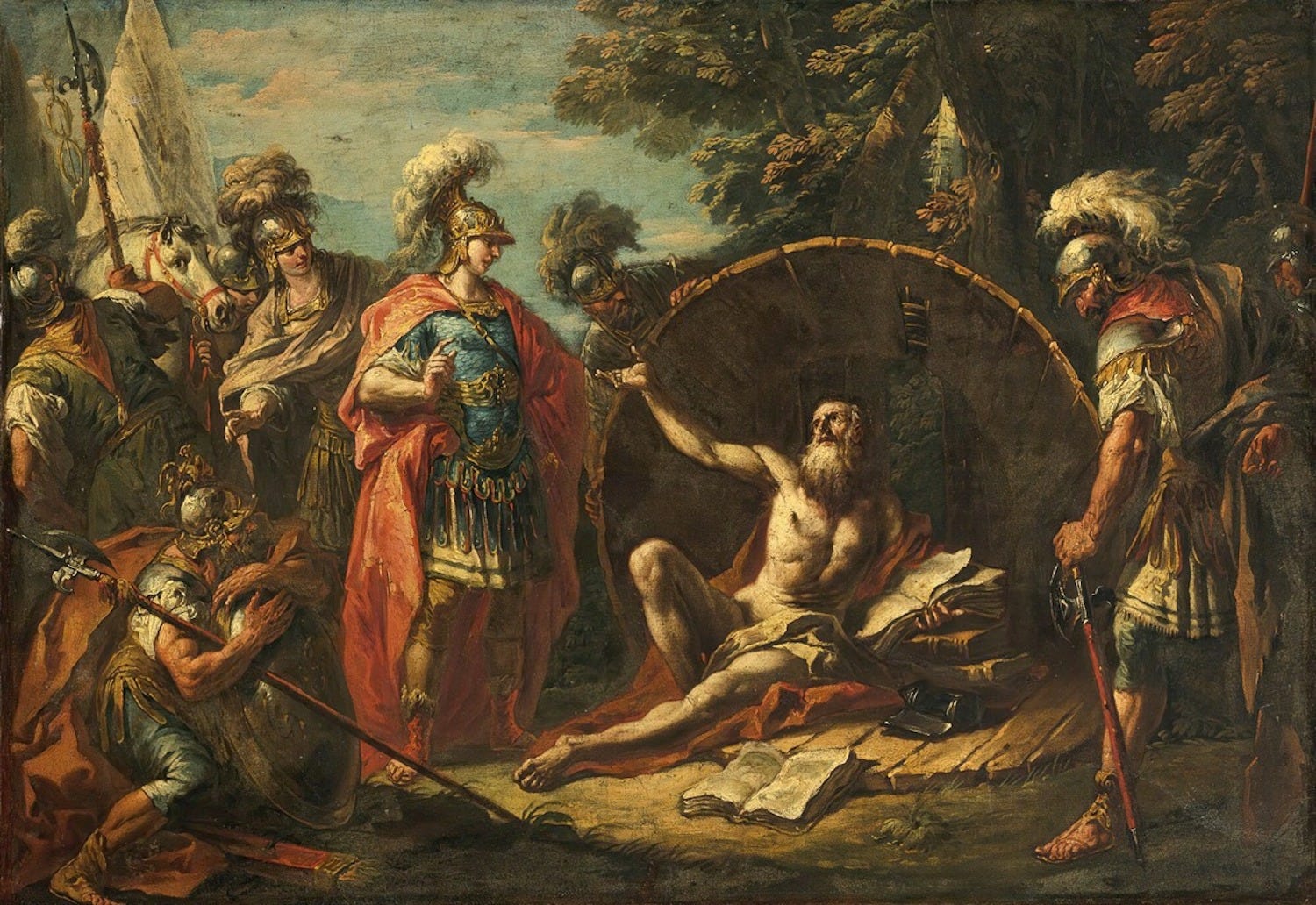
Today’s passage reminds me of an exchange between the philosopher Diogenes the Cynic and the ruler Alexander the Great. Alexander found Diogenes examining a pile of human bones. When Alexander asked what he was looking for, Diogenes said he was searching for the bones of Alexander's father, but couldn't distinguish them from those of his slaves.
You might rightly imagine that Diogenes was an unconventional figure, but the story points out that we all die regardless of position and power.
Let’s return to the idea of fame and praise. Ask yourself, “Is fame or praise good?” According to the Stoics, the answer is no, since virtue is the only good. Yet, someone might ask, “Isn’t it good to receive praise for being virtuous?”
In the following passage, Marcus Aurelius writes,
Beautiful things of any kind are beautiful in themselves and sufficient to themselves. Praise is extraneous. The object of praise remains what it was—no better or worse. This applies, I think, even to “beautiful” things in ordinary life—physical objects, artworks. Does anything genuinely beautiful need supplementing? No more than justice does—or truth, or kindness, or humility. Are any of those improved by being praised? Or damaged by contempt?
+Adapted from Meditations, 4.20
For the Stoics, praise and fame are indifferent. They don’t add any value to a virtuous act or life.
Reflection Prompt
Consider reflecting (or journaling) on the ideas of fame and praise. You might ask yourself, “How can I remember to order my desire to virtue instead of fame and praise?” and/or “What good would it do you to be remembered for all of eternity?”

Listen on Apple Podcasts, Spotify, or YouTube
—
Thank you for listening; I hope you found something useful.
Until next time, be wise and be well,
J.W.
P.S. I greatly appreciate your time, attention, and support!