

Dear Fellow Travelers,
As a reminder, the “Know Thyself” series is intended to explore the art of self-awarness, you can catch up on previous volumes here: The Philosophy of Desire (Vol. 1), The Self, Shadow, and Sage (Vol. 2), The Wisdom of Wonder (Vol. 3), The Art of Rationality (Vol. 4), Making Sense of Emotions (Vol. 5), The Paradox of Uncertainty (Vol 6), and Wisdom is the Way (Vol. 7).
Lastly, if you have any questions, thoughts, or suggestions throughout this series, please don't hesitate to share them in the comments.
Be wise and be well.

👁️ Know Thyself
The “Know Thyself” series explores philosophy, theology, and psychology for insights on the art (and science) of self-awareness. Expect to learn perennial ideas and psychological concepts on human nature, along with philosophical lessons on the art of living.

Love is the Practice
We often describe love as if it were a feeling, a sudden occurrence that happens to us like weather. However, love—especially the kind that sustains, heals, and transforms—is more than just an emotion. It is a practice, a habit. As Erich Fromm explains in The Art of Loving, “Love is an activity, not a passive affect; it is a ‘standing in,’ not a ‘falling for.’” He emphasizes that true love is mainly about giving, not receiving.
To love, then, like virtue, is a practice. It involves cultivating and embodying certain capacities. It is a lifelong art that relies on our highest faculties—reason, will, and virtue. As we will see, the ancient Greeks, Christian thinkers, and contemporary psychologists all recognize love not just as desire or sentiment, but as something much deeper: a moral and spiritual discipline.
This volume of “Know Thyself” examines how the four loves in Greek philosophy connect to the four cardinal virtues, showing how love (as a practice) helps and guides the pursuit of a good life.
The Four Loves
The Greeks recognized what we too often forget: that “love” is not a single thing. They distinguished between multiple kinds of love, each with its own character and ethical demands. C.S. Lewis, in The Four Loves, recovers these distinctions and shows how they reveal different dimensions of the human heart:
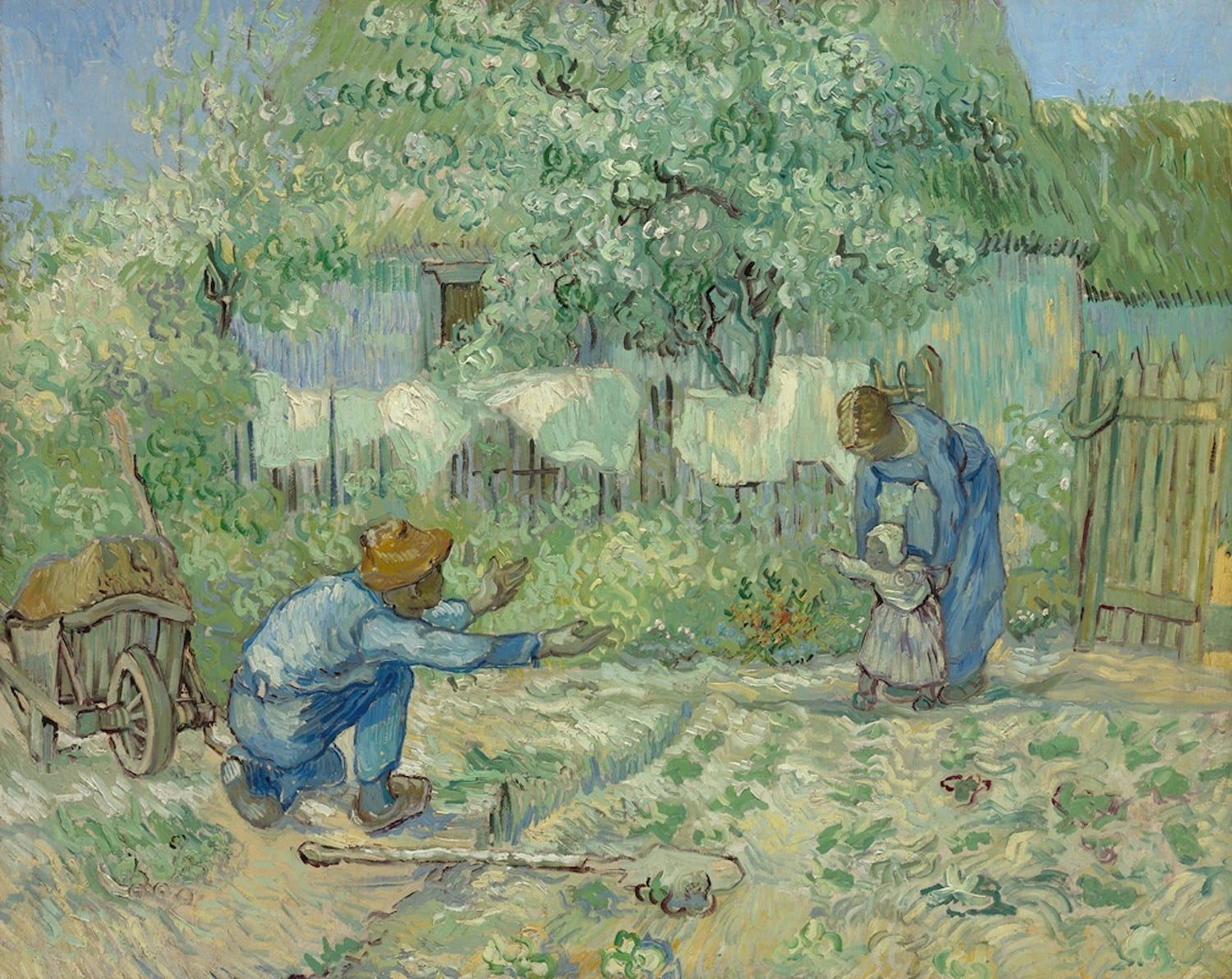
Storge (Affection) is a gentle, unpretentious love that connects family members, particularly parents and children. It is based on shared experiences and familiarity—what Lewis describes as “a humble, comfortable love.” It requires little acknowledgment and often works silently. “Almost anyone can be the object of Affection,” he notes, “because it is the most inclusive of loves.”
Philia (Friendship) is the love of friendship—chosen, mutual, often rooted in shared values and pursuits. Aristotle considered it one of the noblest forms of love, writing in the Nicomachean Ethics that “friendship is a virtue, or involves virtue, and is most necessary for life. For no one would choose to live without friends.”
Eros (Romantic Love) is a passionate longing for love—the kind that inspires poets and brings ecstasy. Plato, in the Symposium, called eros a craving for beauty and transcendence. When at its best, eros elevates us beyond our limits. But if left unchecked, eros can become an obsession. Lewis cautions that it “makes a virtue out of necessity,” requiring total self-surrender. Consequently, eros must be guided by temperance and prudence.
Agape (Charity) is the highest and most difficult of loves: unconditional, self-sacrificing, divine. In Christian thought, it is the love of God for creation and the love we are called to offer in return. In The Four Loves, Lewis calls agape “the greatest of all,” echoing Paul: “Love is patient, love is kind... It keeps no record of wrongs... Love never fails.” (1 Corinthians 13).
Søren Kierkegaard, the Danish theologian and philosopher, states in Works of Love that “To cheat oneself out of love is the most terrible deception... it is an eternal loss for which there is no compensation, either in time or in eternity.” For Kierkegaard, love is not optional but a commandment. It serves as the measure of spiritual maturity.
Consider the following questions: (1) How do you define (or think about) love? (2) Is learning to love any different than learning to be virtuous? (3) What can love teach us about ourselves?
