


🖼️ Monday Muse
The “Monday Muse” is a weekly collection of reminders, insights, and maxims on the art of living. The term “muse” has two meanings: (1) a state of deep thought; and (2) a source of inspiration. May the following (in a small way) be a source of contemplation and wisdom to live your highest good.
📌 Perennial Reminder(s)
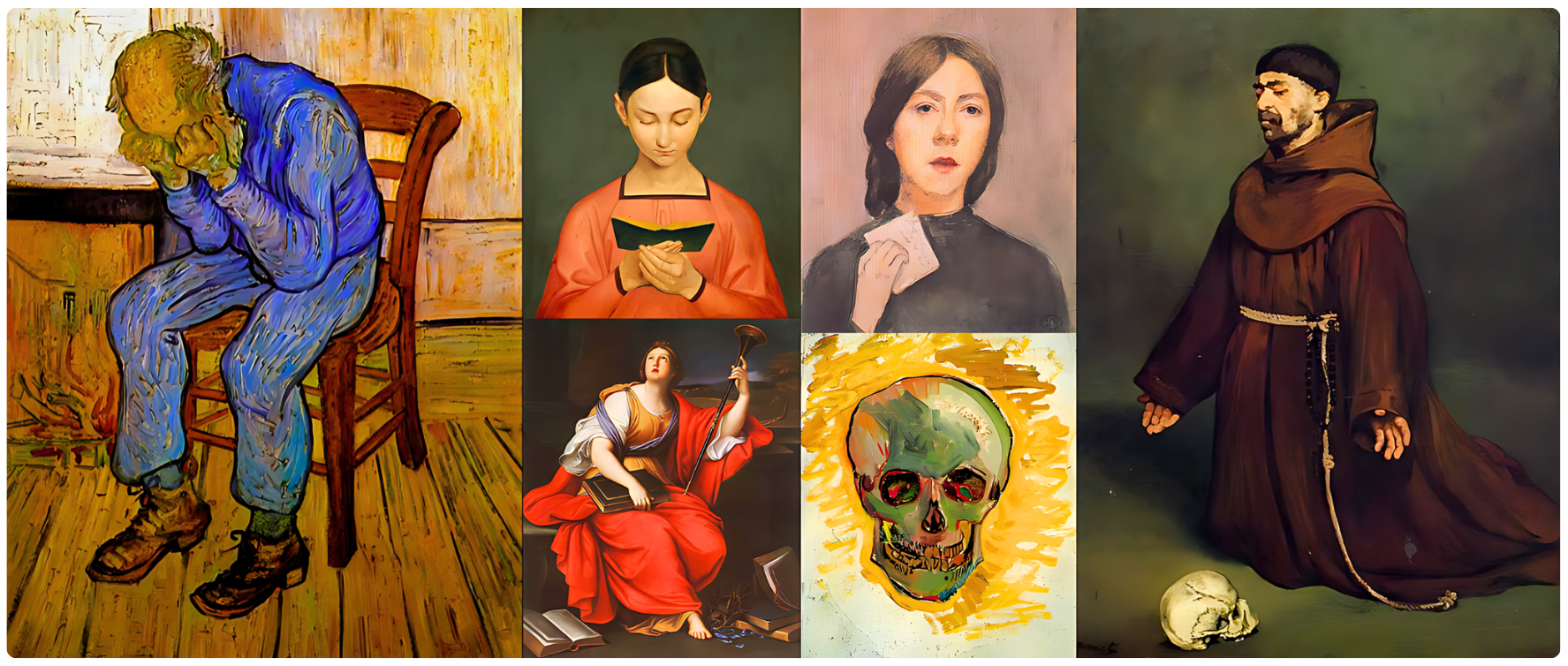
The unhappy person is one who has become a stranger to himself.
— Søren Kierkegaard, Either/Or
Are you truly happy? Kierkegaard, a 19th-century philosopher and theologian, thought it’s easy to fall into quiet despair—not because life is terrible, but because we become distracted from ourselves. Amidst the noise of obligations and appearances, we tend to forget what truly matters.
We wake up and scroll through our feeds. We rush through our routines. We say yes to things we don’t believe in. And somewhere along the way, we become strangers to our own longings. We trade attention for urgency.
Each day provides an opportunity to reflect—by being mindful and asking:
Am I living intentionally or just out of habit?
Is this my authentic life, or simply the one I’ve fallen into?
In Leaves of Grass, the American poet Walt Whitman wrote,
Re-examine all you have been told... dismiss whatever insults your own soul.
Whitman (like Kierkegaard) wasn't advocating rebellion but rather urging remembrance. Your purpose is to live fully, intentionally, and with awareness.
Consider reflecting on what you've overlooked in yourself recently. What subtle truth have you dismissed in the pursuit of busyness?
📜 Perennial Maxim(s)
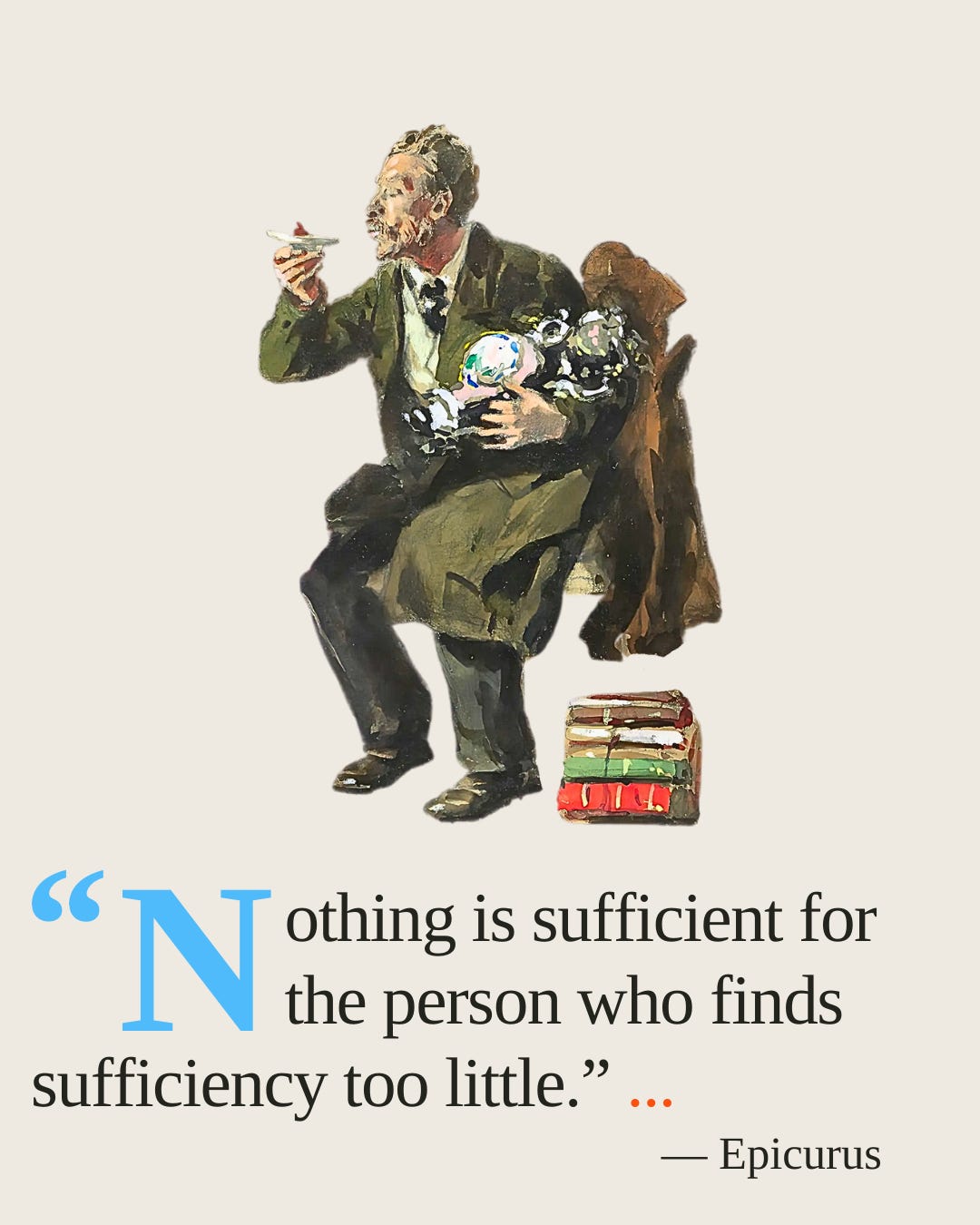
The Greek philosopher Epicurus (341—270 BC) on having enough:
Follow: Instagram | Youtube | Notes
💡 Perennial Insight(s)
Better than a thousand hollow words is one word that brings peace.
— Buddha, Dhammapada
Restraint is not weakness; rather, it is a form of strength and wisdom in everyday life. It requires courage to pause before speaking, to hold back a harsh reply, and to resist the temptation to prove oneself right.
There is a common misconception that being reactive equals being authentic. But reactivity is not honesty; it is often a habitual response.
Before responding to something that provokes you this week, consider pausing. You could ask yourself, “Is what I am about to say necessary? True? Kind?”
If not, let silence be your answer.
Restraint is not repression. It is refinement—the art of responding wisely instead of impulsively.
—
Thank you for reading; I hope you found something useful.
Until next time, be wise and be well.
J.W. Bertolotti
P.S. Catch up on recent (and past) meditations in the archive!