


🖼️ Monday Muse
The Monday Muse is a weekly collection of reminders, insights, and maxims on the art of living. The term “muse” has two meanings: (1) a state of deep thought; and (2) a source of inspiration. May the following (in a small way) be a source of contemplation and wisdom to live your highest good.
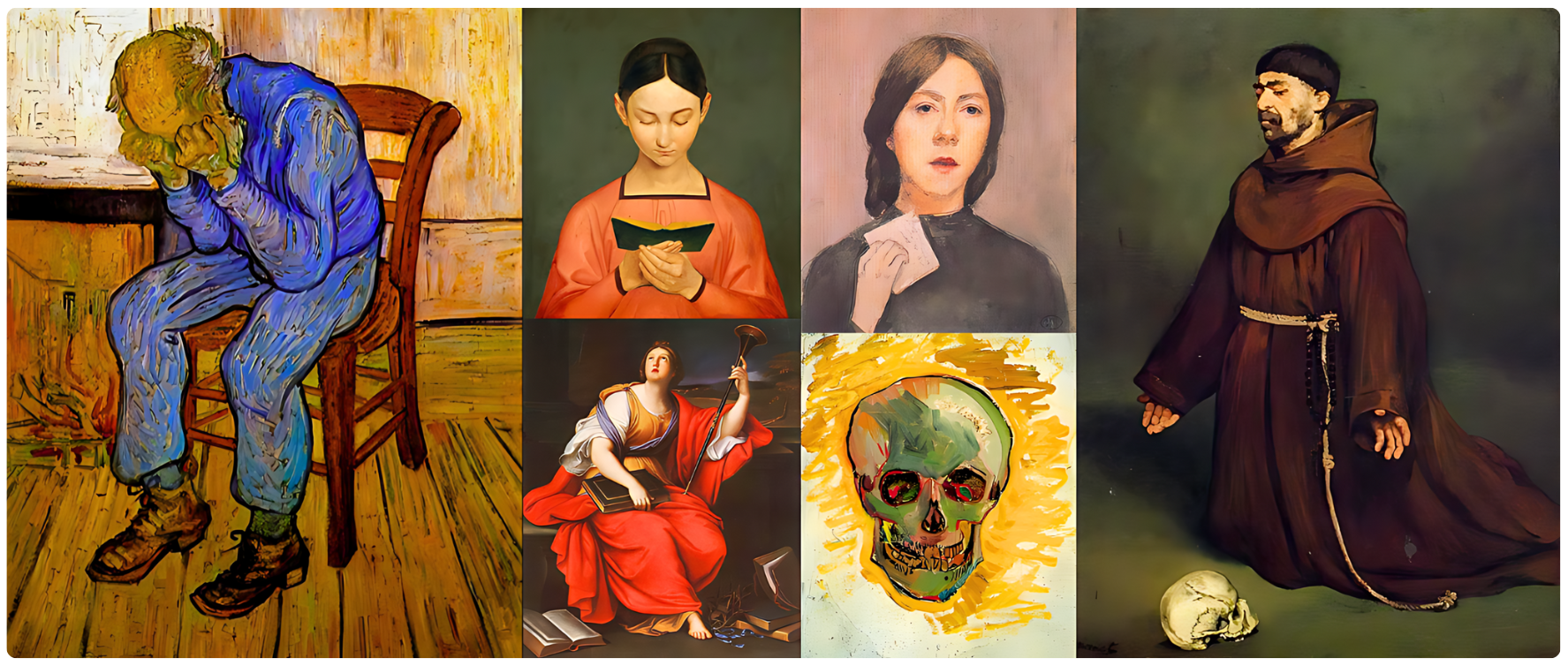
📌 Perennial Reminder(s)
The American historian and philosopher Will Durant (1885—1991) on knowing oneself:
Philosophy begins when one learns to doubt—particularly to doubt one’s cherished beliefs, one’s dogmas and one’s axioms. Who knows how these cherished beliefs became certainties with us, and whether some secret wish did not furtively beget them, clothing desire in the dress of thought? There is no real philosophy until the mind turns round and examines itself. Gnothi seauton, said Socrates: ‘Know thyself’. […]
Source: The Story of Philosophy
📜 Perennial Maxim(s)
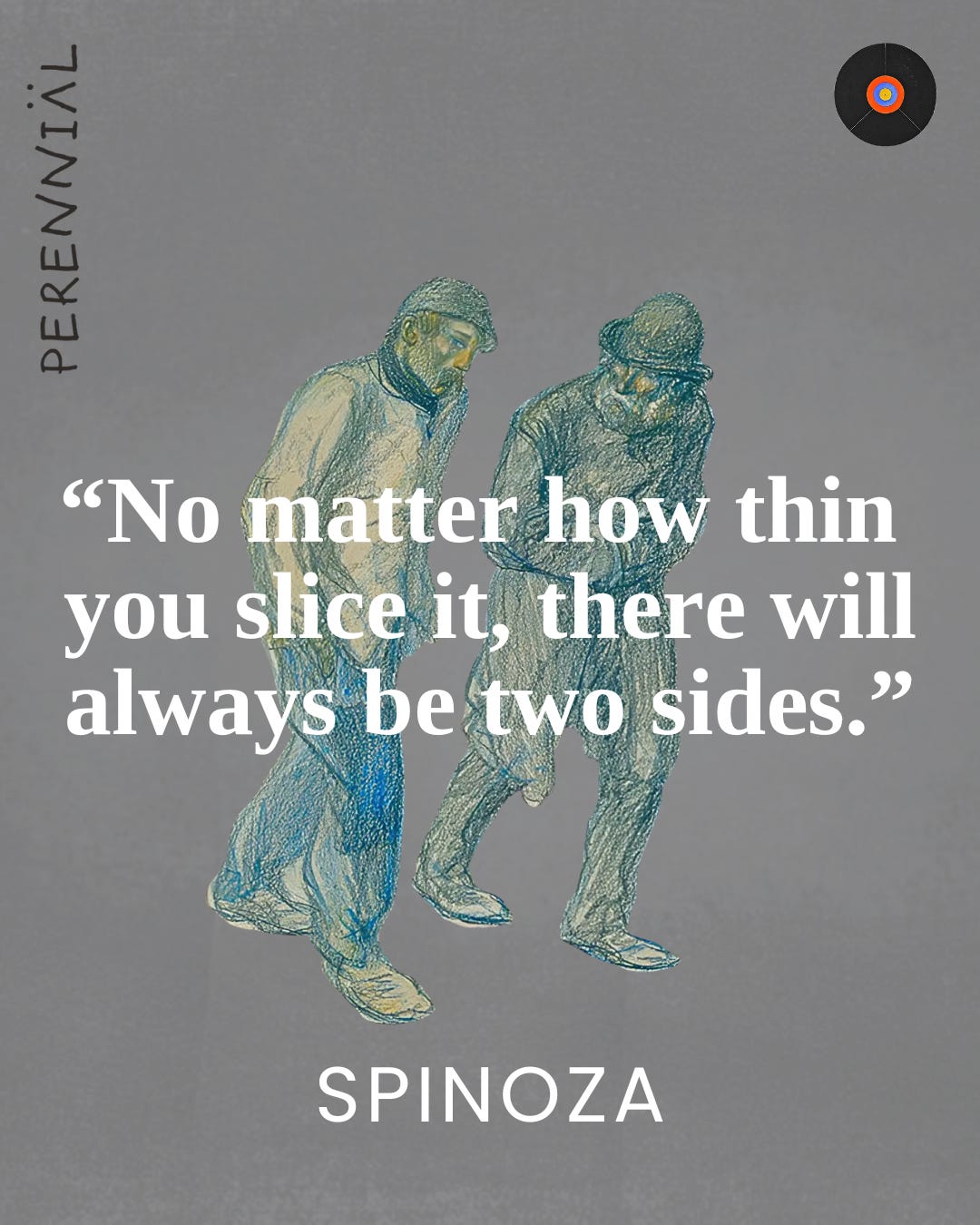
The Dutch philosopher Baruch de Spinoza (1632—1677) on perspectives (I find this maxim to be especially important and one that connects with Durant’s point about doubt and “loosening the grip” on our certainty):
Follow us: Instagram | Youtube
💡 Perennial Insight(s)
The British philosopher A.C. Grayling on the art of self-control:
What especially impressed Socrates’ followers was that his view of happiness, ‘the health of the soul’, was – as this phrase itself implies – radically internalist, a perspective which led some, not least Epicurus, to treat philosophy as a practical therapy for the soul. In their writings, Plato and Xenophon both emphasized Socrates’ ability to master the appetites that are a source of disturbance for most other people – appetites for food, comfort, and sex – because they are chief among the drivers of bad conduct.
Xenophon wrote, ‘Socrates was the most self-controlled of all men over sex and bodily appetite, the most resilient in relation to winter and summer and all exertions, and so trained for needing moderate amounts that he was satisfied when he had only little.’ […]
Source: Philosophy and Life
💀 Dying Every Day
Regarding knowing oneself and self-control, Day 31 of Dying Every Day (Stoicism in a Year) explored the ancient debate between virtue and pleasure withMassimo Pigliucci (Listen to the conversation below):
Listen to Dying Every Day on Apple Podcasts, Spotify, or YouTube
—
Thank you for reading; I hope you found something useful.
Until next time, be wise and be well,
J.W. Bertolotti
P.S. If you’re interested in becoming a member but cannot afford it, feel free to request a complimentary membership or use this discount link.