

Perennial Wisdom
Perennial Wisdom is a podcast for seekers and curious minds. Each episode explores philosophical and spiritual traditions for universal truths and enduring ideas to help you (and me) never stop learning how to live.
Listen on Apple Podcasts, Spotify, or YouTube
How to “Look Again” at Life
In this episode of Perennial Wisdom, we discuss why we often struggle to see ourselves or life clearly, and how to calm restless minds while examining our perceptions and our place in the cosmos. We focus on what it means to “look again” at life—to pause, to notice, and to practice humility and wonder.
This episode draws on insights from spiritual teacher Ram Dass, philosopher Socrates, psychologist Adam Grant, and astronomer Carl Sagan.
Key Takeaways
We don’t always see clearly.
Humility can foster growth.
A broader perspective reveals what truly matters.
Listen on Apple Podcasts, Spotify, or YouTube
Episode Transcript
The following is a transcript from “How to ‘Look Again’ at Life” from the Perennial Wisdom podcast (Ep. 244).
—
Today is an invitation to “look again” at life.
One of the most humbling—and beautiful—truths about life is this: we don’t always see it clearly.
Our minds are not the precise instruments we imagine them to be. Our memories blur. Our perceptions distort. We walk through the world as though we know what’s real—yet so much of it is clouded by desire, fear, and pride.
The spiritual teacher Ram Dass—once a Harvard psychologist who became a pioneer of mindfulness in the West—described this restless state of mind in his book Be Here Now.
Ram Dass wrote:
The human mind is like that monkey, incessantly active by its own nature. Then it becomes drunk with the wine of desire, increasing its turbulence. Next comes the sting of jealousy… and at last, the demon of pride makes the mind think itself all-important.
If you’re honest, you’ve probably felt that inner monkey, haven’t you?
I know I have.
But here’s the paradox: the journey to wisdom starts when we accept that we don’t see the full picture and can't know everything with certainty. Socrates, the ancient Greek philosopher, embraced this idea as his core principle, famously stating, “All that I know is that I know nothing.”
Although this approach isn’t about surrendering, it's about staying grounded in reality.
Adam Grant—a contemporary organizational psychologist and best-selling author of Think Again—reminds us that humility is not weakness but strength.
Grant explains:
One of the Latin roots of humility means ‘from the earth.’ It’s about being grounded—recognizing that we’re flawed and fallible. You can believe in your ability to achieve your goals while still questioning if you have the right tools.
Humility doesn’t make you smaller; it makes you clearer. It helps you see yourself honestly and stand firmly—on the Earth.
And then there’s Carl Sagan—the beloved American astronomer, who helped millions of people see the wonder and fragility of our planet. When NASA’s Voyager probe photographed Earth from the edge of the solar system, he reflected on the tiny dot in that image in his book Pale Blue Dot.
Sagan observed:
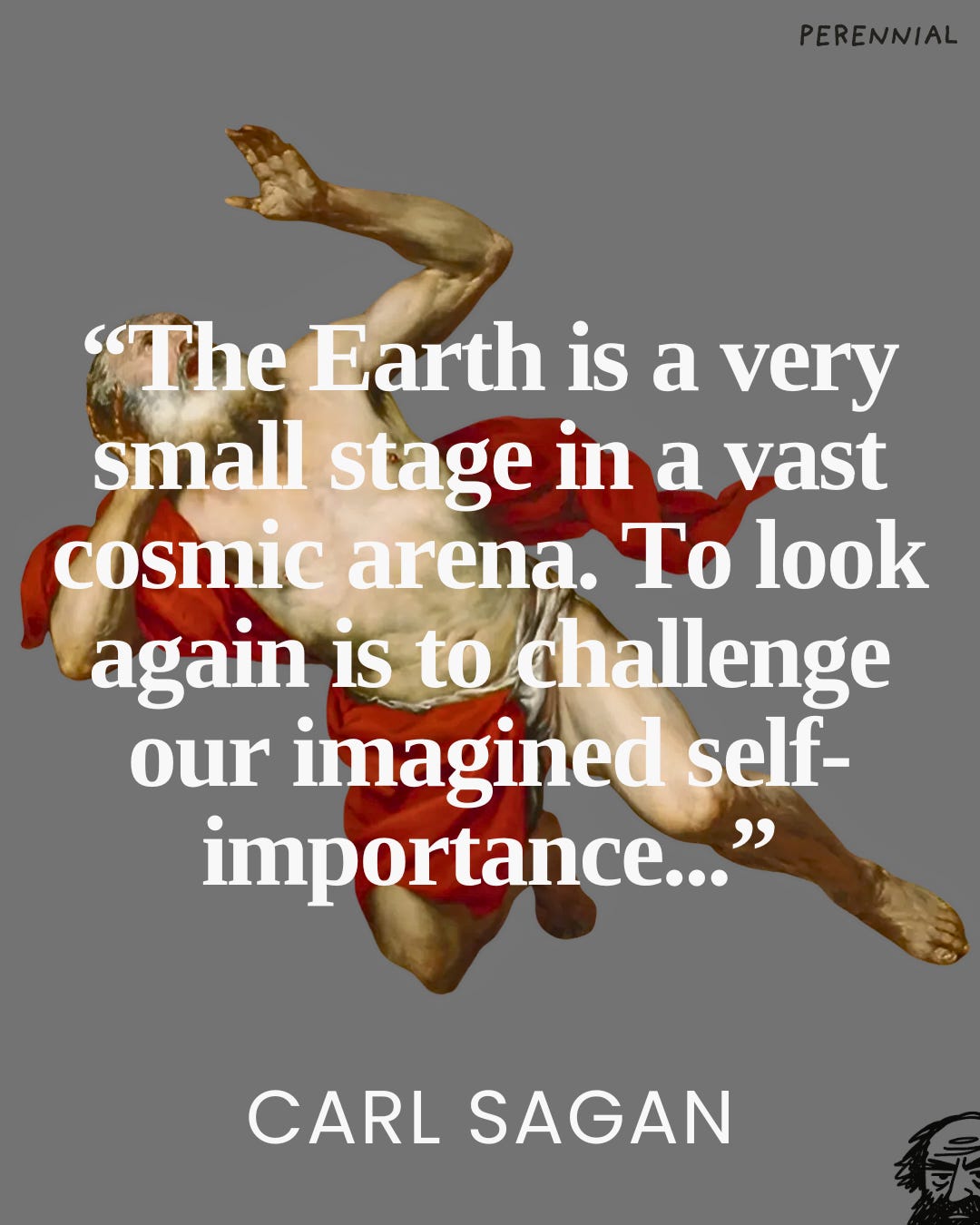
The Earth is a very small stage in a vast cosmic arena. To look again is to challenge our imagined self-importance, the delusion that we have some privileged place in the Universe. Our planet is a lonely speck in the cosmic dark. There is no hint that help will come from elsewhere to save us from ourselves.
So, what does it mean to look again at life?
It means noticing.
It means pausing.
It means seeing your life, your relationships, your choices—not through the haze of assumptions and pride, but with wonder and humility.
This moment—right now—is where you are creating a life.
So take a breath.
Look again.
At your life. At yourself. At the world around you.
It’s here. It’s now.
Reflection Prompt
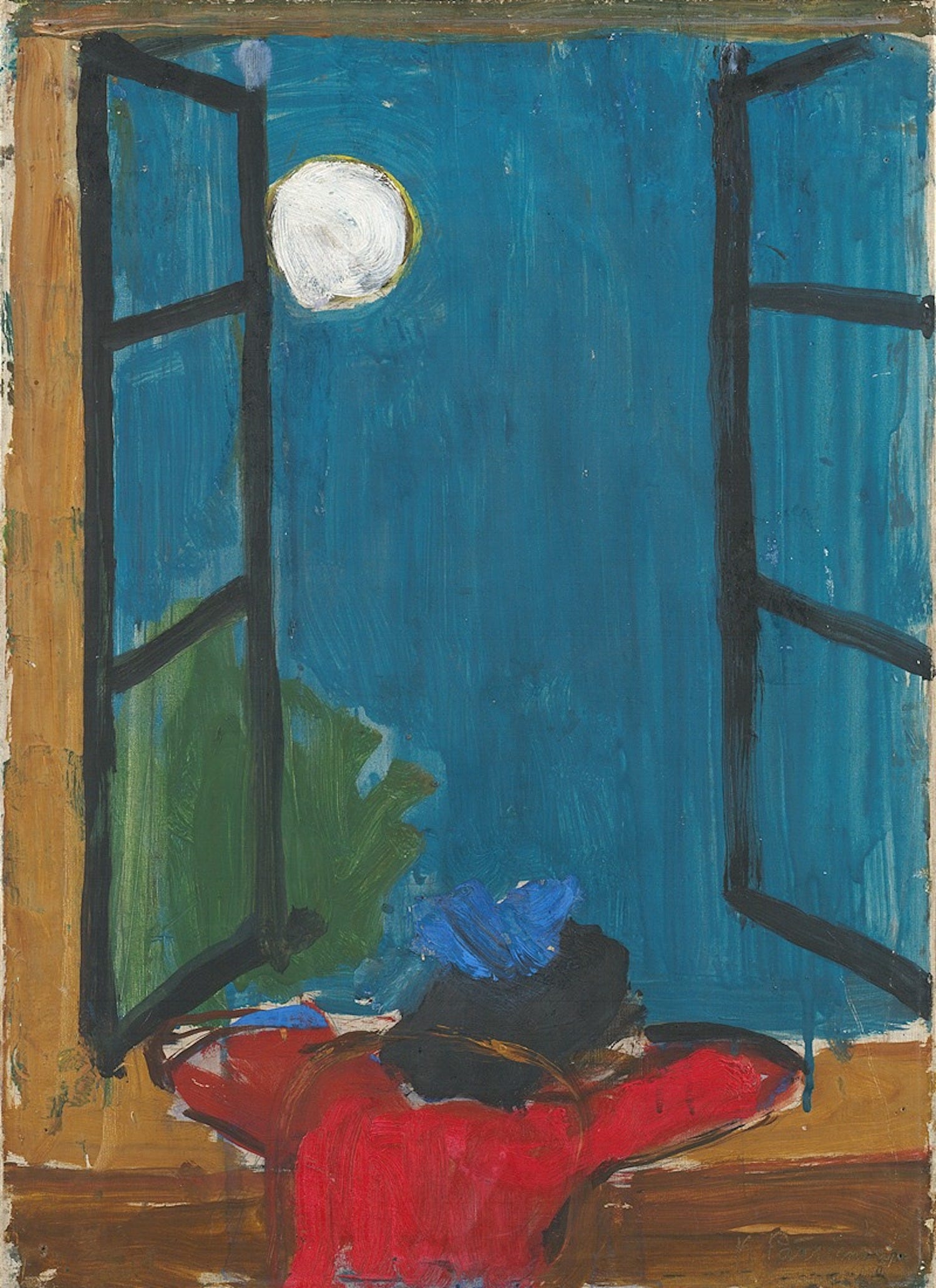
Imagine seeing yourself and your life with a view from above—as if from the edge of the solar system, as Sagan suggested.
What seems less important from that distance?
What feels even more precious?
—
Thank you for reading/listening; I hope you found something useful.
Until next time, be wise and be well.
J.W.
P.S. If you enjoyed it, consider leaving a rating on Apple Podcasts or Spotify.
Sagan
"No hint that help will come from elsewhere to save us from ourselves."
This quote drew me in.
We can not see help coming from other cosmos beings to save our world from ourselves.
So human survival is dependent on ourselves. Our own ability to understand and to recognize the fragility of life. Just as each of us have to find our own way, our own peace, our own sense of purpose. But we are able to reach out to each other to save ourselves, others and our world if we decide to. It will only come from selfless acts. This is where philosophy will lead us and if we will let go of our ego.
I would also add curiosity as the intervention we need to move beyond what we see and feel so we can understand our distortions better and be free of them.