

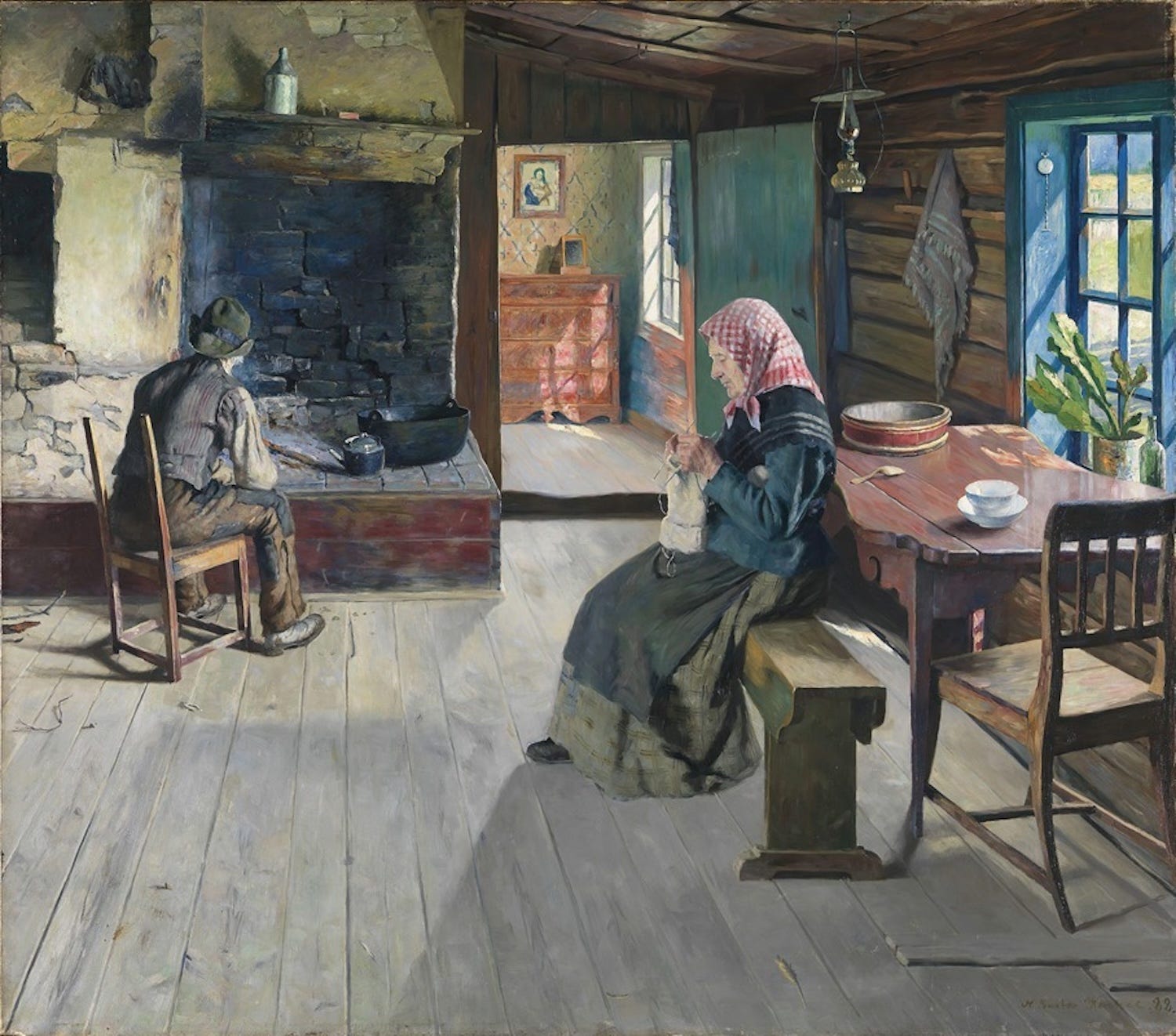
Perennial Wisdom
Perennial Wisdom is a podcast for seekers and curious minds. Each episode explores philosophical and spiritual traditions for universal truths and enduring ideas to help you (and me) never stop learning how to live.
Listen on Apple Podcasts, Spotify, or YouTube
How to Be Bored: An Ancient Guide to Being Where You Are
In this episode of Perennial Wisdom, we explore the art of boredom: a journey through ancient philosophy, psychology, and modern thinkers like David Foster Wallace. From the desert monks who believed stillness revealed the soul, to Pascal’s warning that our fear of silence shapes our entire lives, to modern research showing boredom can unlock creativity.
We talk about why boredom is so uncomfortable, how it shows us what we really want, and why we often use distractions to avoid facing ourselves. If you’ve struggled to slow down, sit still, or be with your own thoughts, this episode offers an ancient guide to being where you are.
Listen on Apple Podcasts, Spotify, or YouTube
Episode Transcript
The following is a transcript from “How to Be Bored: An Ancient Guide to Being Where You Are” on the Perennial Wisdom podcast (Ep. 254).
—
Boredom.
That vague restlessness in the waiting room.
That itch to reach for your phone at a red light.
We live in a world almost allergic to boredom. At the smallest pause, we grab a screen. At the slightest silence, we search for noise.
We think we’re just “passing time.” But most of the time, we’re actually doing something much deeper. We are running away from ourselves.
The strange thing is the wisest voices across history—philosophers, monks, and even modern writers—have all suggested the opposite. That boredom is not a sign that something is wrong.
It might be the moment something finally can go right.
So, in this essay, let us explore an old idea in a new way: boredom not as an absence of meaning. Rather, the condition in which meaning begins to reveal itself.
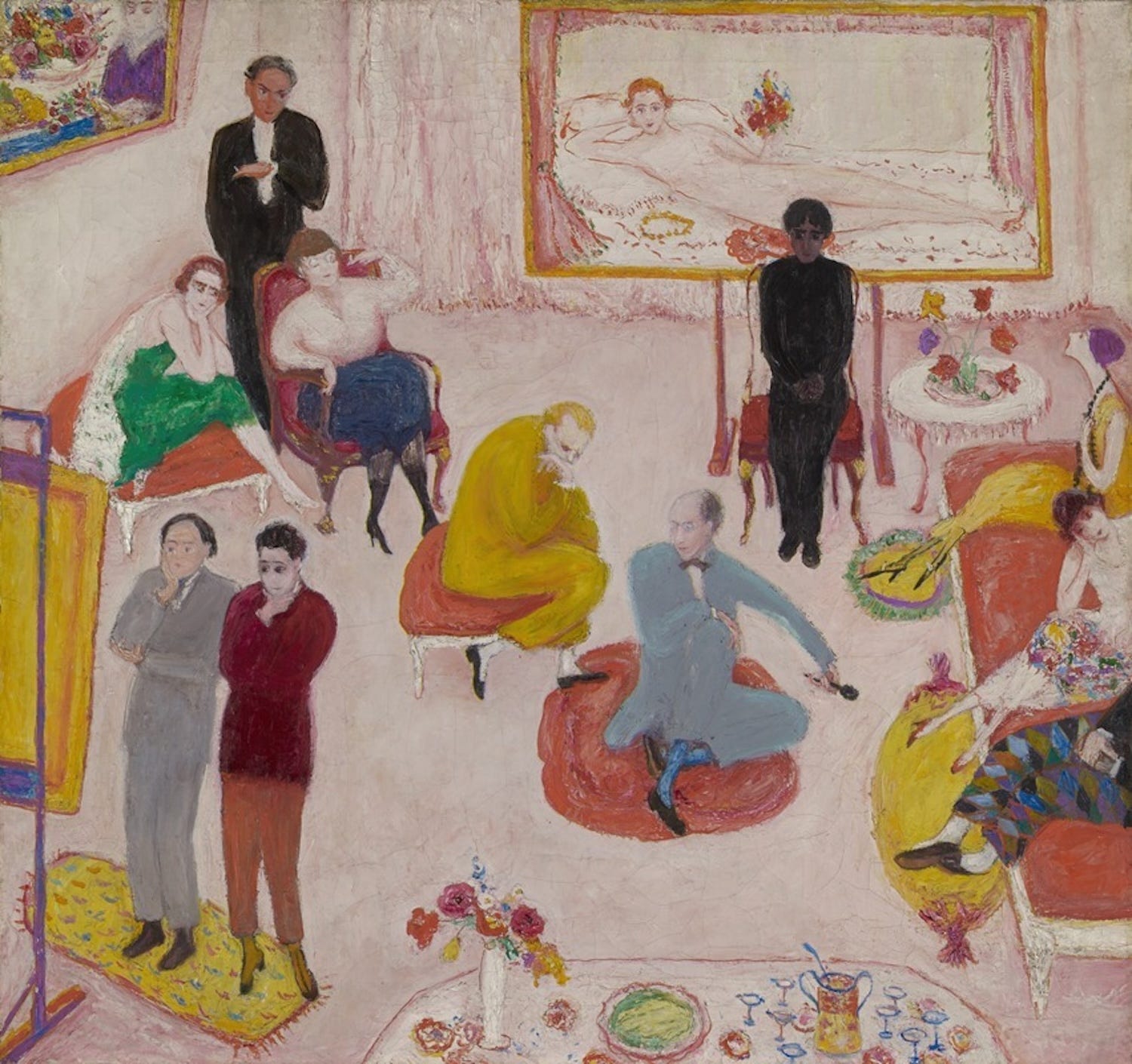
1. The Desert
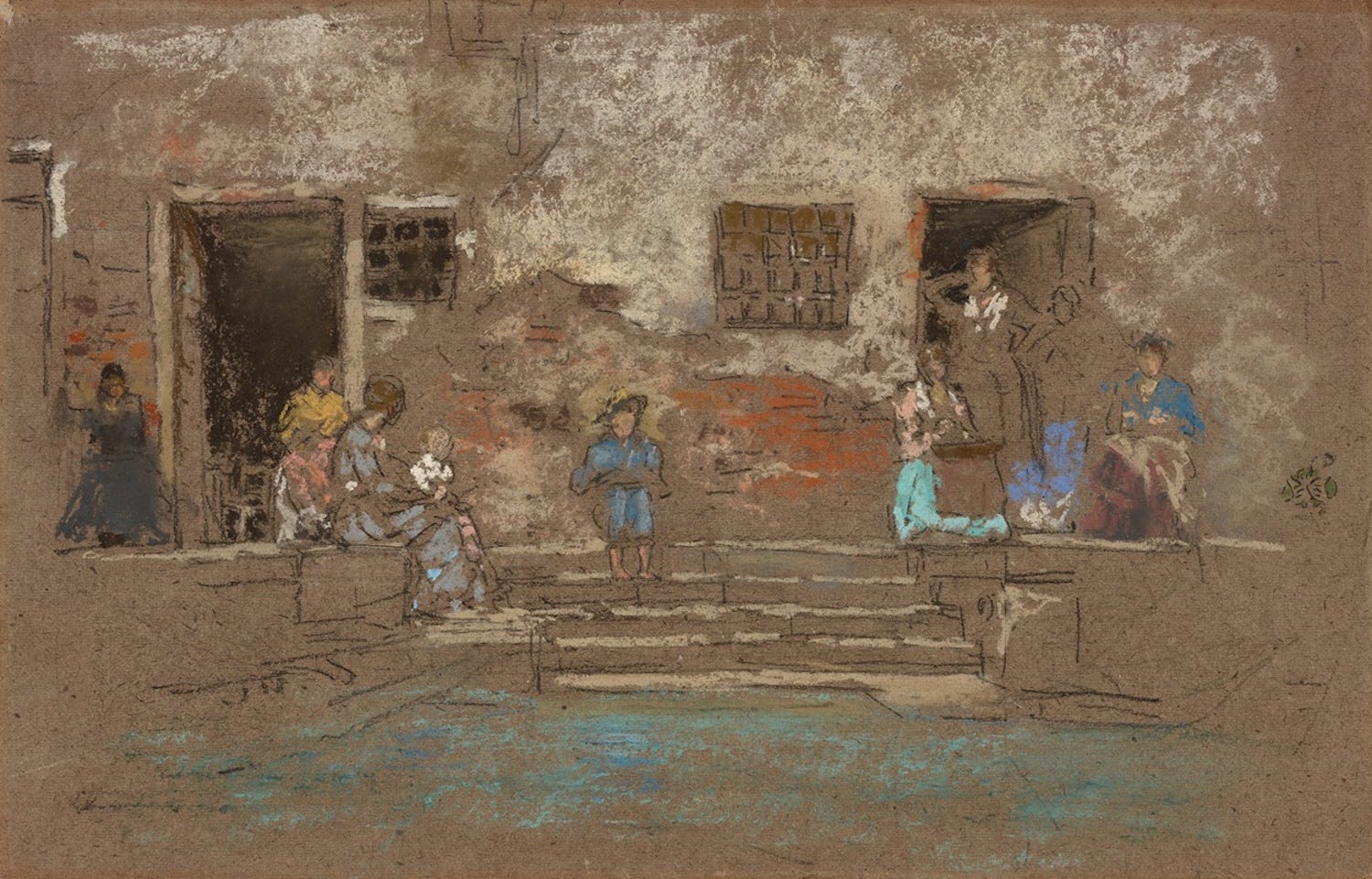
Every spiritual tradition has a desert. The Israelites wandered in one for forty years. The Desert Fathers went into one on purpose.
Pascal, the French philosopher and Christian thinker, said the real desert is simply a room where you sit alone… with no distractions. And David Foster Wallace, the modern novelist, believed boredom is the new desert: fluorescently lit offices, checkout lines, traffic, the quiet places in our day we desperately try to escape.
The desert is where the distractions fall away and only the self remains.
That’s what boredom really is. When the music stops, when the notification pings slow down, when nothing new is happening… the desert begins to appear.
And like every desert in the old stories—it’s not just empty.
It’s dangerous, yes… but it’s also holy.
It’s where people encounter God, or truth, or themselves.
Blaise Pascal has this famous line:
“All of humanity’s problems stem from man’s inability to sit quietly in a room alone.”
He didn’t mean that as a cute quote for Instagram. He meant it as a diagnosis. He believed our inability to tolerate boredom is not a minor weakness—it’s one of our deepest spiritual problems.
He also wrote:
“We run heedlessly into the abyss after putting something in front of us to stop us from seeing it.”
Think about that.
We run toward the cliff, holding up our phones, our work, our busyness, just so we don’t have to look down.
Boredom is the moment you run out of “something in front of you.”
And suddenly… you see.
2. The Diagnosis
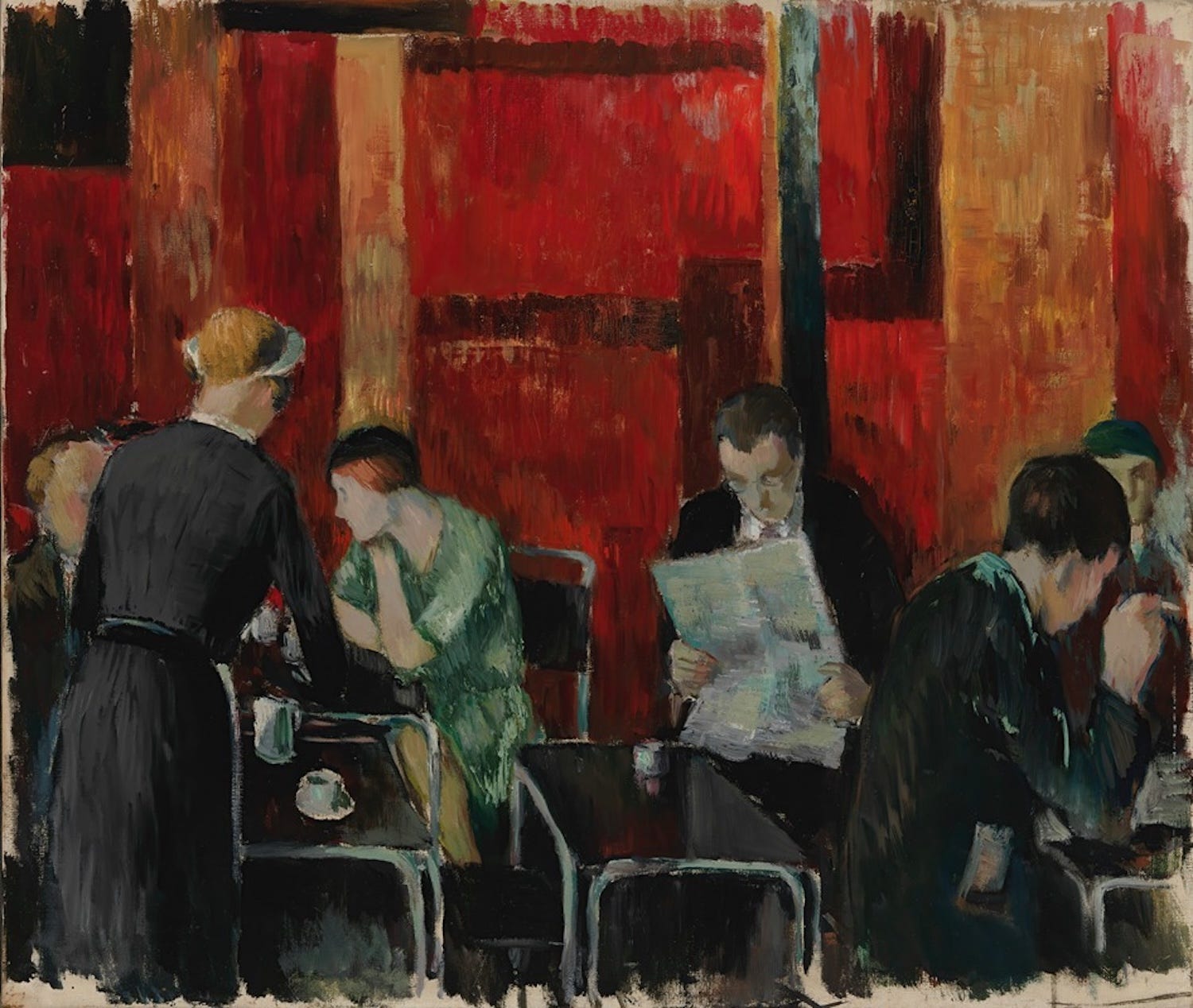
Let’s go back to the ancient world for a moment.
Socrates was known for talking—asking hard questions, challenging people in the marketplace. But he also learned how to be still.
Plato tells a story in the Symposium where Socrates stops, stands in place, and remains there—silent—for hours. Another time, he stands motionless from one sunrise to the next, lost in reflection.
Socrates understood: stopping is the beginning of seeing.
You can’t examine your life if you never stop long enough to look at it.
The Stoics arrived at a similar conclusion. Seneca wrote:
“The mind which is constantly in motion finds rest intolerable.”
To the Stoics, that wasn’t just an observation. It was a warning. If you can’t tolerate rest, you’re not free. You’re being dragged by your impulses.
Epictetus said that freedom begins with self-mastery. If you can’t sit quietly for a few minutes without needing to be entertained or stimulated, then your attention is not really your own.
Then came the Christian monks in the Egyptian desert—the early monastics known as the Desert Fathers and Mothers. They left the cities and went into literal wilderness, trying to meet God in silence and solitude.
And there they discovered a new kind of suffering.
After the initial spiritual excitement wore off, they were attacked by what one of them, Evagrius Ponticus, called the “noonday demon”—what later writers would call acedia.
It felt like boredom, restlessness, disgust with the place they were in, hatred of the monotony, a desperate urge to leave their cell and “go anywhere else.”
What did the elders tell them?
Not, “Go distract yourself.” Not, “You need a change of scenery.”
They said:
“Stay in your cell, and your cell will teach you everything.”
In other words: Stay in the desert long enough… and the desert will begin to speak.
3. The Discovery
Fast forward to today. We have brain scanners, lab studies, and big data. And modern psychology is starting to confirm what the ancients suspected.
When you’re not actively focused on a task… and you’re not being flooded with stimulation… the brain switches into what neuroscientists call the default mode network.
That’s the network that handles:
memory integration
reflection
emotional processing
long-term planning
creativity
and even your sense of self
Most of the deep, connective, “big picture” work your mind does—it does when you appear to be “doing nothing.” That’s why ideas pop up in the shower, or on a walk, or when you’re doing some mindless task.
Boredom is not a shutdown. It’s a reconfiguration.
In a modern psychological study, one group of participants performed a tedious or boring task—copying numbers from a phone book—before engaging in a creative activity. The other group skipped the boring task.
The result? The bored group came up with more original ideas.
Boredom cleared the mental field.
It made space.
Another study from the University of Virginia asked people to sit alone in a room for 15 minutes, with nothing to do but think. If they wanted, they could also press a button that delivered an electric shock.
A surprising number of people—especially men—chose the shock, rather than just sitting with their thoughts.
4. The Prophets
For Blaise Pascal, the French philosopher and mathematician, boredom wasn’t trivial. He believed our inability to tolerate boredom was tied to our difficulty facing reality—our mortality, our limits, and our dependence on God.
He said we fill our lives with what he called divertissement—diversion, entertainment, busyness—to avoid these deeper questions.
Pascal noted:
“The only thing that consoles us for our miseries is diversion. And yet that is the greatest of our miseries, because it prevents us from thinking about ourselves and leads imperceptibly to our ruin.”
In modern terms, boredom is the moment when the distractions fade away. And if we can stay with it—on the other side of that discomfort is honesty. Pascal is tough on us, but he’s not cruel. He’s trying to push us into a kind of courage. The courage to sit in the room. The courage to walk into the desert of boredom and not immediately run back out.
All these insights are well aligned with David Foster Wallace's perspective. Wallace saw boredom not merely as a psychological condition but as a moral and spiritual challenge posed by modern life.
His unfinished novel, The Pale King, is set in an IRS tax office—one of the most soul-numbing environments you can imagine. He uses that setting to ask what happens to a human soul in the face of extreme monotony.
At one point, he writes:
“If you are immune to boredom, there is literally nothing you cannot accomplish.”
He doesn’t mean that you never feel bored.
He means if you can endure boredom without fleeing—if you can remain present in it—then you have a kind of inner strength most of us lack.
In his famous commencement address, This Is Water, Wallace says something crucial about freedom:
“The really important kind of freedom involves attention, and awareness, and discipline… It is being able truly to care about other people, and to sacrifice for them, over and over, in myriad petty little unsexy ways, every day.”
Think about that in the context of boredom.
Most acts of love are rather boring:
Listening to a child ramble.
Showing up for a friend—again.
Doing the dishes.
Answering emails.
Sitting through a meeting.
If we cannot tolerate boredom, we cannot tolerate the reality of ordinary life. And if we cannot tolerate ordinary life, we cannot really love the people who live in it.
For thinkers like Wallace and Pascal, boredom isn’t the enemy. It’s the training ground for real attention. And attention is where freedom and love begin.
5. The Practice
You don’t have to go to Egypt to enter the desert. You don’t need a cave or a monastery.
The desert appears every time there’s a pause and you decide not to flee.
The red light...
The waiting room…
The walk...
These are small deserts.
Opportunities.
Doorways.
Being bored is like being asked a question:
Can you endure yourself long enough to become who you are?
The art of boredom is nothing less than the art of being human—and being here.
Right where you are.
—
Thank you for reading/listening; I hope you found something useful.
Until next time, be wise and be well.
J.W.
P.S. If you enjoyed it, consider leaving a rating on Apple Podcasts or Spotify.
Beautifully written, J.W.
Hey everyone, I'm Anthony.
At 22, I made a choice that most people thought was crazy: https://substack.com/@anthonyhuerta46/note/c-180436379?utm_source=notes-share-action&r=2kbdxu