

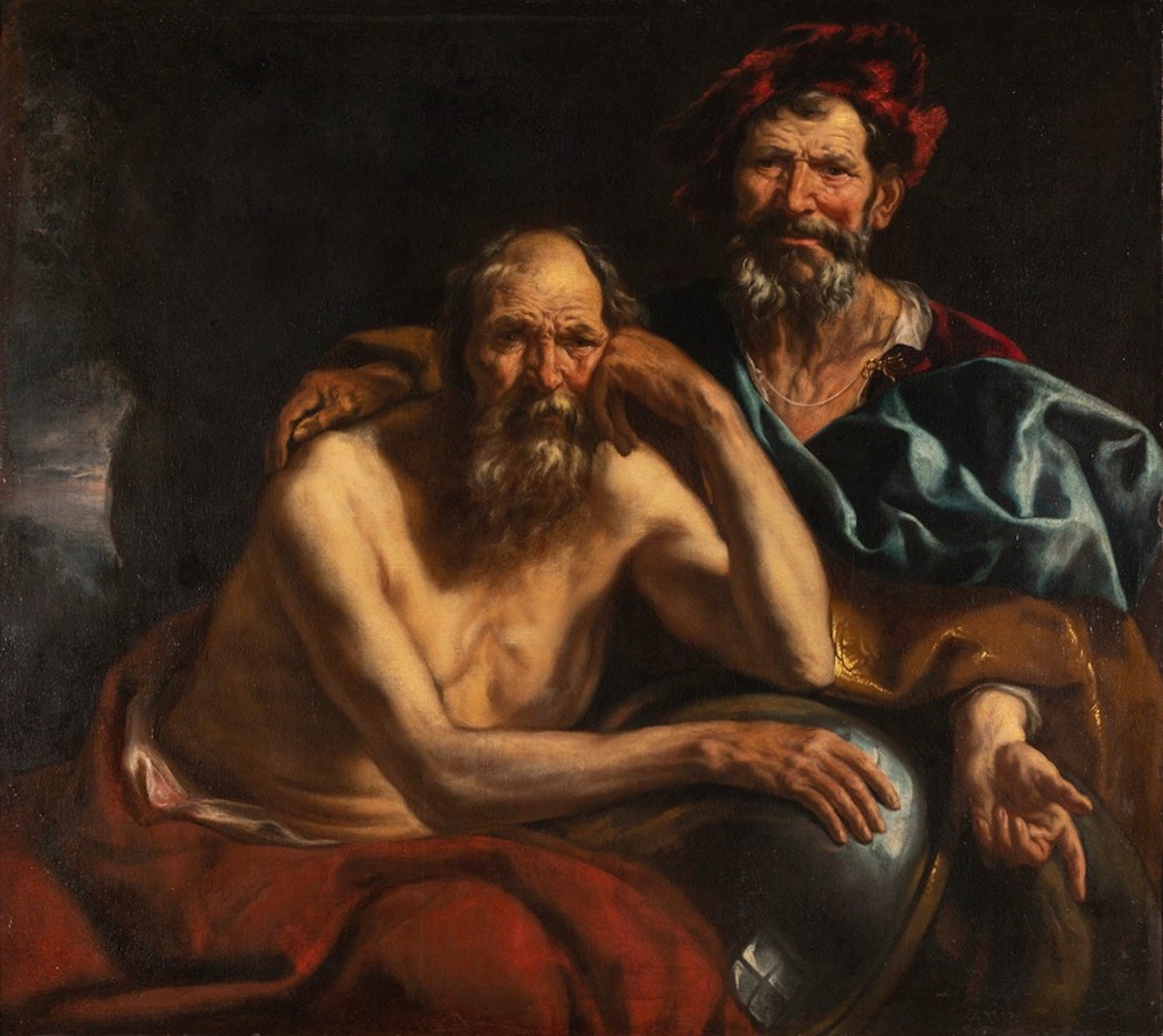
💀 Dying Every Day
Dying Every Day (Stoicism in a Year) is a podcast by the Perennial Leader Project. Each episode turns a selected passage from Stoic philosophy into a guided meditation designed to help you (and me) learn how to live.
Listen on Apple Podcasts, Spotify, or YouTube
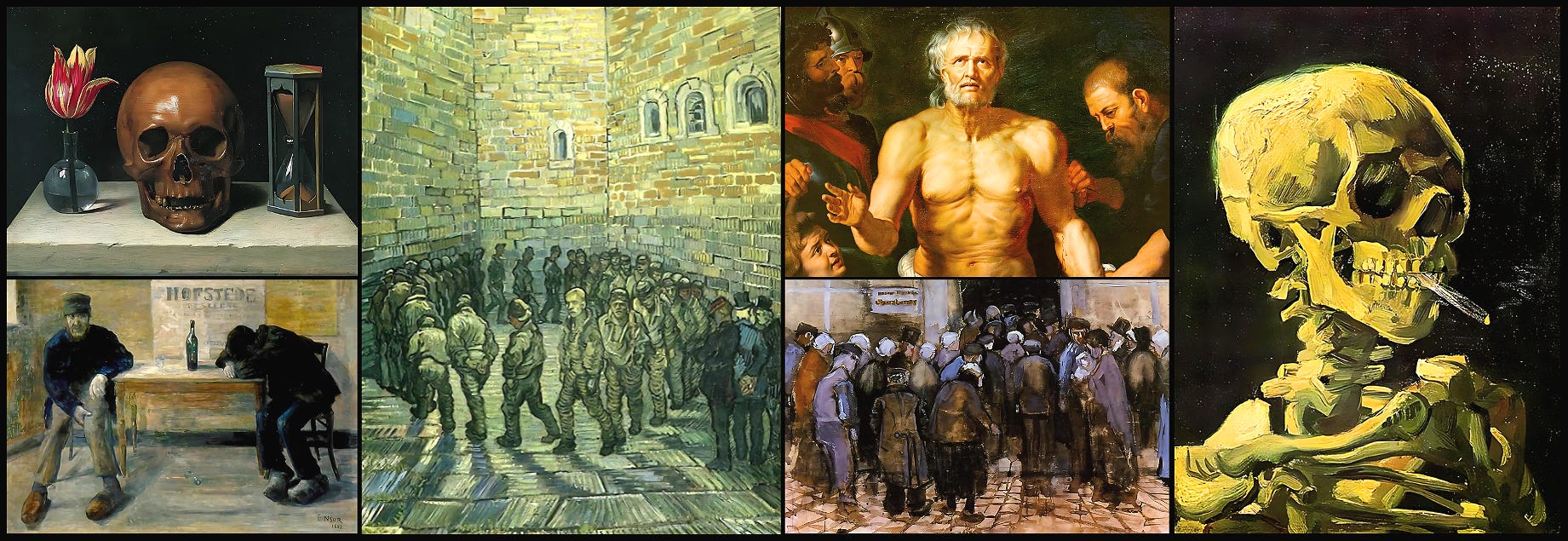
Heraclitus on the only constant
Welcome to another episode of Dying Every Day (Stoicism in a Year). This is Day 79, and we’re turning to the pre-Socratic philosopher Heraclitus to learn about what he called the only constant.
Heraclitus was a Greek philosopher who lived around 500 BCE. In his work, known today as Fragments, the American psychologist James Hillman writes in the foreword,
Heraclitus took a different tack. His method is more psychological. He posited no basic substance, nor did he abstract the world of the senses into numbers, atoms, or assertions about Being as a whole. Instead, he said, nothing is stable; all is in flux. Whatever you say about anything, its opposite is equally true. He brought language into the game of cosmological thinking. …
You cannot know the world through natural philosophy, mathematics, or deductive logic. Because (to quote Heraclitus): ‘By cosmic rule... all things change.’ ‘The sun is new again, all day.’ ‘The river where you set your foot just now is gone—those waters giving way to this, now this.’
+Adapted from the Penguin Classics edition of Fragments
Figures like Heraclitus, the Buddha, and many others believed that understanding the nature of change is central to living a good life. Heraclitus called “change” the only constant thing, emphasizing that everything flows, and nothing abides; everything gives way, and nothing stays fixed.
It’s worth reflecting on whether we notice (or accept) the constant nature of change in our daily lives.
The Roman emperor Marcus Aurelius (someone who quoted Heraclitus often) consistently contemplates the notion of change.
In Meditations, he wrote to himself,
Is change something to fear? But can anything happen without change? Is there anything nearer and dearer to universal nature? What about you personally? Can you take a warm bath unless the firewood undergoes a change? Can you be nourished unless your food undergoes a change? Can anything else worthwhile take place without change? So don’t you see that the changes you experience are no different and are similarly necessary to universal nature?
How often do you remind yourself that change is necessary (and nothing to fear)?
Reflection Prompt
Consider reflecting (or journaling) on how you think about change. You could ask yourself, “Am I making decisions based on the person I am today (or a past version of myself)?” and/or “How might my life change if I embraced the constant nature of change?”
Listen on Apple Podcasts, Spotify, or YouTube
—
Thank you for listening; I hope you found something useful.
Until next time, be wise and be well,
J.W.
P.S. I greatly appreciate your time, attention, and support!