

🖼️ Monday Muse
The Monday Muse is a weekly collection of reminders, insights, and maxims on the art of living. The term “muse” has two meanings: (1) a state of deep thought; and (2) a source of inspiration. May the following (in a small way) be a source of contemplation and wisdom to live your highest good.
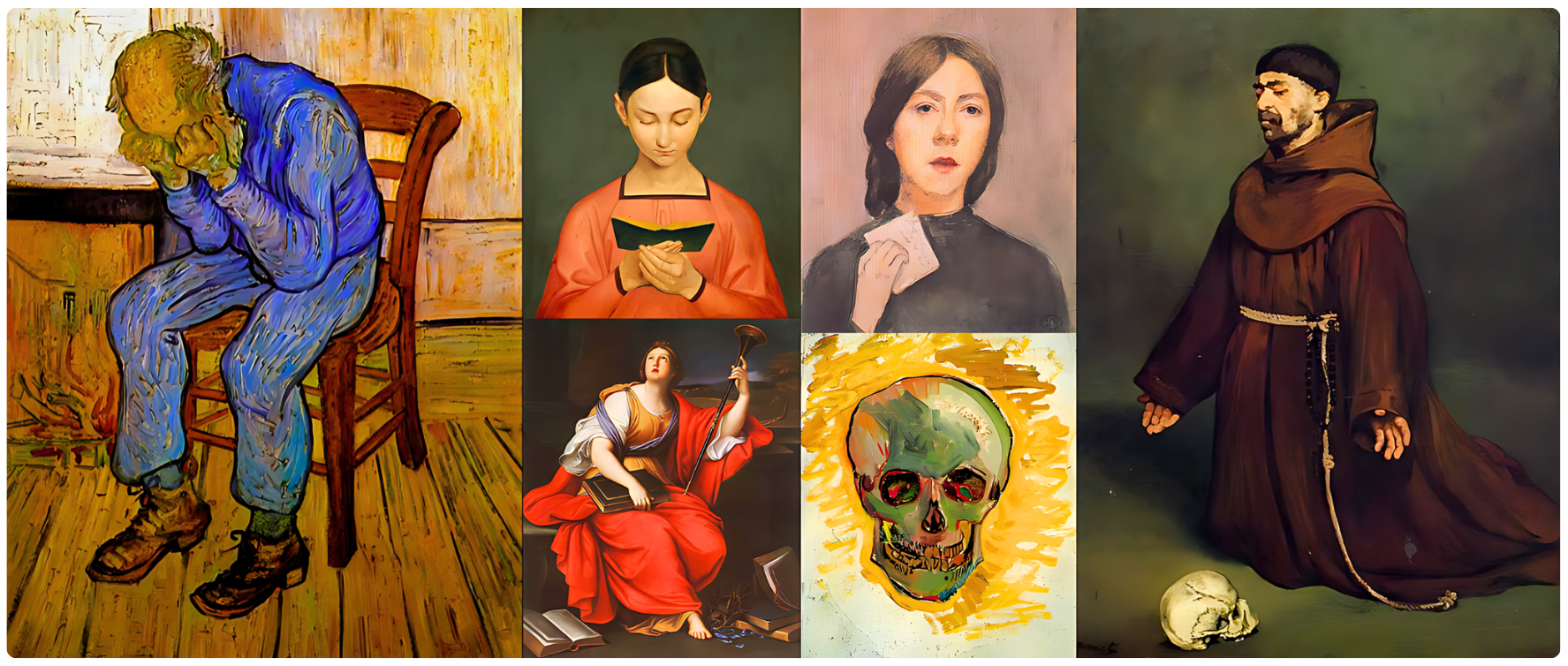
📌 Perennial Reminder(s)
The American writer and professor James Miller on examined lives:
Once upon a time, philosophers were figures of wonder. They were sometimes objects of derision and the butt of jokes, but they were more often a source of shared inspiration, offering, through words and deeds, models of wisdom, patterns of conduct, and, for those who took them seriously, examples to be emulated. Stories about the great philosophers long played a formative role in the culture of the West. For Roman writers such as Cicero, Seneca, and Marcus Aurelius, one way to measure spiritual progress was to compare one’s conduct with that of Socrates, whom they considered a paragon of perfect virtue. …
To Socrates and the countless classical philosophers who tried to follow in his footsteps, the primary point was not to ratify a certain set of propositions (even when the ability to define terms and analyze arguments was a constitutive component of a school’s teaching), but rather to explore ‘the kind of person, the sort of self’ that one could elaborate as a result of taking the quest for wisdom seriously. […]
Source: Examined Lives
📜 Perennial Maxim(s)
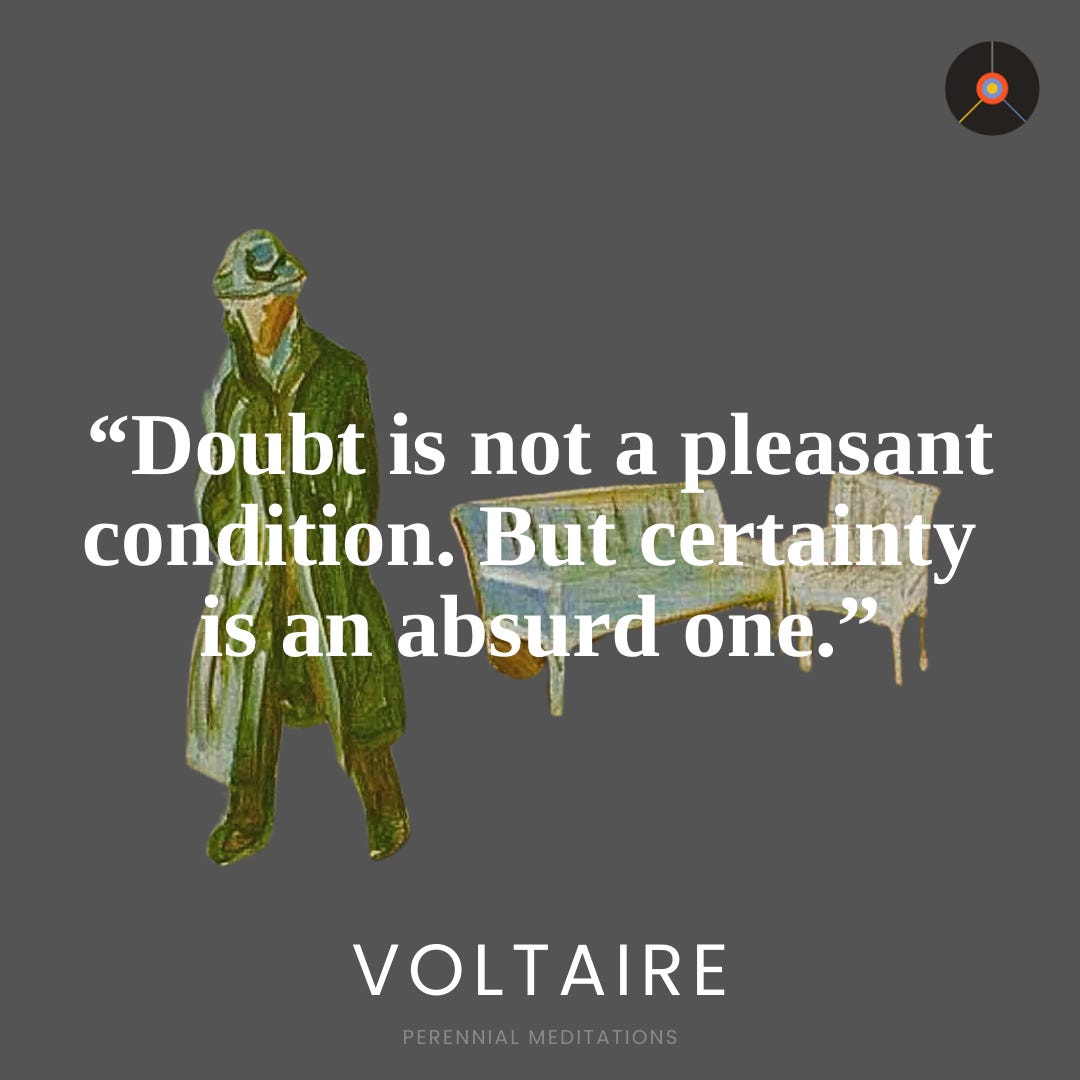
The French writer and philosopher Voltaire (1694—1778) on doubt:
Follow us: Instagram | Youtube
💡 Perennial Insight(s)
The American Trappist monk Thomas Merton (1915—1968) on the art of silence:
Silence does not exist in our lives merely for its own sake. … We work out our salvation in silence and in hope. Silence is the strength of our interior life. Silence enters into the very core of our moral being, so that if we have no silence we have no morality. Silence enters mysteriously into the composition of all the virtues, and silence preserves them from corruption. …
In silence, we learn to make distinctions. Those who fly silence, fly also from distinctions. They do not want to see too clearly. They prefer confusion. A man who loves God necessarily loves silence also because he fears losing his sense of discernment. He fears the noise that takes the sharp edge off every experience of reality. He avoids the unending movement that blurs all beings together into a crowd of undistinguishable things.
The saint is indifferent in his desires but by no means indifferent in his attitudes toward different aspects of reality. […]
Source: No Man is an Island
💀 Dying Every Day
The Stoic philosopher Seneca (4 BC—65 AD) on the power of words: “Words should be scattered like seeds; no matter how small the seed may be, if it has once found favorable ground, it unfolds its strength and, from an insignificant thing, spreads to its greatest growth.”
Listen to Dying Every Day on Apple Podcasts, Spotify, or YouTube
—
Thank you for reading; I hope you found something useful.
Until next time, be wise and be well,
J.W. Bertolotti
P.S. If you’re interested in becoming a member but cannot afford it, feel free to request a complimentary membership or use this discount link.