

💀 Dying Every Day
Dying Every Day (Stoicism in a Year) is a podcast by the Perennial Leader Project. Each episode turns a selected passage from Stoic philosophy into a guided meditation designed to help you (and me) learn how to live.
Listen on Apple Podcasts, Spotify, or YouTube
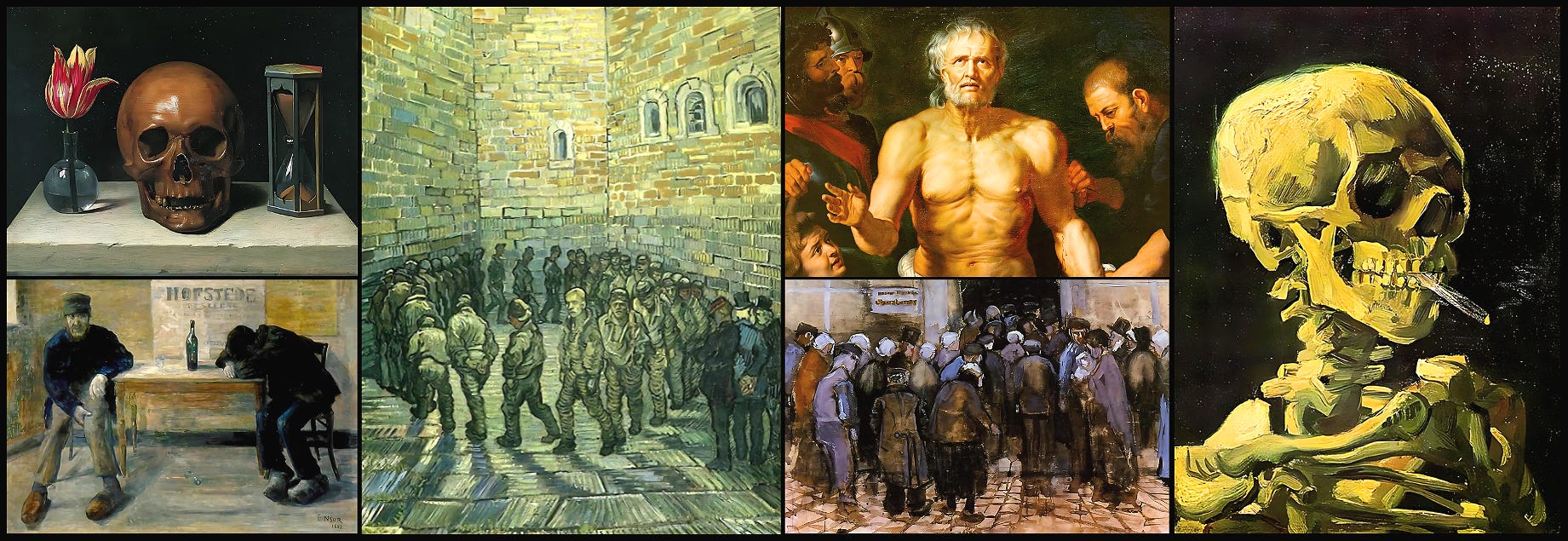
Epictetus on being a philosopher
Welcome to another episode of Dying Every Day (Stoicism in a Year). This is Day 95, and we’re returning to the Stoic teacher Epictetus to learn what it means to be a philosopher.
If you enjoy these meditations and would like to support the project, I’ve created three options: (1) Become a member at $5 a month or $39 for the year; (2) If you need assistance, you can use this 50% discount link; and (3) If you can’t afford it — please accept a complimentary membership.
Epictetus taught his students,
If someone sees one of them behaving improperly, he immediately exclaims, ‘Look at how the philosopher is behaving!’ But he should rather have said, on the evidence of that misbehavior, that the man wasn’t a philosopher at all. …
For that is what we do when it comes to the other arts. When one sees someone making clumsy use of an axe, one doesn’t say, ‘What is the use of the carpenter’s art? Look at how badly carpenters work,’ but one says instead, ‘That man is surely no carpenter, because he is so bad at handling an axe.’
+Adapted from Discourses 4.8
For the Stoics, philosophy and action are interconnected. If we are not working diligently to embody our philosophy of life, then we are merely fans of that philosophy. Much like someone who enjoys watching sporting events on television, no one would consider them to be an athlete of that sport.
For this reason, Epictetus stressed to his students that, instead of talking about their philosophy, they should focus on embodying it. Although it’s a straightforward lesson, it is nevertheless a difficult one to remember.
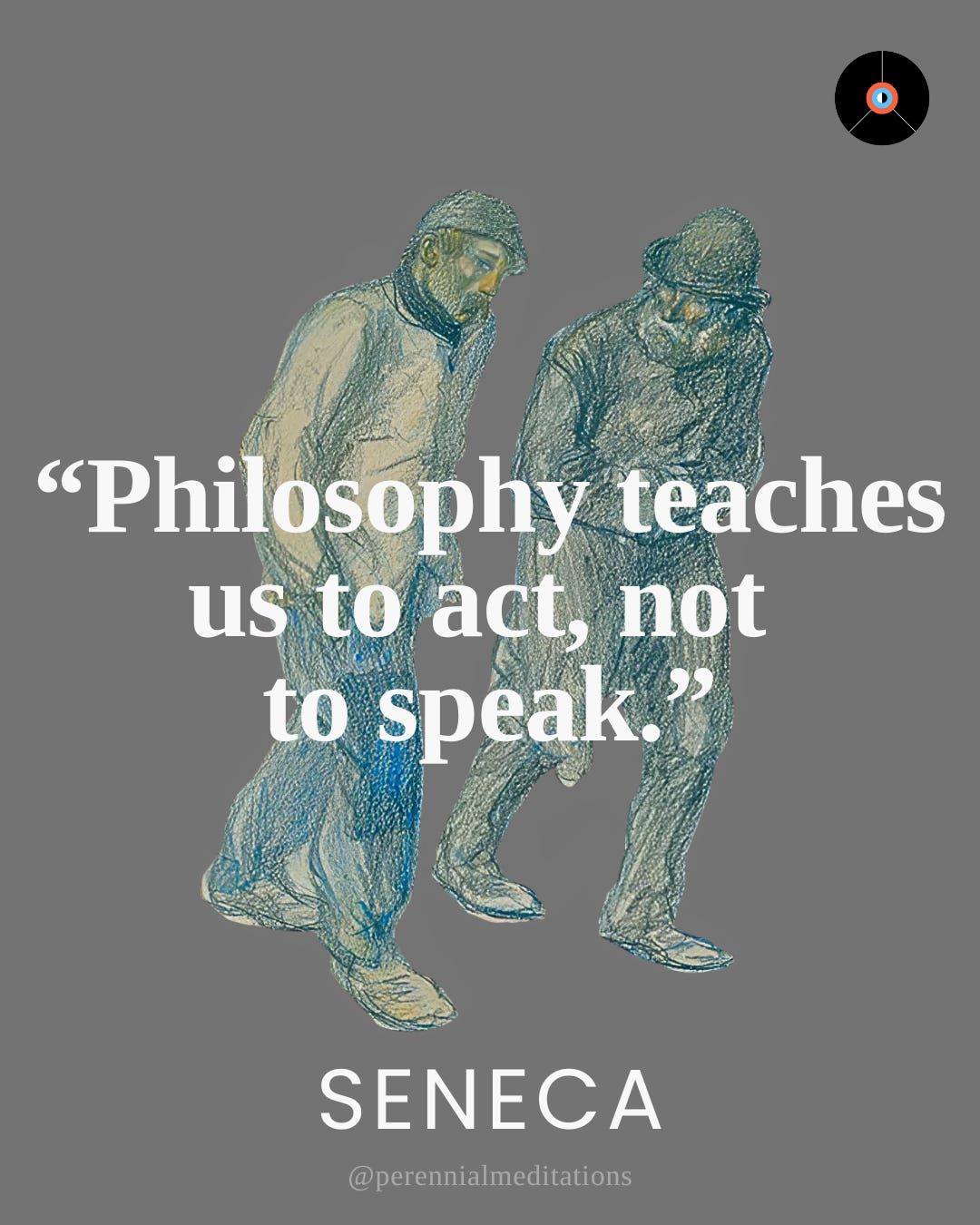
Here’s how Seneca put it, in a letter titled On Consistency,
Philosophy teaches us to act, not to speak. Its demands are these: each person should live to the standard he has set; his manner of living should not be at odds with itself or his way of speaking, and all his actions should have a single tenor. …
The key is to understand that philosophy and action are inextricably linked. Although one reads and contemplates philosophical ideas, they do so to practice them in daily life. Like a painter who spends time going to the art store to buy supplies. The artist does so to utilize those supplies to paint something beautiful.
Reflection Prompt
Consider reflecting (or journaling) on your philosophy of life. You might ask yourself, “How would my friends and family describe my philosophy?” and/or “How can I remember that the most important thing is to put my philosophy into practice?”
Listen on Apple Podcasts, Spotify, or YouTube
—
Thank you for listening; I hope you found something useful.
Until next time, be wise and be well,
J.W.
P.S. I greatly appreciate your time, attention, and support!