

💀 Dying Every Day
Dying Every Day (Stoicism in a Year) is a podcast by the Perennial Leader Project. Each episode turns a selected passage from Stoic philosophy into a guided meditation designed to help you (and me) learn how to live.
Listen on Apple Podcasts, Spotify, or YouTube
Epictetus on “Being a Citizen of the Universe”
Welcome back to Dying Every Day (Stoicism in a Year). This is Day 74, and we’re returning to Epictetus to explore what it means to be a citizen of the universe.
Epictetus taught his students,
If there is any truth in what the philosophers say about the kinship between God and humanity, what course is left for human beings than to follow the example of Socrates, and when one is asked where one is from, never to reply, ‘I’m an Athenian’ or ‘I’m a Corinthian’, but rather, ‘I’m a citizen of the universe’? For why say, in fact, that you are an Athenian rather than just from that corner in which your poor body was thrown down at the time of your birth?
Epictetus asked,
Isn’t it obvious that you choose the place that is more sovereign, and not merely that little corner, but also your whole household, and, in a word, the source that your entire race of ancestors has come down to you, and on that basis you call yourself an ‘Athenian’ or a ‘Corinthian’?
+Adapted from Discourses, 1.9
What comes to mind when you hear “I’m a citizen of the universe?” Does it sound a little too mystical or unconventional? If being a “citizen of the universe” doesn’t sound like practical wisdom, bear with me.
Thought Experiment
Imagine that later today, someone stops and asks, “Where are you from?” If you live in the States, you might respond with the city or suburb where you live. Or, you could give the state in which you were born. Epictetus points out that we generally would not respond with the specific birth location (e.g., the hospital and room number). Imagine you were traveling abroad and someone asked, “Where are you from?” In this situation, one might respond with their particular country of residence or birth. …
What happens if we keep this thought experiment going?
If we continue to expand, we will eventually begin to identify ourselves as citizens of the world. But this does not mean that you and I are not unique or individuals (or even citizens of particular countries). For example, if you live in the West, you probably have a social security number, driver’s license, and birth certificate. These are useful and needed. However, you only have a social security number (or passport), for example, because you are part of a larger community.
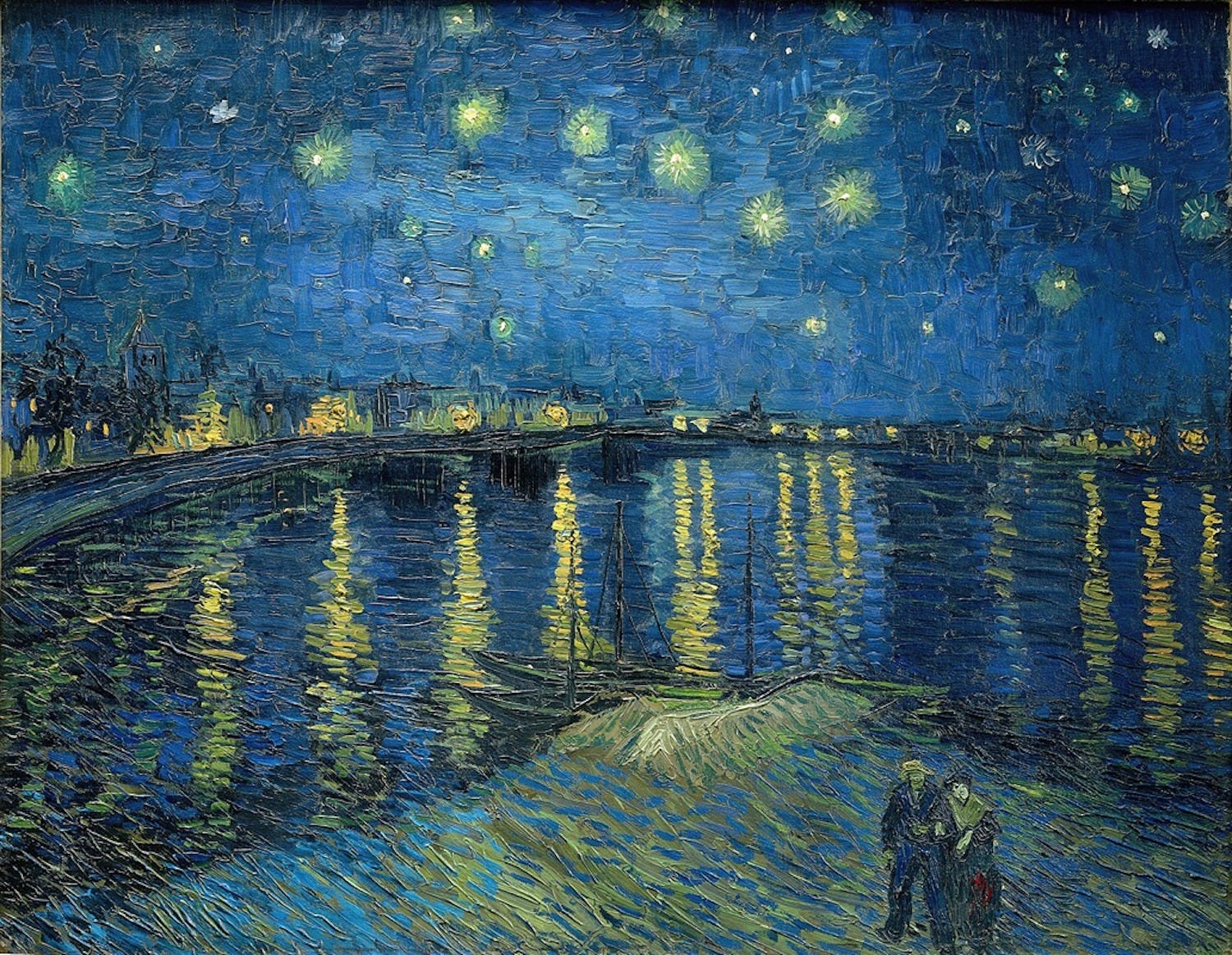
The Stoic exercise “the view from above” (which we spoke about on Day 10) can help us see these insights. However, the actual exercise is the “cosmic” view from above. As Marcus Aurelius put it, “Dwell on the beauty of life. Watch the stars, and see yourself running with them.” The Stoic view from above is not merely a ten-thousand-foot view of your individual life. It’s designed to help us transcend our personal (or narrow) perspective.
For the Stoics, the cosmos (or universe) is an interconnected community, and humans are part of a shared humanity. Seeing ourselves as “citizens of the universe” is a critical aspect of Stoic ethics. It helps shape how we see ourselves, others, and the world around us, which influences how we treat our fellow citizens.
Reflection Prompt
Consider reflecting (or journaling) on what it means to practice the “cosmic view from above” in daily life. You could ask yourself, “What are the duties and responsibilities of being a citizen of the universe?”

Listen on Apple Podcasts, Spotify, or YouTube
—
Thank you for reading/listening; I hope you found something useful.
Until next time, be wise and be well,
J.W.
P.S. I greatly appreciate your time, attention, and support!