


💀 Dying Every Day
Dying Every Day (Stoicism in a Year) is a podcast by the Perennial Leader Project. Each episode turns a selected passage from Stoic philosophy into a guided meditation designed to help you (and me) learn how to live.
Listen on Apple Podcasts, Spotify, or YouTube
Cicero on wisdom and happiness
Welcome back to Dying Every Day (Stoicism in a Year). This is Day 123.
Imagine standing stripped of wealth, cast into exile, or even facing death itself. The Roman statesman Cicero asks, “What can fortune truly take from you?” His answer: nothing essential, if your integrity remains whole.
He begins with first principles:
To live wisely is to live according to nature and reason.
For Cicero, wisdom is not knowledge alone but harmony with nature. Fortune cannot toss about a life guided by reason.
He adds:
If a person has trained themselves to value virtue above pleasure, and principle above popularity, they will not be disturbed by adversity. …
Virtue, not pleasure, provides stability. Principle, not popularity, he says, maintains peace of mind. Cicero asks, “For what injury is there in death, or exile, or poverty, if your character remains whole?”
Finally, he concludes:
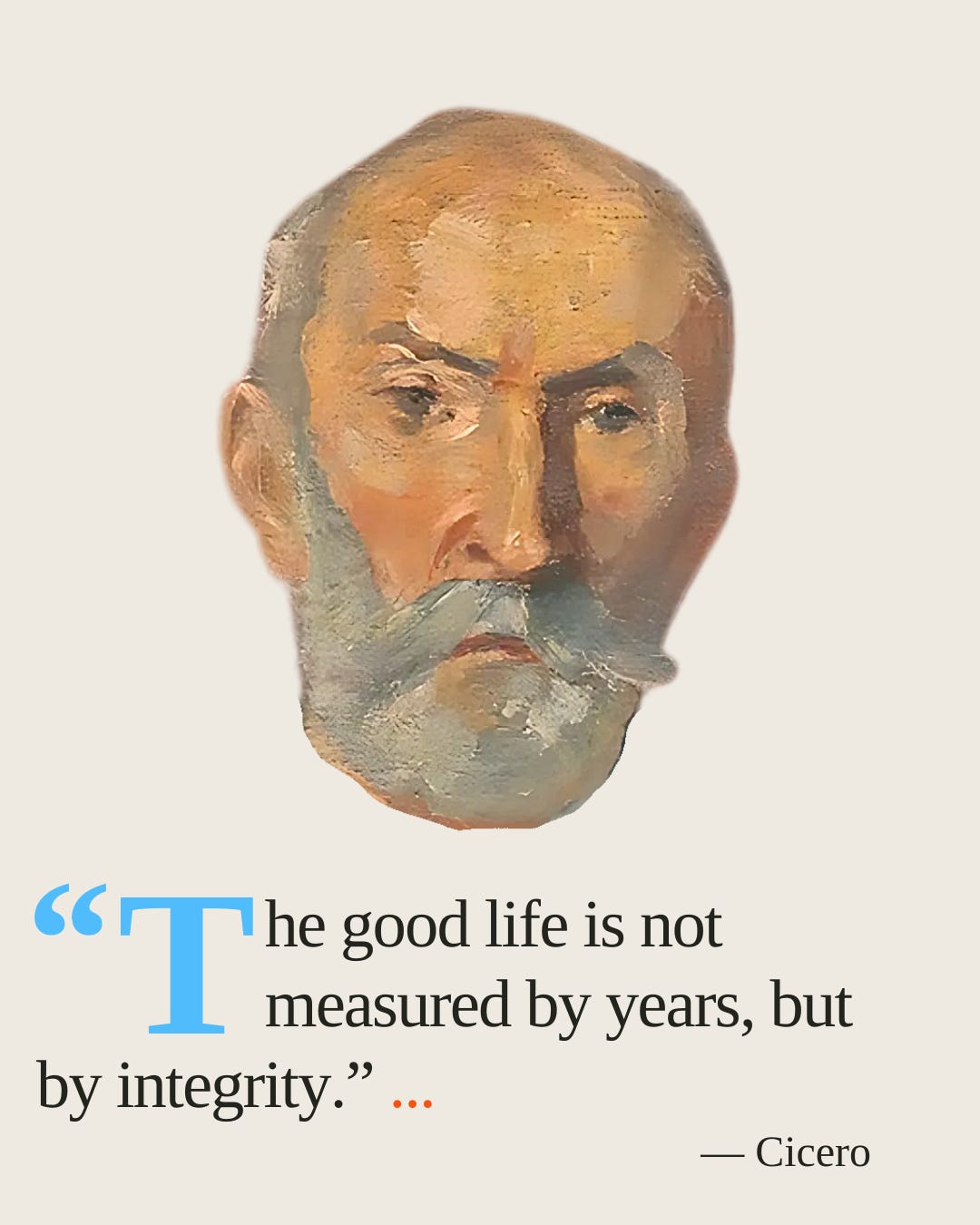
The good life is not measured by years, but by integrity. The wise man fears no misfortune, because no power can take from him the one thing that matters: the freedom of a well-ordered mind.
Like the Stoics, Cicero believes that virtue is the key to happiness. However, he also incorporates Aristotelian ideas, recognizing that while fortune can impact our comfort, it's virtue that truly brings inner freedom.
Aristotle put it this way in the Nicomachean Ethics:
The happy life is one lived in accordance with virtue, and virtue is a kind of activity of the soul in conformity with reason. Such a life needs few external goods; just as a soldier does not need many arms when his courage is sufficient, so too can a good man, if he is truly good, bear many misfortunes with nobility and, in all circumstances, act as the best person can.
Aristotle and Cicero agree: true happiness isn’t amusement, wealth, or status, but the activity of a rational soul living with virtue. External things may harm the body or lessen comfort, but they can't take away the deepest fulfillment of the good life.
Cicero’s conviction was shaped through hardship. He experienced exile, political defeat, and ultimately faced death. His experience serves as a poignant reminder to prioritize virtue over pleasure and principle over popularity, regardless of the cost.
Reflection Prompt
Consider reflecting or journaling on wisdom and happiness. Cicero, Aristotle, and the Stoics all say virtue brings stability. You could ask yourself, “What single act of virtue could you practice today that no turn of fortune could take from you?” Or consider the idea that Cicero and many Stoics faced exile—how can their perspectives help you to view your own struggles in a broader context?
Listen on Apple Podcasts, Spotify, or YouTube
—
Thank you for reading/listening; I hope you found something useful.
Until next time, be wise and be well.
J.W.
P.S. Catch up on recent (and past) meditations in the archive!
Outstanding essay! I love the tie in between reason and virtue to wisdom and happiness. Beautifully put! Thank you.